






KEY POINTS
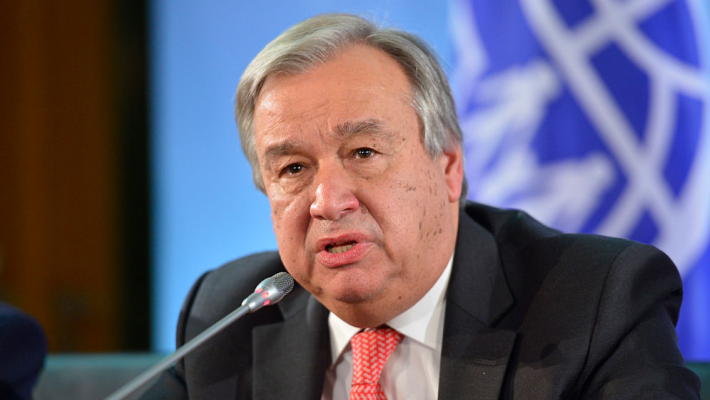
- UN Secretary-General António Guterres has expressed disappointment that COP31 ended without agreement on an overarching outcome.
- Disagreements over fossil fuels, climate finance and the transition to cleaner energy prevented consensus.
- Attention now shifts to COP32 in Addis Ababa, Ethiopia, where unresolved issues will return to the negotiating table.
MAIN STORY
United Nations Secretary-General António Guterres has expressed disappointment that the COP31 climate conference in Antalya, Türkiye, ended without consensus on an overarching outcome.
Guterres’ spokesperson, Stéphane Dujarric, disclosed the Secretary-General’s position on Monday during a briefing at the UN headquarters in New York.
The conference, held from November 9 to 20, ended after negotiators failed to agree on a common position on key climate issues, particularly the future of fossil fuels.
Dujarric said the absence of an agreement did not change the scientific evidence on global warming.
“The world is now poised to exceed the globally-agreed limit of 1.5 degree temperature rise,” he said.
Guterres said the outcome showed that countries needed to intensify efforts to address climate change rather than allow disagreements to delay action.
He criticised continued dependence on coal, oil and gas, warning that fossil fuel consumption was worsening climate disruption, exposing economies to energy price shocks and weakening energy security.
“We can’t put out the fire while pouring fuel on it,” the UN chief said.
He urged governments to build on the roadmaps advanced by Brazil’s COP30 presidency for transitioning away from fossil fuels and reversing deforestation and forest degradation.
THE ISSUES
The failure to reach consensus exposed the divisions between countries seeking stronger commitments to move away from fossil fuels and those concerned about the economic consequences of reducing dependence on oil, gas and coal.
Negotiators from climate-vulnerable countries pushed for more ambitious action, while major fossil fuel-producing nations resisted language they considered damaging to their economies.
Australia and Türkiye circulated several compromise drafts in an effort to secure agreement. The proposals included recognition that global warming was on course to exceed the 1.5°C threshold and calls for expanded use of carbon-removal technologies.
However, the proposals failed to bridge differences among delegations. Critics argued that the final text weakened previous commitments and did not provide the level of action required.
The disagreements also extended to climate finance, loss and damage, and support for countries managing the economic and social costs of transitioning to cleaner energy.
Speaking for the African Group, Ghana acknowledged shortcomings in these areas, particularly the limited attention given to a just transition. It said the issue received only “a single generic sentence” in the text, but the group would not block consensus because the document reflected the views of several parties.
The European Union formally objected to the cover decision, arguing that the omission of references to fossil fuels and the transition away from them was unacceptable.
Panama also rejected the outcome, saying governments should not settle for the minimum level of agreement when stronger action was required to keep the 1.5°C target within reach.
Saudi Arabia, representing the League of Arab States, defended references to carbon capture and storage, arguing that the technology should remain among the options available to limit global warming.
Pakistan, meanwhile, urged countries to continue negotiations, warning that climate action required “bridges, not barriers.”
WHAT’S BEING SAID
“The lesson is that those who profit from the destruction of our planet must never dictate the terms of how we are to save it,” Guterres said.
COP31 President and Türkiye’s Environment Minister, Murat Kurum, acknowledged the failure to secure agreement.
“I understand that there is no agreement on this text. For that reason, these decisions have not been adopted,” he said.
WHAT’S NEXT
Attention now shifts to COP32 in Addis Ababa, Ethiopia, where governments will have to revisit unresolved questions about the transition away from fossil fuels and the mobilisation of climate finance for developing countries.
Guterres urged climate advocates to continue sharing scientific evidence and demanding action despite the setback in Antalya.
He also called for countries to build on the work of previous climate conferences rather than allow the latest disagreement to weaken international efforts.
BOTTOM LINE
COP31 ended without a common position on some of the most contentious climate issues. The outcome highlights the difficulty of securing global agreement when countries face different economic pressures, but it also leaves major questions about fossil fuels, climate finance and climate action for the next round of negotiations.