





Key points
- The Federal Government says it will work with Taraba to develop opportunities in agriculture, energy, tourism, infrastructure and mineral resources.
- The government says federal infrastructure projects and new investments are intended to improve connectivity and support economic activity in the state.
- The Information Minister says subsidy reforms generated N15.8 trillion in additional Federation resources between June 2023 and December 2025.
Main story
The Federal Government has reaffirmed its commitment to partnering with the Taraba State Government to develop the state’s potential in agriculture, energy, tourism, infrastructure and mineral resources.
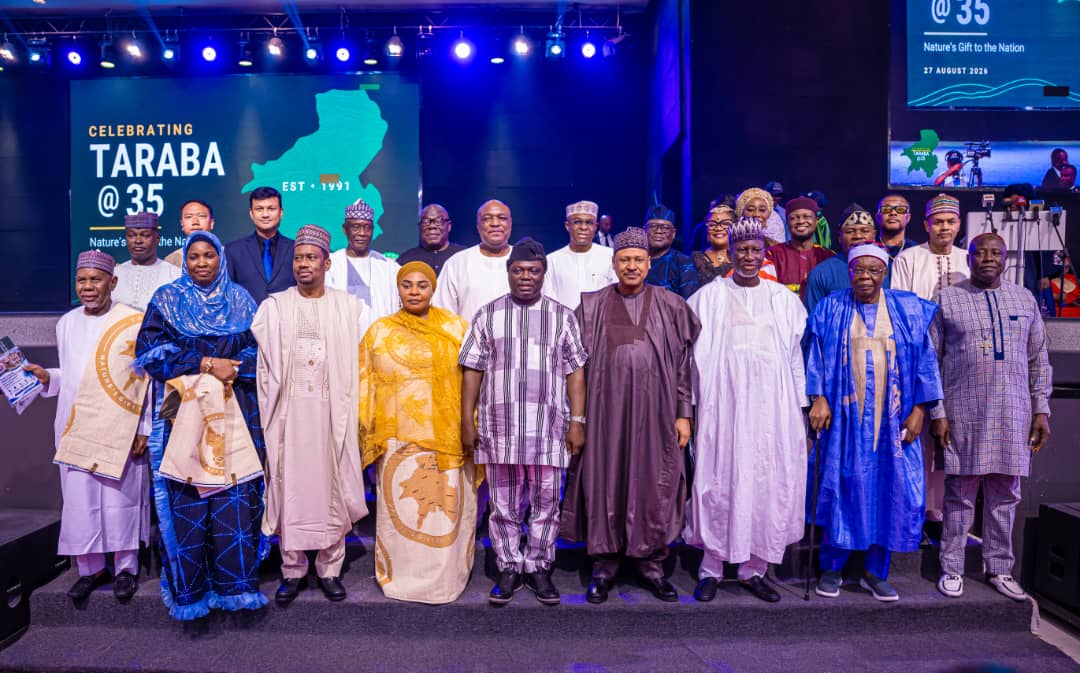
The Minister of Information and National Orientation, Mohammed Idris, stated this on Thursday in Jalingo during a gala night marking Taraba’s 35th anniversary and the unveiling of the Taraba Regional Development Master Plan.
Idris described the master plan as a framework for guiding the state’s long-term development, but said its value would ultimately depend on how effectively it was implemented and translated into improvements in the lives of residents.
He said Taraba had significant opportunities in agriculture and agro-processing, livestock, hydropower, tourism, manufacturing and mineral development, which could generate jobs and expand economic activity if properly developed.
The minister commended Gov. Agbu Kefas for adopting the long-term development framework and highlighted investments by the state government in education, healthcare, infrastructure, security and economic development.
Among the initiatives, he cited the provision of more than N1.8 billion in 2026 for the National Examinations Council (NECO), Basic Education Certificate Examination (BECE) and National Business and Technical Examinations Board (NABTEB) registration for students in public schools.
He also pointed to about $268 million in financing agreements between Taraba and the ECOWAS Bank for Investment and Development for an integrated industrial park, 10,000 hectares of irrigated rice production and processing, and a 50-megawatt solar power plant in Jalingo.
According to Idris, such investments would help move the state beyond the extraction of its natural resources towards production, processing, job creation and broader economic development.
The Federal Government, he said, was complementing the state’s efforts through infrastructure projects covering several parts of Taraba.
These include the Gembu-Mbamnga-Yang (Lip) Road, Bali-Serti-Gashaka-Gembu Road, interventions on the Jalingo-Mutum Biyu-Tella-Wukari corridor, and further work on the Mayo Selbe-Gembu, Mutum Biyu-Garba Chede and Jalingo-Numan roads.
Idris said the projects would improve movement between communities while supporting trade, agriculture, tourism, security and the transportation of goods and people.
He also reaffirmed the Federal Government’s interest in developing Taraba’s agricultural, energy and mineral resources, including the Mambilla Hydroelectric Power Project.
The minister linked infrastructure development to security, saying investment, farming, tourism and business activity would be difficult to sustain where communities remained unsafe.
He said the Federal Government was pursuing reforms towards the establishment of State Police, which could strengthen local intelligence gathering and response, particularly in Taraba because of its large terrain and dispersed border communities.
Idris also cited the establishment of the Nigerian Army’s 10 Division in Jalingo, with responsibility for Taraba and Adamawa, as part of efforts to strengthen security in the region.
The minister further defended the Federal Government’s economic reforms, saying the removal of petrol subsidy had generated N15.8 trillion in additional resources for the Federation between June 2023 and December 2025.
He said about N5.4 trillion accrued to the Federal Government, while approximately N10.4 trillion went to states and local governments for development priorities.
Idris said the Federal Government would not return to the previous subsidy regime, arguing that the focus should instead be on consolidating the gains of the reforms, protecting vulnerable Nigerians and ensuring that additional public resources produce visible improvements.
He said the development agenda should prioritise young people, women, farmers, small businesses and communities by expanding access to markets, jobs and public services.
The minister also pledged closer cooperation between the Federal Ministry of Information and National Orientation and the Taraba State Ministry of Information and Re-Orientation to ensure that residents understood and participated in the implementation of the master plan.
He said the plan should extend beyond government offices and become a development framework embraced by farmers, entrepreneurs, students, traders and communities across the state.
Kefas, in his remarks, called for continuity in governance and acknowledged the contributions of former military administrators and elected governors to Taraba’s development.
He said his administration would build on previous achievements, correct shortcomings, complete viable projects and create new opportunities for future generations.
The governor said development should remain larger than any administration, political party, ethnic group or individual, urging former leaders to continue contributing their experience to the state’s development.
The issues
The unveiling of the master plan comes as Taraba seeks to convert its agricultural, energy, tourism and mineral resources into sustained economic activity.
The key challenge will be implementation. The state has identified major investment opportunities and secured financing for projects including an industrial park, irrigated agriculture and solar power, while the Federal Government is supporting connectivity through road and other infrastructure projects.
Security will also remain important because the state’s large territory and border communities can affect the movement of people, agricultural produce, tourists and investment.
What’s being said
Mohammed Idris said the success of the master plan would ultimately be determined by the roads built, businesses created, jobs generated, communities connected and lives improved.
He said the Federal Government remained committed to supporting Taraba’s development and would continue working with the state to unlock its economic potential.
Agbu Kefas said governance and development must be continuous, with each administration building on the work of those before it.
What’s next
The Taraba Regional Development Master Plan is expected to guide the state’s development priorities and provide a framework for investment in key sectors.
The Federal Government and Taraba State Government are also expected to continue collaboration on infrastructure, security and projects aimed at developing agriculture, energy, tourism and other productive sectors.
Bottom line
Taraba is seeking to turn its natural and economic advantages into long-term development through a new regional master plan, while the Federal Government says it will support the state through infrastructure, investment and policy collaboration.
The immediate test will be whether the projects and financing already identified can translate the plan into jobs, stronger connectivity, increased production and improved living conditions for residents.