








Key Points
- The FCTA has upgraded 20 Primary Healthcare Centres across the six area councils under the World Bank-supported IMPACT project.
- The renovated facilities have received modern medical equipment, staff accommodation and solar-powered electricity systems.
- At least 1,000 vulnerable residents are being enrolled free of charge in the FCT Health Insurance Scheme for one year.
- The project also includes training for more than 250 healthcare workers and the distribution of maternal delivery kits.
- The initiative aims to reduce maternal and under-five mortality by improving access to quality healthcare and removing financial barriers.
Main Story
The Federal Capital Territory Administration (FCTA) has upgraded 20 Primary Healthcare Centres (PHCs) across the territory under the World Bank-supported Immunisation Plus and Malaria Progress by Accelerating Coverage and Transforming Services (IMPACT) project.
The intervention is aimed at improving access to quality and affordable healthcare, particularly for pregnant women, children, elderly people and other vulnerable residents.
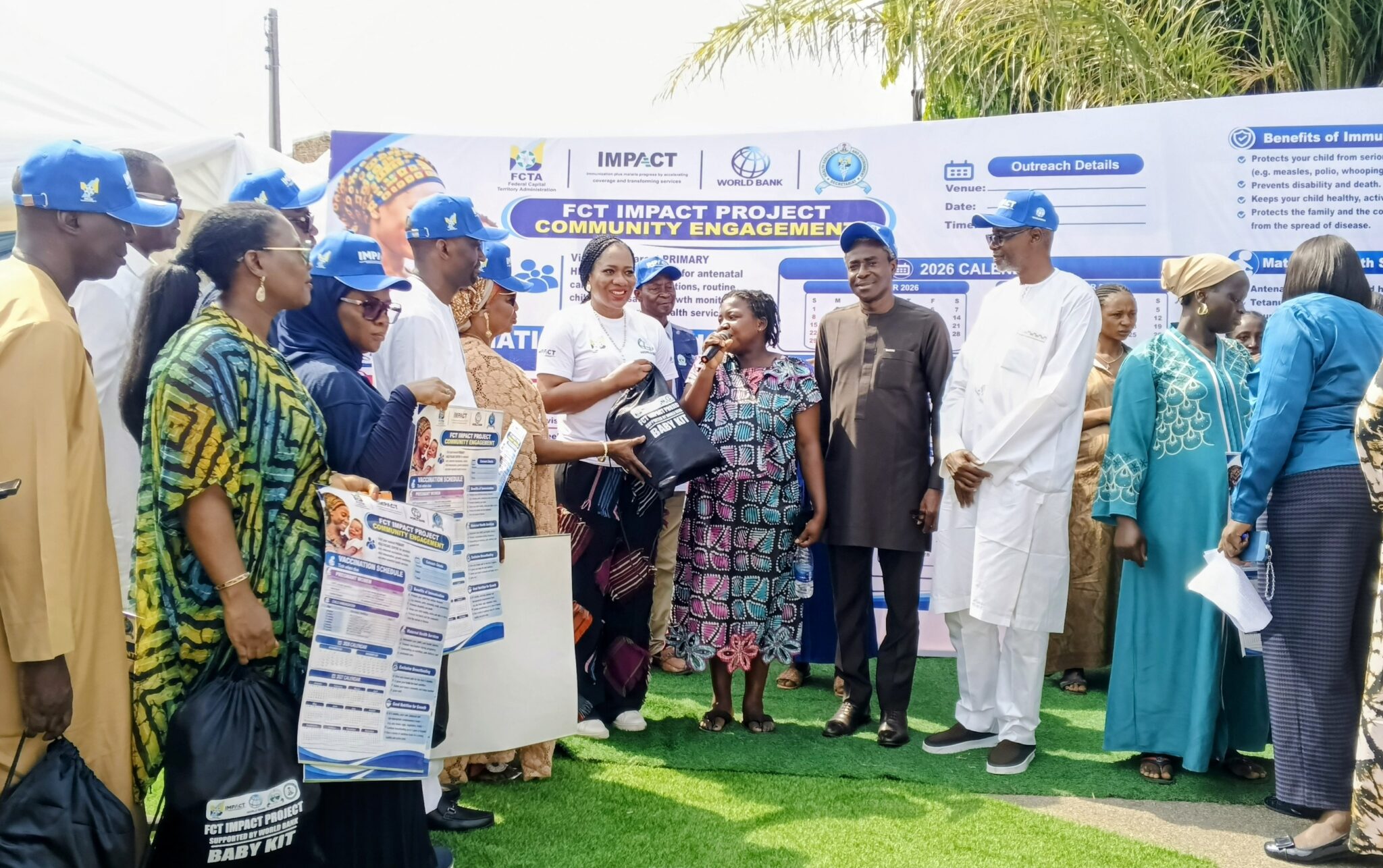
The Mandate Secretary of the FCT Health Services and Environment Secretariat, Dr Adedolapo Fasawe, disclosed this on Monday in Abuja during a community engagement and inauguration ceremony at the renovated Owner-Occupier Model Primary Healthcare Centre in Kubwa.
Fasawe said the intervention went beyond renovating buildings, explaining that the administration had also constructed staff accommodation, provided modern medical equipment and installed solar-powered systems to ensure uninterrupted electricity and round-the-clock healthcare services.
She described primary healthcare centres as the first point of contact for many residents, stressing that strengthening their capacity was essential to improving health outcomes, preventing avoidable deaths and advancing universal health coverage.
According to her, the FCTA’s healthcare strategy is built around three priorities: access, affordability and quality.
She also highlighted improvements in emergency response through the FCT Emergency Medical Services and Ambulance System (FEMSAS), which provides free 24-hour services and works with local transport operators to assist pregnant women during emergencies.
During the event, Fasawe demonstrated the system by asking a pregnant woman to call one of its emergency lines. An ambulance reportedly arrived in less than four minutes.
On affordability, she announced that at least 1,000 vulnerable residents were being registered free of charge under the Basic Health Care Provision Fund into the FCT Health Insurance Scheme. The registration would provide them with one year of free medical care at accredited public and private hospitals.
She urged traditional rulers and community leaders to monitor the facilities and ensure that patients were not charged for services covered under the free healthcare arrangements.
The Issues
Despite efforts to expand healthcare coverage, many Nigerians still face financial and geographical barriers when seeking medical attention.
For residents of underserved communities, poor facilities, inadequate equipment, electricity shortages and the cost of treatment can discourage early visits to health centres.
These challenges are particularly serious for pregnant women and young children, whose access to timely medical attention can determine survival.
The IMPACT project seeks to address some of these problems by improving facilities, strengthening healthcare workers’ capacity and reducing the financial burden on vulnerable households.
What’s Being Said
The Executive Secretary of the FCT Primary Health Care Board, Dr Dan Gadzama, said the IMPACT project began in 2021, with an initial completion deadline of December 2025.
He explained that the FCT was initially excluded from the project’s immunisation component but was later included following Fasawe’s engagement with the World Bank.
According to Gadzama, the FCT signed its Subsidiary Loan Agreement with the bank in February 2025. Following subsequent disbursements and advocacy, the project timeline was extended by one year, with December 2026 set as the new closure date.
He listed the renovation and equipping of 20 PHCs across the six area councils among the project’s major achievements. Other interventions include the procurement of more than 70 laptops and tablets to improve health data reporting, specialised training for over 250 healthcare workers and the distribution of maternal delivery kits, known as Mama Kits.
The World Bank IMPACT Project Task Team Leader, Dr Onoriode Ezire, commended the FCTA for the speed and quality of its implementation, urging residents to make use of the upgraded facilities.
Also speaking, the Senior Special Assistant to the President on Community Engagement (North-Central), Dr Abiodun Essiet, said the Federal Government had expanded health insurance coverage to more than 16 million Nigerians since 2023 and invested over N235 billion in upgrading primary healthcare centres nationwide, alongside other health interventions.
The Village Head of Usuma Ward, Kubwa, Chief Beje Tazodayi, praised the transformation of the previously dilapidated clinic but appealed for volunteer health workers to be absorbed into the formal healthcare system.
What’s Next
The IMPACT project is expected to close in December 2026, giving the FCTA a limited period to consolidate the gains made under the programme.
Community leaders are also expected to help monitor the facilities, encourage residents to use available services and ensure that eligible patients receive care without improper charges.
Bottom Line
Upgrading 20 primary healthcare centres is a significant step towards improving healthcare delivery in the FCT. However, the real measure of success will be whether residents can consistently access equipped facilities, qualified health workers, emergency services and affordable treatment long after the renovation ceremonies are over.