








Key Points
- The Minister of State for Petroleum Resources (Gas), Ekperikpe Ekpo, has advocated for blended finance and stronger private sector participation to harness Africa’s natural gas potential.
- Despite holding over 600 trillion cubic feet (tcf) of proven gas reserves, more than 600 million people in Africa still lack access to electricity.
- Nigeria, possessing over 210 tcf of those reserves, is positioning itself as a regional hub through the Decade of Gas initiative.
- Priority projects identified for regional integration include the Trans-Sahara, Nigeria–Morocco (Africa Atlantic), and Nigeria–Equatorial Guinea gas pipelines.
Main Story
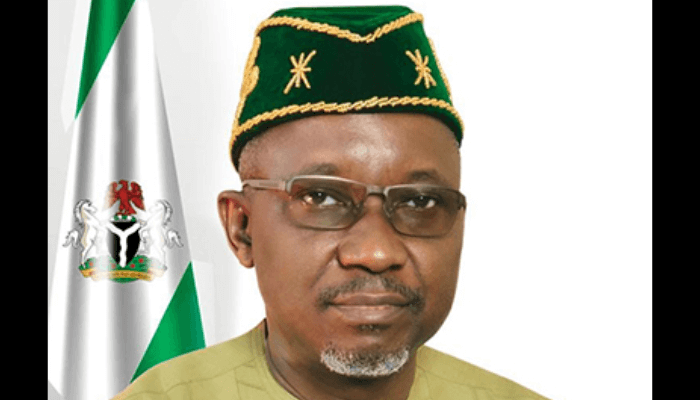
Nigeria’s Minister of State for Petroleum Resources (Gas), Ekperikpe Ekpo, reported that Africa’s energy future depends on collective action and innovative financing rather than just resource abundance.
Speaking at a ministerial roundtable in Abuja on Monday, organised by the Decade of Gas Secretariat and the World Bank, Ekpo stated that the continent’s vast gas resources remain underutilised due to gaps in coordination and infrastructure.
He noted that while the continent holds massive reserves, millions of citizens still rely on traditional fuels for cooking and lack basic power access.
The minister emphasised that natural gas serves as a critical “transition fuel” capable of driving industrialisation and economic resilience while reducing emissions.
He highlighted that Nigeria is already working on several cross-border midstream projects to foster a regional energy market.
To accelerate these goals, Ekpo called for the harmonisation of regulatory frameworks across African borders, citing Nigeria’s Petroleum Industry Act (PIA) as a functional model for attracting the necessary investment to the sector.
The Issue
The primary obstacle identified is the “Coordination Gap” between resource-rich nations and energy-poor populations. Although the gas exists, the lack of integrated regional markets and bankable cross-border projects prevents the delivery of energy to those who need it most. Furthermore, mobilizing climate-aligned and blended financing remains difficult in a global environment where funding for fossil fuel infrastructure is under increased scrutiny. Without a unified policy approach and secured private sector participation, many of Africa’s ambitious pipeline projects risk remaining in the planning stages.
What’s Being Said
- “Africa holds over 600 trillion cubic feet of proven natural gas reserves, yet more than 600 million people lack access to electricity,” stated Ekperikpe Ekpo.
- He noted that the challenge is “not a question of resource availability, but one of coordination, infrastructure and collective action.”
- The minister stressed that “no single country could unlock its full potential alone,” urging for a foundation of regional cooperation.
- Ekpo reaffirmed Nigeria’s readiness to partner in building an integrated market, stating that aligned vision can transform resources into “shared prosperity.”
What’s Next
- Stakeholders are expected to focus on identifying specific “bankable” projects that can attract immediate private sector and World Bank support.
- Efforts will be intensified to harmonise gas-to-power and clean cooking regulations across West and North Africa to facilitate smoother cross-border trade.
- The Decade of Gas Secretariat is slated to review progress on the Nigeria–Morocco and Trans-Sahara pipelines to establish firmer implementation timelines.
- Participants at the roundtable are urged to establish concrete implementation mechanisms to move beyond theoretical discussions and toward physical infrastructure delivery.
Bottom Line
Minister Ekpo has made it clear that Africa’s 600 tcf of gas is a stranded asset without a unified financial and regulatory bridge. By calling for blended finance and regional synergy, Nigeria is attempting to lead a shift where gas is not just an export commodity, but the literal fuel for a connected, industrialised continent.







, Ekperikpe Ekpo, reported that Africa’s energy future depends on collective ...)