









Key points
- Nigeria Customs Service (NCS) FOU Zone C seized smuggled vegetable oil products valued at N403.49 million.
- The contraband was intercepted in separate intelligence-led operations in Enugu and Anambra States.
- Customs says the crackdown is aimed at protecting local industries, jobs, and government revenue.
Main story
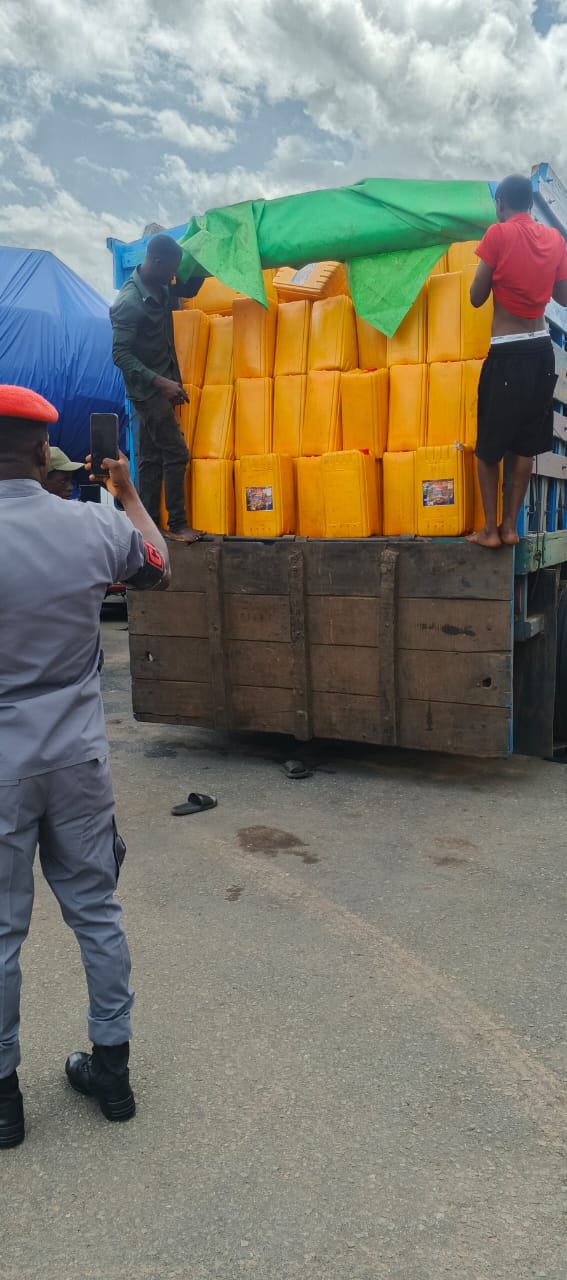
The Nigeria Customs Service (NCS), Federal Operations Unit (FOU) Zone C, Owerri, has intercepted a large consignment of smuggled vegetable oil products with a Duty Paid Value (DPV) of N403.49 million, dealing a major blow to illicit trade networks operating in the South-East.
The Controller of the Unit, Comptroller Bishir Balogun, disclosed the seizure during a media briefing on the Unit’s recent anti-smuggling operations, describing it as part of ongoing efforts to curb economic sabotage and enforce Nigeria’s import regulations.
According to Balogun, the seized items comprised 3,310 jerrycans of 25-litre “Super Delicious” vegetable oil, 10 jerrycans of 10-litre “Super Delicious” vegetable oil, 20 cartons of 5-litre sunflower vegetable oil, and 20 cartons of 3-litre sunflower vegetable oil.
He explained that the seizures were made following extensive intelligence gathering and coordinated surveillance operations by Customs officers.
The Comptroller revealed that operatives intercepted two trucks carrying the contraband along the Ninth Mile axis in Enugu State on May 9, while another seizure was recorded on June 7 along the Onitsha–Agbor Highway after receiving credible intelligence on the movement of smuggled goods.
“The Duty Paid Value of the seized items is Four Hundred and Three Million, Four Hundred and Ninety-One Thousand Naira (N403,491,000),” Balogun stated.
The issues
The seizure highlights the continued challenge of smuggling in Nigeria despite intensified enforcement efforts by security and regulatory agencies.
According to Customs, the illegal importation of vegetable oil undermines government policies aimed at promoting local production and self-sufficiency in the edible oil industry.
Industry experts have repeatedly warned that smuggling distorts market competition, discourages investment in domestic manufacturing, reduces government revenue, and places legitimate businesses at a disadvantage.
The influx of prohibited imports also raises concerns over product quality standards and consumer protection, as many smuggled products bypass regulatory inspection processes.
What’s being said
Comptroller Balogun described the interception as a significant victory against economic saboteurs engaged in the illegal importation of foreign vegetable oil.
He noted that such activities threaten local industries by limiting opportunities for technology transfer, reducing employment generation, and exerting pressure on Nigeria’s foreign exchange reserves.
The Customs boss reiterated that the operation demonstrates the Service’s commitment to enforcing the provisions of the Nigeria Customs Service Act 2022 (as amended) and supporting the Federal Government’s fiscal and trade protection measures.
Balogun also issued a stern warning to smugglers and criminal syndicates, stressing that the Service would continue to deploy intelligence-driven operations to protect public health, national security, and the domestic economy.
What’s next
Customs authorities have confirmed that the seized products remain in government custody pending the conclusion of investigations and the initiation of necessary legal proceedings.
The Service is also expected to intensify surveillance along key smuggling corridors in the South-East and strengthen intelligence-sharing mechanisms to dismantle networks involved in illicit cross-border trade.
Officials say further enforcement actions will focus on preventing the entry of prohibited goods and ensuring compliance with Nigeria’s trade regulations.
Bottom line
The interception of N403.49 million worth of smuggled vegetable oil underscores the scale of illicit trade confronting Nigeria’s economy and highlights the Customs Service’s renewed push to protect local industries, preserve government revenue, and enforce import restrictions. While the seizure represents a major operational success, it also reflects the persistent challenge of smuggling and the need for sustained enforcement and border surveillance across the country.




, Federal Operations Unit (FOU) Zone C, Owerri, has intercepted a large consignment of smuggled vegetable...)