KEY POINTS
- Chinese President Xi Jinping and Togolese President Faure Gnassingbé have agreed to establish a China-Togo community with a shared future in the new era.
- The leaders pledged to expand cooperation in trade, renewable energy, digital technology, infrastructure and industrial development.
- China encouraged Togo to take advantage of its zero-tariff policy for eligible African countries and designated export channels to improve access to the Chinese market.
MAIN STORY
China and Togo have agreed to elevate their bilateral relations to a China-Togo community with a shared future in the new era, with both countries seeking stronger trade, investment and diplomatic cooperation.
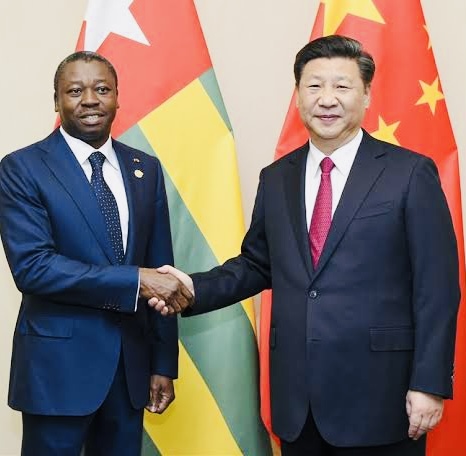
The decision was announced in a joint statement following talks between Chinese President Xi Jinping and Togolese President Faure Gnassingbé at the Great Hall of the People in Beijing during Gnassingbé’s official visit to China.
Xi said the traditional friendship between the two countries, established by earlier generations of leaders, remained strong and had endured over time.
He said their cooperation, mutual understanding and people-to-people exchanges had contributed to broader China-Africa relations, adding that their aligned development priorities provided a basis for expanding cooperation across several sectors.
The Chinese president called for stronger exchanges between the two countries’ ruling parties and governments, greater sharing of governance experience and mutual support on issues concerning their respective core interests.
On trade, Xi described China’s zero-tariff policy for African countries as a measure intended to support Africa’s independent development and deepen economic cooperation with the continent.
He urged Togo to maximise opportunities under the policy and use designated channels for African exports to enter the Chinese market.
According to Xi, the arrangements could strengthen Togo’s role as a regional trade and logistics hub while expanding access for Togolese products and specialised goods from neighbouring countries.
Xi also welcomed Togo’s initiative to expand the cross-border use of the Chinese yuan and pledged stronger cooperation in renewable energy, digital technology and intelligent industries.
He said collaboration in these areas could support Togo’s industrialisation ambitions and create opportunities for economic development.
On international affairs, Xi called for closer coordination between China and Togo in multilateral institutions, improved global governance and joint efforts to promote regional peace and security.
He outlined four principles for international engagement in resolving African conflicts, emphasising African leadership, fairness, peaceful settlement and sustainable development.
Xi said African people should remain central to decisions affecting their continent, while international actors should respect the United Nations Charter, national sovereignty and territorial integrity.
He argued that hostilities and unilateral sanctions could not deliver lasting solutions to conflicts, advocating dialogue, consultation and mutual accommodation instead.
He also called for efforts to address both immediate security threats and their underlying causes through long-term development planning and sustained peacebuilding.
Gnassingbé said his visit had deepened his appreciation of China’s modernisation achievements, cultural heritage and governance philosophy under Xi’s leadership.
He pledged to strengthen mutual trust, expand dialogue and deepen long-term cooperation ahead of the 55th anniversary of diplomatic relations between the two countries in 2027.
The Togolese president also promised to encourage Chinese investment and broaden cooperation in trade, infrastructure, science and technology.
He endorsed Xi’s principles for resolving African conflicts and commended China’s contributions to international peace and stability. Gnassingbé said Togo was ready to strengthen multilateral cooperation, defend multilateralism and advance the shared interests of developing countries.
THE ISSUES
The partnership creates a framework for expanding China’s economic engagement with Togo, particularly in trade, infrastructure, renewable energy and digital technology. For Togo, a stronger relationship with China could provide additional opportunities to attract investment and develop industries beyond traditional economic activities.
The proposed use of zero-tariff access could also create opportunities for Togolese exporters. However, the commercial benefits will depend on which products qualify, the ability of local producers to meet market requirements and their capacity to supply Chinese buyers consistently.
Togo’s ambition to strengthen its position as a regional trade and logistics hub could benefit neighbouring countries if improved trade links and infrastructure make it easier to move goods across borders. Realising that ambition will require investment in transport, logistics and productive capacity.
The agreement also has a diplomatic dimension. Both countries have called for closer coordination in international institutions and stronger cooperation among developing countries. Their positions on African conflict resolution emphasise national sovereignty, dialogue and development, although the practical implications will depend on how those principles are applied in specific situations.
WHAT’S NEXT
The next phase will depend on how the partnership is translated into trade arrangements, investment commitments and specific projects in renewable energy, digital technology, infrastructure and industrial development.
The 55th anniversary of diplomatic relations in 2027 will provide a further milestone for assessing progress in bilateral cooperation.
For Togo, the key measures will include whether the partnership attracts new investment, improves access for domestic products to Chinese markets and supports local industrial development.
BOTTOM LINE
China and Togo have established a broader framework for economic and diplomatic cooperation, with trade access, investment and industrial development among the central priorities. The partnership’s practical value will depend on whether it produces tangible gains for Togolese businesses, exporters and workers.