








Key Points
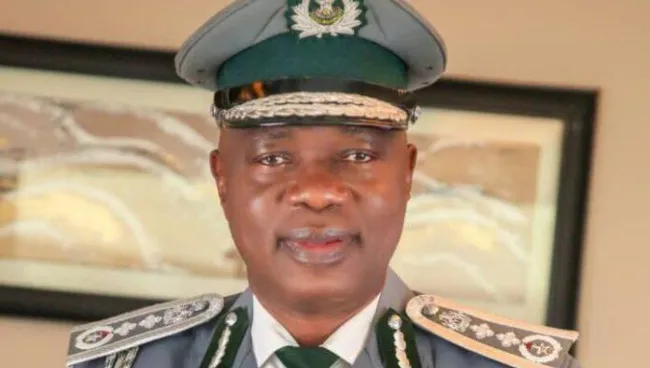
- Comptroller-General of Customs Adewale Adeniyi has urged Deputy Comptrollers to embrace innovation and prepare for future leadership roles.
- The charge was delivered at the closing ceremony of the Strategic Refresher Course for Deputy Comptrollers in Ikeja, Lagos.
- Adeniyi said continuous learning is essential as customs administrations worldwide adopt technology-driven operations.
- Senior Customs officials called on participants to uphold professionalism, discipline and transparency.
- The Service reaffirmed its commitment to strengthening institutional capacity through continuous training and leadership development.
Main Story
The Comptroller-General of Customs (CGC), Adewale Adeniyi, has charged Deputy Comptrollers of Customs to embrace innovation and demonstrate leadership readiness as the Nigeria Customs Service (NCS) intensifies efforts to modernise its operations in line with global best practices.
Adeniyi gave the charge on Thursday, July 16, 2026, at the closing ceremony of the Strategic Refresher Course for Deputy Comptrollers held at the Nigeria Customs Training College, Ikeja, Lagos.
Addressing participants, the CGC said customs administrations across the world are transforming their operations through technology, innovation and institutional reforms, making continuous professional development critical for senior officers.
He emphasised that the Service’s investment in local and international capacity-building programmes is aimed at preparing officers to assume higher leadership responsibilities within the organisation.
According to him, leadership in the modern Customs environment requires officers to remain ahead of emerging developments while demonstrating the competence needed to drive institutional reforms.
Adeniyi explained that the impact of training would be measured through the Service’s performance management systems, stressing that leadership effectiveness is assessed over time rather than through isolated events.
He urged participants to translate the knowledge acquired during the course into improved operational performance and strategic leadership across their respective commands.
Speaking at the event, the Zonal Coordinator, Zone ‘A’, Assistant Comptroller-General Mohammed Babandede, encouraged the Deputy Comptrollers to serve as role models by promoting discipline, professionalism and ethical conduct.
Babandede said the officers now carry greater responsibility to shape the next generation of Customs personnel by leading through personal example, maintaining transparency in their duties and making sound decisions during operational challenges.
Also speaking, the Acting Provost Marshal, Deputy Comptroller Saulawa Sanusi, said the Customs Police Unit remains committed to strengthening discipline and compliance across the Service through continuous engagement and regular sensitisation of officers.
He noted that sustained training and repeated reinforcement of standard operating procedures are essential to achieving a high level of compliance within the organisation.
The Strategic Refresher Course forms part of the Nigeria Customs Service’s broader human capital development strategy aimed at equipping senior officers with the leadership, operational and strategic competencies required to support the Service’s ongoing modernisation agenda.
The Issues
As customs administrations globally accelerate digital transformation, increasing trade volumes and evolving border security threats require senior officers to develop stronger leadership, technological and decision-making capabilities.
Continuous capacity building has therefore become central to the Nigeria Customs Service’s reform agenda as it seeks to improve trade facilitation, revenue generation, border security and institutional efficiency.
The emphasis on discipline, professionalism and succession planning also reflects the Service’s commitment to building a resilient leadership pipeline capable of sustaining ongoing reforms.
What’s Being Said
Comptroller-General of Customs, Adewale Adeniyi, said:
“You must put yourself ahead of all these developments. This is why we are investing a lot in building your capacity locally and internationally. You must demonstrate capacity, you must demonstrate readiness that you’re ready to take on the leadership of the service.”
Assistant Comptroller-General Mohammed Babandede said:
“As senior officers and true ambassadors of the NCS, you are now better positioned to set standards of discipline and professionalism, lead by personal example, manage public perceptions through transparency and fairness, and make sound decisions during operational challenges and crises.”
Acting Provost Marshal, Deputy Comptroller Saulawa Sanusi, added:
“You keep repeating the procedure until when the compliance level can now be said to be on the high level.”
What’s Next
The Deputy Comptrollers are expected to apply the knowledge and leadership skills acquired during the training to improve operational efficiency, strengthen discipline and support the Service’s ongoing modernisation initiatives.
The Nigeria Customs Service is also expected to continue investing in leadership development and specialised training programmes as part of its broader strategy to build a technology-driven and globally competitive customs administration.
Bottom Line
The conclusion of the Strategic Refresher Course underscores the Nigeria Customs Service’s commitment to developing future leaders capable of driving innovation, strengthening institutional discipline and sustaining reforms in an increasingly technology-driven customs environment.










, Adewale Adeniyi, has charged Deputy Comptrollers of Customs to embrace innovation...)