









Key points
- AFC Capital Partners has launched the Infrastructure Climate-Resilient Fund Nigeria (ICRF Nigeria) to mobilise domestic institutional capital for infrastructure projects.
- The SEC-registered closed-end fund will target pension funds, insurers, asset managers and other Nigerian institutional investors.
- ICRF is a $750 million pan-African fund targeting 10 to 12 infrastructure projects and up to $3.7 billion in total financing.
Main story
AFC Capital Partners (ACP), the asset management arm of Africa Finance Corporation (AFC), has launched a new investment vehicle aimed at directing Nigerian institutional capital into climate-resilient infrastructure projects across Nigeria and other African markets.
The Infrastructure Climate-Resilient Fund Nigeria (ICRF Nigeria), registered with the Securities and Exchange Commission (SEC) as a closed-end fund, will target investment from pension fund administrators, insurers, asset managers and other institutional investors with long-term capital.
The fund is the Nigerian platform of ACP’s broader $750 million Infrastructure Climate-Resilient Fund, which seeks to finance infrastructure capable of withstanding the physical and economic effects of climate change while generating commercial returns for investors.
Its launch is intended to address two challenges facing Africa at the same time: the shortage of financing for infrastructure and the difficulty of attracting private investment into projects that require significant spending on climate adaptation and resilience.
ICRF will use a combination of concessional and commercial funding to reduce investment risks and make projects more attractive to institutional investors. Rather than treating climate resilience as an additional consideration after a project has been designed, the fund will assess climate risks from the planning stage through construction and operation.
The wider fund has already secured commitments from a number of development and institutional investors, including a $253 million first-loss commitment from the Green Climate Fund (GCF). Other participants include the European Investment Bank, Development Bank of Southern Africa, Cassa Depositi e Prestiti, Nigeria Sovereign Investment Authority and African pension funds.
With these commitments, ACP expects the fund to mobilise as much as $3.7 billion in total financing and build a portfolio of between 10 and 12 infrastructure projects across Africa.
AFC President and Chief Executive Officer, Samaila Zubairu, said the initiative was designed to address the disconnect between Africa’s substantial domestic savings and its infrastructure financing needs.
He said Africa had more than $4 trillion in domestic resources, including pension, insurance and sovereign wealth funds, but much of this capital remained invested in low-risk and short-term instruments instead of productive sectors such as infrastructure, industry and innovation.
According to Zubairu, creating investment vehicles that match Africa’s long-term savings with its long-term development needs would allow domestic capital to play a greater role in financing the continent’s growth.
The Chief Executive Officer of ACP, Ayaan Adam, said ICRF Nigeria would give local institutional investors access to a diversified pool of infrastructure opportunities while helping to address the growing risks posed by climate change.
She said combining institutional funding with AFC’s infrastructure experience and blended finance would allow the fund to support projects that might otherwise struggle to secure sufficient private financing.
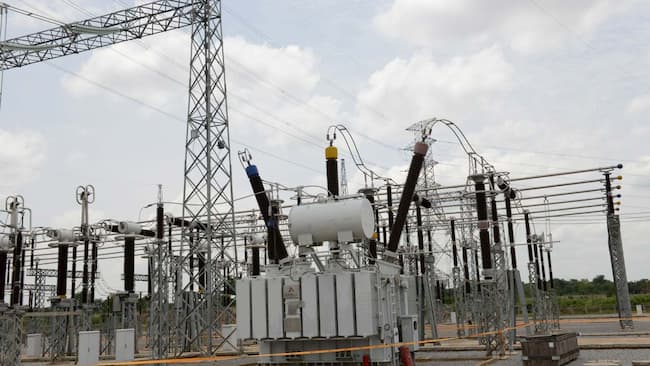
The fund will focus on renewable energy, transport and logistics, digital infrastructure and industrial development, sectors that ACP considers important to Africa’s economic transformation.
Investment decisions will also take into account physical climate risks, transition risks, emissions pathways and climate governance, with proposed projects undergoing climate-risk assessments before investment.
The Green Climate Fund will further support the initiative through first-loss financing and technical assistance for climate-risk assessment and monitoring, with the aim of reducing risks for investors and attracting additional private capital.
The issues
Africa faces a significant infrastructure financing gap while climate change is increasing the risks to existing and new infrastructure.
ICRF Nigeria is designed to address both challenges by creating a dedicated investment vehicle through which Nigerian institutional investors can deploy long-term capital into infrastructure while incorporating climate resilience into projects.
The approach also seeks to reduce the reliance of institutional investors on short-term and low-risk instruments by creating access to diversified infrastructure investments with commercial potential.
What’s being said
AFC President and CEO Samaila Zubairu said Africa’s substantial domestic resources needed to be connected more effectively to its long-term development requirements.
ACP CEO Ayaan Adam said ICRF Nigeria would provide Nigerian institutional investors with a dedicated route into climate-resilient infrastructure investments across Nigeria and Africa.
The Green Climate Fund is providing first-loss capital and technical assistance to help de-risk investments and attract additional institutional funding.
What’s next
ACP expects the wider ICRF to mobilise up to $3.7 billion in total financing and develop a portfolio of 10 to 12 infrastructure projects across Africa.
ICRF Nigeria will seek to attract investment from Nigerian pension funds, insurers, asset managers and other institutional investors for projects in sectors including renewable energy, transport, logistics, digital infrastructure and industrial development.
Bottom line
The launch of ICRF Nigeria creates a dedicated platform for Nigerian institutional capital to participate in climate-resilient infrastructure investment while supporting projects considered critical to the country’s and Africa’s economic development.










, the asset management arm of Africa Finance Corporation (AFC), has launched a new investment vehicle ...)