




Key points
- Abakaliki Rice Mill employs over 5,000 workers, with 2,500 in ancillary roles
- Industry boosts food security through local rice production and processing
- Cooperative model supports farmers and empowers vulnerable groups
Main story
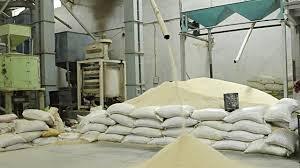
The Abakaliki Rice Mill in Ebonyi State has continued to play a pivotal role in strengthening food security and generating employment, with over 5,000 direct workers and an additional 2,500 engaged in ancillary services.
Chairman of the Rice Milling Industry in the state, Obeji Linus, disclosed this in an interview with journalists in Abakaliki, describing the facility as one of the largest and oldest rice processing hubs in Nigeria and West Africa.
According to him, the mill operates as a conglomeration of cooperative clusters, bringing together multiple operators and machines within a single ecosystem to process rice at scale. He noted that the integrated structure allows for a full range of processing activities, including milling, destoning, polishing, and packaging.
Obeji explained that beyond processing, the industry actively supports rice production by financing local farmers across rural communities, who in turn supply paddy rice to the mill. This model, he said, has significantly boosted local production while ensuring a steady supply chain.
He added that the industry, established before the 1970s, remains central to Ebonyi’s identity as a leading rice-producing state, stressing that its operations meet global standards.
The issues
Despite its contributions, Nigeria continues to grapple with food insecurity and unemployment, particularly among unskilled labour. The need for sustainable, locally driven agricultural value chains remains critical to addressing these challenges.
The Abakaliki model highlights how coordinated investment in agro-processing can bridge gaps in production, distribution, and employment.
What’s being said
Obeji described the rice mill industry as a major employer of labour, particularly for vulnerable and unskilled individuals.
“It houses the highest employment opportunities because even unskilled people can work here. As long as you have the strength, you are qualified,” he said.
He further noted that the industry has made significant contributions to food supply, helping to reduce food insecurity across the country.
A beneficiary, Mrs Okoro Ibakwu, said the rice mill has been a lifeline for her family following the death of her husband.
“Without this place, my children wouldn’t have gone to school. I thank God for the rice mill industry,” she said.
What’s next
Stakeholders say scaling up similar agro-industrial clusters across Nigeria could further enhance food production, create jobs, and reduce reliance on imports.
There are also calls for increased government support, improved infrastructure, and access to financing to sustain and expand operations within the sector.
Bottom line
The Abakaliki Rice Mill stands as a model of how local industry, cooperative structures, and agricultural value chains can drive food security, empower communities, and create thousands of jobs in Nigeria.