







Key Points
- The Federal Government plans to invest N70 billion in a National Oral Health Strategic Plan covering 2026 to 2030.
- The programme will prioritise prevention, early detection and treatment of oral diseases, including Noma.
- Noma surveillance has been integrated into Nigeria’s Integrated Disease Surveillance and Response system.
- The government plans to train oral health workers and deploy them to primary healthcare centres across all local government areas.
- Thirty indigent patients received free surgical operations during the conference where the investment was announced.
Main Story
The Federal Government has announced plans to invest N70 billion in a National Oral Health Strategic Plan covering 2026 to 2030 to improve access to oral healthcare and address major challenges affecting Nigerians.
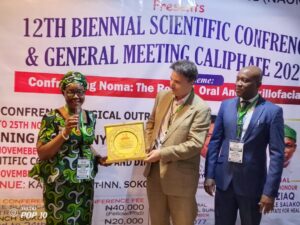
The Minister of State for Health and Social Welfare, Dr Iziaq Salako, disclosed this on Thursday in Sokoto during the 12th Biennial Scientific Conference and General Meeting of the Nigerian Association of Oral and Maxillofacial Surgeons (NAOMS).
The conference, themed “Confronting Noma: The Role of Oral and Maxillofacial Surgeons”, opened with free surgical operations for 30 indigent patients.
Represented by the Medical Director of the Federal Neuro-Psychiatric Hospital, Kware, Dr Abubakar Baguda, Salako said the government had integrated Noma surveillance into the Integrated Disease Surveillance and Response system.
He explained that the move would strengthen early identification, reporting and timely intervention, particularly in communities where malnutrition and limited healthcare access increase the risk of the disease.
Describing Noma as a disease associated with poverty, malnutrition, poor oral hygiene and weak health systems, the minister warned that it could cause devastating damage if not treated early.
According to him, the disease often begins as a gum infection in malnourished children aged between two and six. It can rapidly destroy facial tissues, including the lips, cheeks, nose and jaw.
He said 90 per cent of children who develop acute Noma globally die without early treatment, while survivors may experience severe facial disfigurement and difficulties eating, speaking and breathing.
The Issues
Salako said Nigeria carries one of the highest Noma burdens globally, with Sokoto, Kebbi, Zamfara, Borno and other northern states particularly affected.
Although early detection and treatment can prevent the disease from progressing, survivors of advanced Noma often require specialised surgery to repair damaged tissues and restore essential functions.
The minister said the government was strengthening the capacity of frontline healthcare workers and community health actors to recognise early symptoms, refer patients and improve public awareness.
He also stressed the need to move beyond isolated interventions towards a coordinated national programme covering prevention, early diagnosis, treatment, surgical rehabilitation and the social reintegration of survivors.
What’s Being Said
Salako said the government was committed to integrating oral healthcare into primary healthcare services because primary healthcare centres are often the first point of contact for vulnerable communities.
He disclosed that oral health workers would receive training in preventive care and be deployed to primary healthcare centres across every local government area.
The minister also challenged NAOMS to develop a National Clinical Practice Guideline for Noma Management before its next biennial conference to standardise treatment across primary, secondary and tertiary healthcare facilities.
Meanwhile, Dr Henry Leonhard of Dresden University Clinic, Germany, who led the team conducting the free surgeries, described Noma as a treatable disease requiring more specialised interventions.
Sokoto State Commissioner for Health, Dr Faruk Abubakar-Wurno, represented by the Director of Clinical Services, Dr Adam Abubakar, commended the association and pledged the state’s support for research, healthcare training and improved service delivery.
The Sultan of Sokoto, Alhaji Sa’ad Abubakar, represented by the District Head of Bodinga, Alhaji Bello Abdurrauf, also praised the organisers and assured them of continued support from traditional rulers.
What’s Next
The planned N70 billion investment is expected to support the implementation of the national oral health strategy over five years.
Other priorities include strengthening surveillance, expanding preventive services, improving specialist treatment and ensuring that healthcare workers can identify and refer suspected Noma cases early.
The programme also aims to improve access to surgical rehabilitation for survivors.
Bottom Line
The proposed N70 billion oral health plan represents an opportunity to strengthen a healthcare area that often receives limited attention.
For communities affected by Noma, early detection, affordable treatment and access to specialist surgery can make the difference between recovery and lifelong disability.
However, the success of the initiative will depend on effective implementation, adequate funding, trained personnel and sustained access to oral healthcare, particularly in underserved communities.