






By Emmanuella Opara | October 28th 2026
KEY POINTS
- President Bola Tinubu is seeking legislative approval for $20.52bn and €1.045bn in external borrowing under the 2026-2027 plan.
- Nigeria’s public debt stood at N166.79tn at the end of June 2026 and could approach N200tn if the proposed loans are approved and added to existing obligations.
- Economists have raised concerns about the absence of project-by-project details and expected financial returns.
- Alternative funding options include equity investment, asset sales and concessions, pension funds, electricity market reforms, public-private partnerships and diaspora investment.
MAIN STORY
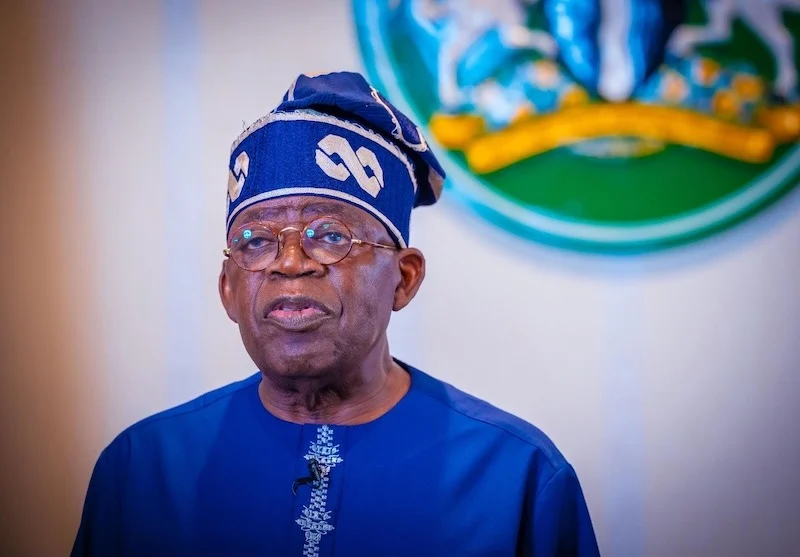
President Bola Tinubu is seeking approval for $21.67bn in fresh external borrowing, as concerns grow over the country’s rising debt burden and the lack of detailed information on the projects expected to be financed with the funds.
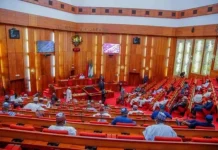
The proposed borrowing comprises $20.52bn and €1.045bn under the Federal Government’s 2026-2027 external borrowing plan. The request was conveyed in a letter read by Senate President Godswill Akpabio during plenary on Tuesday.
Tinubu said the proposed investments would support infrastructure development, create jobs, promote skills acquisition and entrepreneurship, reduce poverty and improve food security. He also argued that external borrowing was necessary to address Nigeria’s infrastructure financing gap.
However, the borrowing request does not provide details of individual projects, their expected financial returns or whether alternative sources of financing have been considered. The absence of this information makes it difficult to assess the economic justification for the proposed loans and determine which projects could attract private investment.
For commercially viable infrastructure, options such as concessions and public-private partnerships could reduce the government’s immediate financing requirements. Projects with broader social benefits, however, may still require public funding.
The request comes as Nigeria’s public debt continues to rise. Data from the Debt Management Office show that total public debt reached N166.79tn at the end of June 2026, compared with N87.37tn in June 2023.
If the proposed loans are fully approved, disbursed and added to existing obligations, public debt could approach N200tn, depending on exchange rates and other debt movements.
The increase has continued despite higher government revenue following reforms that include petrol subsidy removal, foreign exchange liberalisation and changes to the tax system.
Nigeria’s total revenue collection rose from N6.8tn five years ago to N28.7tn in 2025, while the revenue agency is targeting N40.7tn in 2026. Federal allocations also increased from N16.28tn in 2023 to N28.78tn in 2024, according to Agora Policy.
Despite the revenue growth, the expansion of government spending and reliance on borrowing have continued to add pressure to the country’s debt position.
“The budget expanded to N68.3 trillion, and the revenue expected to fund most of that would come from borrowings, implying that the debt levels will rise. And that’s what we’re seeing now,” Ibrahim Bakare, a professor of economics at Lagos State University, said.
The latest request follows previous external borrowing approvals, including a $516.3m Deutsche Bank AG facility for the Sokoto-Badagry Superhighway. Approved about five months ago, the nine-year loan carries an interest rate capped at the Secured Overnight Financing Rate plus 5.3 percentage points annually and includes a grace period of up to three years.
In March, the National Assembly also approved a $6bn external borrowing plan. It comprised a $5bn facility from First Abu Dhabi Bank to support the national budget and a $1bn UK export-finance facility arranged by Citibank for the rehabilitation of Tin Can Island Port and Lagos Port Complex.
Eze Onyekpere, lead director of the Centre for Social Justice, said the priority should be how borrowed funds are used, rather than borrowing itself.
“We do not have much problem with collecting loans, but what you actually do with borrowed funds, and so that is the critical challenge of Nigeria. The law is clear that you only borrow for capital expenditure, capital regenerative expenditure or human capital development,” he said.
Economists have proposed alternative ways of financing infrastructure without relying exclusively on additional government debt.
Sylvester Anaba, head of research at United Capital, said the government should distinguish between the value of projects being proposed and the capital actually committed by investors.
“The critical question is not merely whether Nigeria can attract $78.5 billion, but whether it can structure and execute the projects in ways that make them sufficiently attractive to private investors without transferring excessive risks and liabilities back to the government,” he said.
Ayo Teriba, chief executive officer of Economics Associates, argued that equity financing could allow investors to share ownership and risks without imposing fixed interest obligations on the government.
One option is to attract domestic and foreign equity investors, including private equity firms, infrastructure funds and sovereign wealth funds, to commercially viable projects in exchange for ownership stakes and future profits.
Teriba said broader access to investment opportunities could help mobilise capital and support efforts to reduce borrowing costs.
“The more equity you can raise, the more you can use equity to refinance outstanding debt and crash interest rates,” he said.
Another option is to unlock the value of underused public assets through restructuring, concessions, long-term leases and strategic divestments. PwC estimates that N180tn in trapped, dead and idle assets could be made more productive.
Pension funds, insurers and asset managers could also provide long-term infrastructure financing through project bonds, equity investments and professionally managed funds. Nigeria’s pension assets rose by 51 per cent to N31.48tn, according to the National Pension Commission.
However, such investments would require credible projects, competitive returns, adequate liquidity and safeguards for contributors’ savings.
Electricity market reforms were also identified as a potential source of investment. Rafiq Raji, a member of BusinessDay’s Board of Economists, called for greater liberalisation of the electricity market and a willing-buyer, willing-seller model for electricity and gas pricing.
He estimated that at least $50bn could be mobilised from commercial banks, pension funds and African development finance institutions to support an estimated $12bn annual financing requirement for a liberalised electricity sector.
Public-private partnerships and diaspora investment offer further options. Under these arrangements, private companies could finance, build and operate infrastructure such as roads, ports, terminals and electricity facilities, recovering their investments through tolls, tariffs and user charges.
Anaba warned, however, that poorly structured government guarantees and minimum-revenue commitments could create future liabilities for taxpayers.
He also stressed the need for credible feasibility studies, predictable cash flows and clear risk-sharing arrangements, noting that high interest rates, inflation and exchange rate volatility could weaken project returns, particularly when project costs are denominated in foreign currencies but revenue is earned in naira.
THE ISSUES
The borrowing request places the need for infrastructure investment alongside concerns about debt sustainability and transparency in public spending.
Without project-level details, lawmakers and the public cannot readily assess the expected economic returns, the risks attached to the proposed investments or whether private financing would be more suitable for some projects.
The rise in revenue has not prevented public debt from increasing substantially since 2023. This makes the quality of expenditure and the returns generated by borrowed funds important considerations for future fiscal management.
Alternative financing methods could reduce the government’s immediate borrowing needs, but they would require commercially viable projects, transparent arrangements and careful management of risks. Private investment does not automatically eliminate public liabilities, particularly where government guarantees are involved.
WHAT’S BEING SAID
“In light of the need for significant infrastructure investment in the country and the vast financial resources needed to address this gap, it has become essential to pursue broader external borrowings to close the financing shortfall,” President Bola Tinubu said.
“We do not have much problem with collecting loans, but what you actually do with borrowed funds, and so that is the critical challenge of Nigeria. The law is clear that you only borrow for capital expenditure, capital regenerative expenditure or human capital development,” Eze Onyekpere, lead director of the Centre for Social Justice, said.
“The critical question is not merely whether Nigeria can attract $78.5 billion, but whether it can structure and execute the projects in ways that make them sufficiently attractive to private investors without transferring excessive risks and liabilities back to the government,” Sylvester Anaba, head of research at United Capital, said.
WHAT’S NEXT
The National Assembly will consider Tinubu’s external borrowing request. The source does not specify when lawmakers will conclude their review or whether the proposal will be approved in full.
Further details on the projects to be financed, their expected returns and the terms of the proposed facilities would help clarify the economic case for the borrowing.
The proposed alternatives to additional debt also depend on the government’s ability to structure bankable projects, attract investors and manage financial risks without creating new contingent liabilities.
BOTTOM LINE
Tinubu’s request for $21.67bn in external loans comes as Nigeria’s public debt continues to rise despite stronger revenue collection. The central issue is whether the proposed borrowing will finance projects that deliver sufficient economic and social benefits, and whether alternative funding sources could reduce the government’s dependence on debt.