









By Emmanuella Opara | October 19th 2026
KEY POINTS
- The Nigerian Society of Economic Geologists says Nigeria must develop local capacity to process minerals and retain more value within the economy.
- Kaduna State Governor Uba Sani calls for responsible exploration, credible investment and stronger regulatory institutions.
- The Emir of Zazzau raises concerns about unauthorised mining and the displacement of residents from their ancestral lands.
- Stakeholders urge environmentally responsible mining that creates jobs and benefits host communities.
MAIN STORY
The Nigerian Society of Economic Geologists (NSEG) has urged Nigeria to move beyond exporting unprocessed minerals by investing in local processing, technical expertise and infrastructure to increase the economic value derived from its mineral resources.
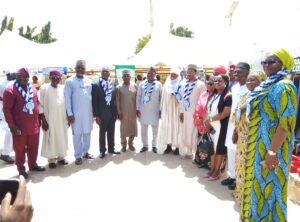
The society’s president, Dr Abdulrasaq Garba, made the call on Monday at its 5th Annual International Conference and Exhibition in Kaduna, where stakeholders discussed ways to improve mineral exploration and strengthen the country’s mining industry.
Garba said Nigeria needed a skilled workforce, adequate infrastructure, technical capacity and industrial partnerships to retain more value from its mineral resources rather than relying on the export of raw materials.
The conference, themed “Unlocking the Earth’s Mineral Potential; Innovation and Discovery for Future Resources”, focused on the challenges and opportunities in mineral development and the role of the sector in diversifying the economy.
Garba said economic geologists provided the scientific foundation for viable mineral projects through their work in structural controls, geochemistry, geophysics and ore-forming mechanisms.
He also highlighted the society’s efforts to expand its professional network, including the inauguration of zonal chapters in Ibadan and Abuja. He said the first volume of its Bulletin of Economic Geology had been completed and would soon be available online to support knowledge development.
The society also acknowledged its collaboration with the Nigerian Mining and Geosciences Society and other organisations, including their involvement in organising the 10th Short Course on African Metallogeny of the Society for Geology Applied to Mineral Deposits in Ibadan.
Garba warned against allowing market enthusiasm to drive mineral development, advocating transparent and environmentally responsible approaches to exploration, production and value addition.
Kaduna State Governor Uba Sani, represented by the Commissioner for Environment, Abubakar Buba, said the conference could support economic diversification, industrialisation, job creation and sustainable development.
The governor said the country needed to translate its mineral wealth into economic opportunities and improved livelihoods through responsible exploration, credible investment and local processing.
“As a government, we recognise the solid mineral sector as a strategic driver of economic growth.
“We must therefore promote responsible exploration, attract credible investment, encourage local mineral processing and value addition,” Sani said.
He called for stronger regulatory institutions and improved infrastructure to make the mining industry more competitive.
Sani also said Kaduna State had opportunities to attract investment in exploration, mining, processing and mineral-based industries. He urged stakeholders to ensure that mineral development generated employment, supported local businesses and improved community livelihoods, while protecting the environment and ensuring that host communities shared in the benefits.
In a goodwill message, the Emir of Zazzau, Ahmad Bamalli, represented by the Waziri of Zazzau, Khadi Aminu, called for greater transparency and effective regulation of mineral exploration.
Bamalli expressed concern over reports of unauthorised miners displacing residents from their ancestral lands, warning that local communities should not be forced to leave their homes to accommodate unregulated mining activities.
“We must insist on mining activities to be properly controlled and regulated. What we see now is a sort of crude way of mining, it should be eliminated,” Bamalli said.
He urged economic geologists and policy experts to develop practical recommendations that would balance commercial mining with the welfare of host communities. He also called for compliance with due process and national interests in mineral investigations.
THE ISSUES
Nigeria’s mineral resources offer opportunities to expand industrial production, create jobs and diversify government revenue. However, exporting minerals without processing them locally limits the amount of economic value retained within the country.
Developing domestic processing capacity requires investment in infrastructure, technical skills and partnerships between mining operators and industrial businesses. Effective regulation is also necessary to promote responsible exploration and curb unauthorised activities.
The concerns raised at the conference over the displacement of residents highlight the need to protect host communities and ensure that mining benefits are shared fairly.
WHAT’S BEING SAID
“We must therefore promote responsible exploration, attract credible investment, encourage local mineral processing and value addition,” Uba Sani, Governor of Kaduna State, said.
“We must insist on mining activities to be properly controlled and regulated. What we see now is a sort of crude way of mining, it should be eliminated,” Ahmad Bamalli, Emir of Zazzau, said.
WHAT’S NEXT
The conference is expected to produce recommendations on mineral exploration, local processing, regulation and sustainable mining. Stakeholders have urged participants to translate their discussions into practical measures and investment that support the mining industry while protecting host communities and the environment.
BOTTOM LINE
Nigeria’s mineral wealth can contribute more to economic development if the country expands local processing, strengthens regulation and invests in the skills and infrastructure needed for a competitive mining industry. Responsible operations must also protect communities and ensure that the benefits of extraction are shared fairly.



 has urged Nigeria to move beyond exporting unprocessed minerals..........................)