Key Points
- Societal expectations that men must be strong, independent, and emotionally tough can discourage them from acknowledging depression or seeking professional help.
- Depression in men may manifest as irritability, aggression, social withdrawal, excessive drinking, sleep disturbances, and loss of interest in everyday activities.
- Mental health experts warn that suppressing emotions can worsen psychological distress, damage relationships, and affect workplace performance.
- Families, employers, and healthcare providers have important roles to play in creating supportive environments where men feel safe discussing their mental health.
- Early recognition, professional intervention, and open conversations can help men manage depression before it becomes more severe.
Main Story
For many men, saying “I’m not okay” can feel harder than enduring the pain itself.
From childhood, some boys are taught to be tough, hide their tears, and face their problems without showing vulnerability. As they grow older, these expectations can become deeply ingrained, shaping how they handle disappointment, fear, loneliness, and emotional distress.
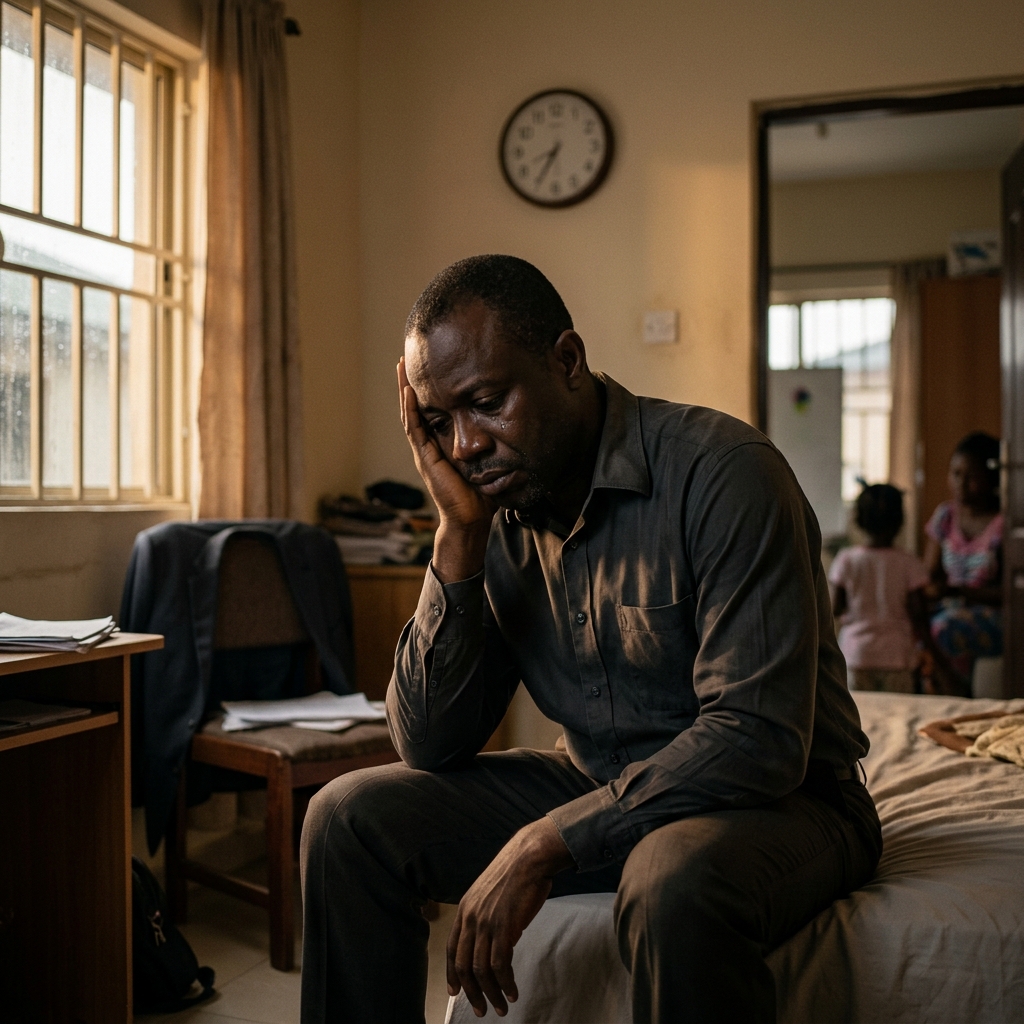
A man struggling with depression may continue going to work, providing for his family, and responding to friends as though everything is fine. Behind the appearance of normality, however, he may be dealing with persistent sadness, exhaustion, hopelessness, or a sense that life has lost its meaning.
Rather than asking for help, some men choose silence.
Mental health experts warn that societal expectations surrounding masculinity can discourage men from acknowledging depression and seeking professional care, potentially allowing their symptoms to worsen.
Prof. Taiwo Obindo, Professor of Psychiatry at the University of Jos and Chairman of the Faculty of Psychiatry, West African College of Physicians, Nigeria Chapter, said cultural expectations often influence how men respond to emotional difficulties.
Speaking in an interview with the News Agency of Nigeria, Obindo explained that some men suppress their symptoms because they believe showing emotional vulnerability contradicts society’s expectations of masculinity.
According to him, this suppression can contribute to prolonged psychological distress and make symptoms more difficult to manage.
The consequences can extend beyond sadness. Men experiencing depression may become unusually irritable, aggressive, withdrawn, or increasingly unable to function effectively at home and at work.
Obindo identified sleep and appetite disturbances, weight loss, poor memory, reduced libido, nightmares, hallucinations, and suicidal thoughts among the possible warning signs requiring attention.
He stressed that men should not be prevented from expressing their emotions.
His message challenges a familiar social expectation: that a man must always remain composed, regardless of what he is experiencing internally.
“Men can be depressed. Men can have issues, and therefore men do cry. And so expression of their emotion should not be restricted,” he said.
For men who have spent years concealing their struggles, accepting this idea may be an important first step towards seeking help.
The Issues
The problem is not that men are naturally less willing to discuss their feelings. Rather, some grow up in environments ,
where emotional expression attracts ridicule, criticism, or shame.
A boy who is repeatedly told to stop crying may eventually learn to hide his sadness.
A young man who is mocked for admitting fear may become reluctant to discuss his struggles as an adult.
Over time, silence can become a coping mechanism.
This pressure may become particularly difficult when men are expected to provide financially, protect their families, maintain successful careers, and solve problems without asking for assistance.
Financial difficulties, unemployment, relationship breakdowns, family responsibilities, and unmet personal expectations can add to the strain.
For some men, the fear of appearing incapable may become another burden on top of the original problem.
Anthony Ezeobele, a clinical psychology scholar at Lagos State University, said societal expectations of masculinity, fear of judgement, and family responsibilities could discourage men from seeking help.
He noted that untreated depression could contribute to severe emotional distress, anxiety, substance misuse, physical exhaustion, sleep problems, and, in some cases, suicide.
When men struggle to communicate their distress, the consequences may also affect their relationships.
A partner may interpret withdrawal as a lack of interest. Children may experience a father’s emotional distance without understanding its cause. Colleagues may notice declining performance without recognising the psychological difficulties behind it.
Some men may express their distress through anger or excessive drinking rather than openly discussing sadness.
These behaviours do not automatically mean someone has depression, but persistent changes in mood, habits, relationships, and daily functioning should not be dismissed.
The danger is that a man may continue struggling until his condition begins to affect nearly every part of his life.
What’s Being Said
Mental health professionals are calling for a change in how families, workplaces, and communities respond when men experience emotional difficulties. Ezeobele emphasised that seeking professional help should not be treated as a sign of weakness.
“Seeking help for depression is a sign of strength, not weakness,” he said.
The message is particularly important in environments where men may fear losing respect if they admit that they are struggling.
For families and friends, support can begin with listening without judgement. Instead of dismissing a man’s concerns or telling him to toughen up, loved ones can ask how he is feeling, give him room to speak, and encourage professional assistance when necessary.
Employers also have a role to play.
Obindo urged families and employers to pay attention to behavioural changes, poor self-care, social withdrawal, and declining workplace performance.
He said the Mental Health Act placed responsibilities on employers regarding workers’ access to appropriate mental health services, highlighting the importance of supportive workplaces.
A workplace that takes mental health seriously can help employees seek assistance without feeling that doing so will automatically damage their professional standing.
However, support must extend beyond policies and awareness campaigns. Men need access to qualified mental health professionals, affordable services, and confidential environments where they can discuss their concerns.
Exercise may also help some people manage stress and emotional tension, but it should not replace professional assessment and treatment when depression is present.
Midlife Crisis: When Expectations Collide With Reality
For some men, emotional distress becomes particularly noticeable during midlife, when personal expectations meet the realities of ageing, relationships, finances, and career progression.
Obindo said a midlife crisis could arise from unmet expectations, hormonal changes, and societal pressures.
A man who expected to achieve financial security, advance professionally, or reach certain personal milestones may feel disappointed when life takes a different direction.
These feelings can influence relationships, confidence, and decision-making.
Ezeobele similarly noted that midlife difficulties could produce stress, dissatisfaction, and confusion, potentially affecting family relationships.
However, a midlife crisis is not a universal experience, and not every man who feels dissatisfied during this period has depression.
The important distinction is whether emotional difficulties persist, interfere with daily life, or become increasingly difficult to manage.
Families should avoid dismissing these experiences as a normal part of getting older. Where symptoms are concerning, encouraging a professional assessment is more helpful than making assumptions.
What’s Next
Addressing depression among men requires more than telling them to speak up. It also requires changing the conditions that make speaking up difficult. Schools and families can teach boys that expressing emotions is a healthy part of growing up. Community leaders can challenge the idea that masculinity requires emotional silence. Employers can improve access to mental health support, while healthcare providers can encourage early assessment and treatment.
Public conversations should also recognise that depression does not look the same in everyone.
A man may not always describe himself as sad. He may talk about exhaustion, become unusually irritable, lose interest in activities he once enjoyed, or withdraw from people close to him.
Recognising these changes can help families and friends respond with concern rather than criticism.
Men experiencing persistent emotional difficulties should be encouraged to speak with a qualified healthcare professional. If someone expresses suicidal thoughts or appears to be in immediate danger, they need urgent professional assistance rather than being left to cope alone. Progress will depend on making emotional honesty acceptable in everyday life, not simply during public awareness campaigns.
Bottom Line
The idea that men must always be strong can leave some of them fighting battles that nobody else knows about. Behind the silence may be depression, fear, exhaustion, or the pressure to meet expectations that feel impossible to fulfil. But emotional pain does not make a man less capable, less responsible, or less worthy of respect.
Recognising depression, speaking honestly, and seeking professional help are not failures of masculinity. They are practical steps towards protecting one’s health and rebuilding a sense of control.
Families, friends, employers, and communities all have a part to play in making those steps easier.
Sometimes, the strongest thing a man can do is admit that he is struggling and allow someone to help.