








By Emmanuella Opara Isioma | October 12th 2026
KEY POINTS
- -NRM presidential candidate Esther Okereke unveils her ESTHER agenda for addressing Nigeria’s economic and social challenges.
- -She proposes a N500,000 minimum wage, saying the current wage structure cannot adequately meet workers’ needs.
- -Her blueprint targets 20,000 megawatts of electricity generation and 500,000 technology jobs annually.
- -She proposes using recovered stolen public funds to finance infrastructure projects.
- -Okereke also promises improvements in education, security, healthcare, housing and social welfare.
MAIN STORY
National Rescue Movement (NRM) presidential candidate Esther Okereke has proposed a N500,000 minimum wage, 20,000 megawatts of electricity generation and 500,000 technology jobs annually as part of her plans for Nigeria ahead of the 2027 general elections.
Okereke said her campaign was built around a policy blueprint she described as a practical response to the country’s longstanding economic and social challenges.
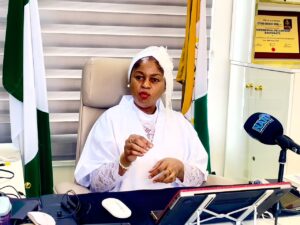
Speaking during an interview in Abuja on Sunday, she said her emergence as the party’s flagbearer reflected the need to address what she characterised as systemic failure in Nigeria.
She argued that the number of presidential candidates contesting the 2027 election indicated the need for a different approach to governance.
“For over 20 years, some sets of people had done the same thing repeatedly and getting the same result, which is the same result of systemic failure, that is why we’re here on a rescue mission,” she said.
Okereke said her proposed framework, known as the ESTHER agenda, was organised around six pillars covering energy, education and economic renaissance; security and social welfare; technology, transformation and transparency; healthcare and housing; enterprise and employment; and resuscitation, recovery and reorientation.
On electricity, she proposed generating 20,000 megawatts and expanding the use of mini-grids to supply communities while strengthening the national grid.
“It’s not rocket science. We start with having mini-grids here and there and leave the national grid to breathe while empowering it for more. Then you have the mini-grids to supply to communities,” she said.
She also pledged to improve educational facilities, citing schools where pupils reportedly sit on classroom floors because of inadequate infrastructure.
Okereke said access to basic amenities should be treated as a right and not as charity.
On employment, she proposed creating 500,000 technology jobs for young people annually. She said technology would also be central to improving transparency and tackling corruption in public administration.
“Most of the things we will do would have to be with technology. You don’t just remove corruption; you kill it with technology,” she said.
The NRM candidate also promised measures to improve security, social welfare and access to affordable housing, particularly for low- and middle-income earners.
She said her proposed N500,000 minimum wage was based on the decline in the naira’s purchasing power and the difficulty workers face in meeting their daily needs.
To explain her position, Okereke recalled earning N2,500 monthly in Abuja in 1997, saying she could cover her expenses and support members of her family with the salary at the time.
She argued that a proposed N100,000 minimum wage would not adequately address workers’ needs or help tackle corruption.
Under her plan, workers earning N500,000 would be able to subscribe to low-cost housing and access proposed transport services involving electric vehicles and compressed natural gas (CNG) buses.
She proposed a dedicated card system linked to workers’ allowances, through which monthly transport subscriptions and utility bills would be deducted electronically.
According to her, workers would have at least N300,000 remaining at the end of the month after the proposed deductions.
Okereke cited Singapore as an example of a country that developed its economy by identifying and investing in areas of competitive strength, including trade and electronics.
She argued that Nigeria could achieve greater economic progress by making better use of its natural resources and investing in its people, particularly young people and women.
She described the country’s human capital as an important economic asset and said inadequate opportunities at home contributed to Nigerians seeking opportunities abroad.
On economic recovery, the presidential candidate proposed recovering stolen public wealth and channeling the proceeds into a proposed National Recovery Infrastructure Fund.
She said the fund would support infrastructure development, including road construction and mini-grid projects.
Okereke also proposed expanding the responsibilities of Nigerian embassies to include efforts to strengthen the relationship between Nigerians in the diaspora and their home country.
She cited her experience in real estate, hospitality, sports, entertainment and production, where she said she had close to 200 staff members across different sectors, as part of her preparation for national leadership.
THE ISSUES
Okereke’s blueprint centres on electricity, employment, wages, infrastructure and the use of technology in public administration.
Her proposed targets include 20,000 megawatts of electricity generation, 500,000 technology jobs annually and a N500,000 minimum wage. However, the interview did not provide detailed timelines, cost estimates or financing arrangements for implementing these proposals.
The minimum wage proposal would also require further details on how the government intends to meet the associated wage costs and how the policy would affect public finances, businesses and workers’ purchasing power.
Similarly, the proposed technology employment programme and electricity target would depend on implementation plans, infrastructure investment and funding.
Her plan to finance infrastructure through recovered public funds would require details on how the funds would be identified, recovered, managed and allocated.
WHAT’S BEING SAID
“For over 20 years, some sets of people had done the same thing repeatedly and getting the same result, which is the same result of systemic failure, that is why we’re here on a rescue mission.”
“It’s not rocket science. We start with having mini-grids here and there and leave the national grid to breathe while empowering it for more. Then you have the mini-grids to supply to communities.”
“You don’t just remove corruption; you kill it with technology.”
WHAT’S NEXT
As the 2027 elections approach, Okereke’s proposals will need to be developed into detailed implementation plans, including funding arrangements and timelines.
The proposed minimum wage, electricity generation target, annual technology job creation programme and infrastructure recovery fund are among the major policy commitments to watch as the campaign progresses.
BOTTOM LINE
Okereke has outlined an economic and social policy agenda featuring a N500,000 minimum wage, 20,000 megawatts of electricity generation and 500,000 technology jobs annually. The proposals form the core of her ESTHER agenda, although detailed implementation and funding plans were not provided in the interview.









 presidential candidate Esther Okereke has proposed a N500,000 minimum wage, 20,000 megawatts..................)