By Emmanuella Opara Isioma | October 10th 2026
KEY POINTS
- -Lagos State Governor Babajide Sanwo-Olu and business experts have called on organisations to combine profitability with ethical leadership, accountability and sustainable business practices.
- -Speakers at the Institute of Chartered Secretaries and Administrators of Nigeria’s 60th anniversary and 50th Annual Conference said responsible business practices could support Nigeria’s ambition of building a one-trillion-dollar economy by 2030.
- -Former Nigerian Exchange Group chief executive Oscar Onyema said aligning commercial success with long-term stakeholder interests could strengthen profitability and public confidence.
- -Business consultant Biodun Adedipe highlighted the importance of economic viability, environmental protection, social responsibility and effective governance.
- -ICSAN President Uto Ukpanah disclosed that a bill seeking to rename the institute the Chartered Governance Institute of Nigeria had passed second reading in the Senate.
- -Ukpanah said the institute’s new national secretariat was at an advanced stage of development, with completion and commissioning expected before the end of her tenure in July 2027.
MAIN STORY
Lagos State Governor Babajide Sanwo-Olu and economic experts have called on Nigerian businesses to prioritise ethical leadership, effective corporate governance and sustainability alongside profit-making, saying responsible business practices are important to long-term economic growth.
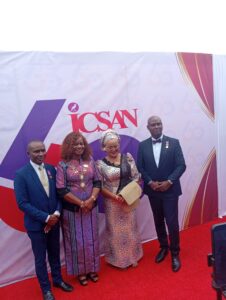
The speakers made the call at the 60th anniversary celebration and 50th Annual Conference of the Institute of Chartered Secretaries and Administrators of Nigeria (ICSAN), held in Lagos on Friday.
The conference, themed “Balancing Profit and Purpose: Advancing Sustainable Business Practices in Emerging Economies,” examined how businesses could maintain financial performance while meeting their responsibilities to employees, customers, investors, communities and the environment.
Represented by the Secretary to the Lagos State Government, Bimbola Salu-Hundeyin, Sanwo-Olu said sound corporate governance was necessary for effective decision-making, risk management, accountability and institutional resilience.
He noted that business performance was increasingly judged not only by the profits organisations generated but also by how they earned those profits, treated their stakeholders and contributed to society.
According to the governor, Nigeria needs businesses that can create employment, attract investment and compete internationally without compromising integrity and responsibility.
He also highlighted the growing need for effective governance as organisations adopt artificial intelligence, digital finance and data analytics in their operations.
Sanwo-Olu said the opportunities presented by these technologies must be accompanied by adequate oversight, transparency and accountability.
“Innovation must be matched by governance, and growth must be matched by responsibility,” he said.
The governor urged ICSAN to support business leaders and public institutions in developing clear standards for board oversight of artificial intelligence and the use of data.
He also called for stronger cooperation between the institute, the Lagos State Government and private-sector organisations to improve governance across public institutions and businesses.
Profitability and purpose
Former Group Chief Executive Officer of Nigerian Exchange Group, Oscar Onyema, said businesses should pursue profitability while contributing to sustainable development and national prosperity.
He identified economic uncertainty, technological disruption and rising stakeholder expectations as factors making responsible business leadership increasingly important.
Onyema argued that profitability and purpose should be treated as complementary objectives rather than competing priorities.
“Properly aligned, purpose strengthens profitability, while profitability provides the resources to sustain purpose,” he said.
Drawing on his experience in capital markets and corporate leadership, Onyema said company secretaries and governance professionals had assumed a more strategic role in organisations.
He described them as trusted advisers to boards and promoters of institutional integrity, extending beyond their traditional responsibilities for compliance.
He encouraged conference participants to concentrate on improving governance, connecting commercial success with long-term stakeholder value and building institutions capable of attracting investment and maintaining public confidence.
According to him, these priorities are important for businesses seeking to remain competitive and sustainable amid changing economic and technological conditions.
Sustainability as a business priority
Chief Consultant of B. Adedipe Associates Ltd., Biodun Adedipe, said sustainable business practices require organisations to consider people, the environment and profit when making decisions.
He explained that the triple-bottom-line approach places these three considerations at the centre of business operations.
Adedipe identified economic viability, environmental responsibility, social accountability and effective governance as the major pillars of sustainable business practices.
He said organisations should strengthen risk management, improve operational efficiency, conserve energy and water, reduce waste and protect employees and customers.
He also stressed the need for ethical conduct and transparent reporting as part of efforts to establish responsible business practices.
Adedipe identified stakeholder expectations, regulatory requirements, climate change, investor interest in environmental, social and governance performance, technological progress and international sustainability commitments as factors driving businesses towards more responsible operations.
He said adopting sustainable practices could help organisations lower operating costs, improve resilience, attract local and international investment, build customer trust and gain access to global supply chains.
The consultant urged business leaders to consider the long-term impact of their decisions and the condition in which they would leave their organisations.
He challenged them to assess whether their businesses would become stronger, more responsive to stakeholders and more profitable over time.
ICSAN outlines priorities at 60
ICSAN President Uto Ukpanah said the institute’s 60th anniversary provided an opportunity to reaffirm its commitment to professional standards, ethical leadership, corporate administration and good governance.
She said the conference theme was particularly relevant as Nigeria pursued its ambition of becoming a one-trillion-dollar economy by 2030.
Ukpanah said the country needed to pay attention not only to the economic value businesses generated but also to how that value was distributed and whether it could be sustained.
She noted that organisations faced several challenges, including economic uncertainty, technological disruption, climate concerns, changing regulations and evolving stakeholder expectations.
She said businesses must respond to these pressures while maintaining responsible practices and strong governance standards.
The ICSAN president also reported progress on the institute’s new national secretariat, describing the project as being at an advanced stage.
She expressed hope that the building would be completed and commissioned before the end of her tenure in July 2027.
Ukpanah acknowledged the contributions of institute members and other stakeholders, including the Lagos State Government, towards the project.
“We would not have been able to do this without the support of members in this hall, members online, members across the footprint of ICSAN,” she said.
She added: “We would not have been able to do it without the donations from various stakeholders, including the Lagos State Government and so I use this opportunity to urge everyone in this room, please be in this project.”
Proposed change to ICSAN’s name
Ukpanah disclosed that a bill seeking to change the institute’s name to the Chartered Governance Institute of Nigeria and expand its mandate had passed second reading in the Senate in June.
She said ICSAN was working towards securing the bill’s passage before the end of the 10th National Assembly.
According to her, the proposed change reflects the international development of governance as a professional discipline and is intended to position the institute to respond more effectively to emerging governance needs.
She urged members and stakeholders to support the institute’s development projects and its efforts to strengthen the governance profession in Nigeria.
THE ISSUES
The conference focused on how Nigerian businesses can pursue growth without neglecting ethical conduct, accountability and their responsibilities to society.
For organisations, the challenge is to balance immediate financial targets with long-term considerations, including environmental protection, employee welfare, customer interests and investor confidence.
The discussions also highlighted the implications of emerging technologies for corporate governance. As businesses adopt artificial intelligence, digital finance and data analytics, boards and management teams face the need to ensure that these tools are used responsibly and subject to appropriate oversight.
Another issue is the role of governance professionals in strengthening institutions. The speakers emphasised that company secretaries and other governance specialists can contribute to board decisions, risk management and institutional integrity beyond routine compliance responsibilities.
The conference also linked responsible business practices to Nigeria’s economic ambitions, with speakers arguing that sustainable and well-governed organisations could improve investment prospects, operational efficiency and access to international markets.
WHAT’S BEING SAID
Babajide Sanwo-Olu, Lagos State Governor:
“Innovation must be matched by governance, and growth must be matched by responsibility.”
Oscar Onyema, former Group Chief Executive Officer of Nigerian Exchange Group:
“Properly aligned, purpose strengthens profitability, while profitability provides the resources to sustain purpose.”
Uto Ukpanah, ICSAN President:
“We would not have been able to do this without the support of members in this hall, members online, members across the footprint of ICSAN.”
“We would not have been able to do it without the donations from various stakeholders, including the Lagos State Government and so I use this opportunity to urge everyone in this room, please be in this project.”
WHAT’S NEXT
ICSAN is working to secure the passage of the bill proposing its renaming as the Chartered Governance Institute of Nigeria before the end of the 10th National Assembly.
The institute also expects to complete and commission its new national secretariat before Ukpanah’s tenure ends in July 2027.
Meanwhile, the calls made at the conference place responsibility on businesses, public institutions and governance professionals to strengthen accountability, improve oversight of emerging technologies and incorporate sustainability into their operations.
BOTTOM LINE
Sanwo-Olu and economic experts say Nigeria’s pursuit of a one-trillion-dollar economy by 2030 should be supported by businesses that combine profitability with ethical leadership, effective governance and sustainable practices. ICSAN has also outlined plans to expand its professional mandate and complete its new national secretariat.