







By Annette Ikponmwonba | September 17, 2026
Key Points
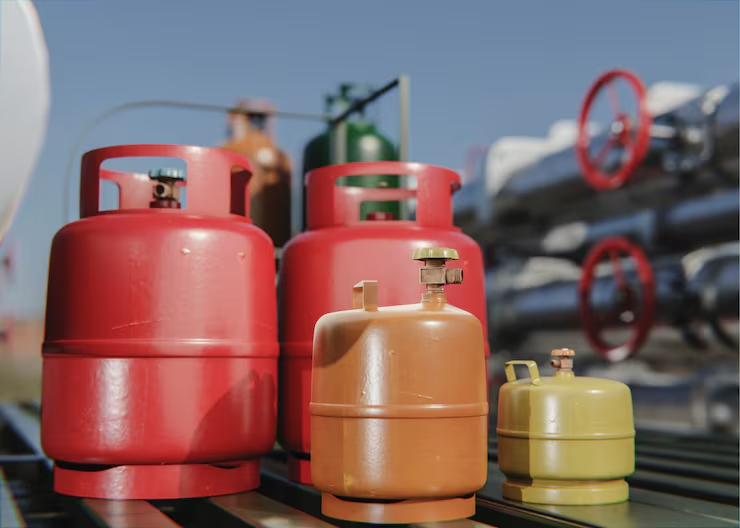
· A supply crunch triggered by the Iran war has hit LPG markets across sub-Saharan Africa, with Nigeria suffering the sharpest disruption
· Nigeria’s cooking gas demand fell to a seven month low of 123,000 tonnes in June, down almost 23 per cent from March
· Domestic production also dropped over 20 per cent due to lower plant output and maintenance at Dangote refinery’s cracker unit
· Prices later eased after the US-Iran peace deal, helping Nigeria swing to a 30,000 tonne surplus by July
· Retail LPG price fell 10 per cent to N1,491.75 per kilogramme in July as supply recovered
· Ghana and Kenya saw milder pressure, while regional infrastructure investment continues to expand
Main Story
A supply crunch triggered by the Iran war has tested Liquefied Petroleum Gas markets across sub-Saharan Africa, with Nigeria hit hardest as import constraints and falling domestic production pushed demand down by almost 23 per cent. This was disclosed in a report by energy intelligence provider Argus, which said African markets had largely withstood the disruption despite exposing weaknesses in some newer markets.
Nigeria’s demand fell to a seven month low of 123,000 tonnes in June, according to the Nigerian Midstream and Downstream Petroleum Regulatory Authority. Domestic production also dropped more than 20 per cent, driven by lower output at inland processing plants and maintenance at the Dangote refinery’s cracker unit, pushing imports up sharply to 46,000 tonnes in June from just 3,000 tonnes in May.
The Issues
The episode exposes how exposed Nigeria’s cooking gas supply remains to global shocks, especially given how concentrated domestic production is around a small number of major facilities. It also raises questions about the resilience of Nigeria’s clean cooking expansion plans, including its National Grassroots LPG Penetration Programme targeting five million homes by 2030, if similar disruptions recur.
What’s Being Said
Argus reported that easing international prices after the US-Iran peace deal helped the market recover quickly, with the butane West Africa index falling more than 40 per cent from its March peak. Domestic output also rebounded strongly in July, with Dangote refinery supplies up 71 per cent and gas processing plant output up 88 per cent, allowing Nigeria to cut back on imports.
What’s Next
The renewed resumption of US-Iran hostilities and its effect on global prices will likely determine whether Nigeria’s recovery holds. Regional infrastructure expansion, including new terminals in Kenya and Cameroon and Nigeria’s cylinder recirculation programme, will also shape supply resilience going forward.
Bottom Line
Nigeria absorbed the sharpest LPG shock in the region, but a swift recovery in production and pricing has eased the crisis, even as it highlights how vulnerable the country’s cooking gas supply remains to global volatility.