Key Points
- 51% of young South Africans named Winnie Madikizela-Mandela as Africa’s greatest female liberation fighter.
- Albertina Sisulu and Helen Joseph followed with 6% and 5%, respectively.
- Winnie Mandela was also the highest-ranked woman among leaders perceived to have sacrificed most for the anti-apartheid struggle, with 36%.
- 89% of respondents described her as one of the greatest icons of the anti-apartheid movement.
- 81% agreed that she made the greatest sacrifices among liberation leaders.
- The findings were released on South Africa’s National Women’s Day, marking 70 years since the 1956 Women’s March.
- The survey also found widespread concern among young South Africans about gender-based violence, women’s rights and the shortage of female leadership.
Main Story
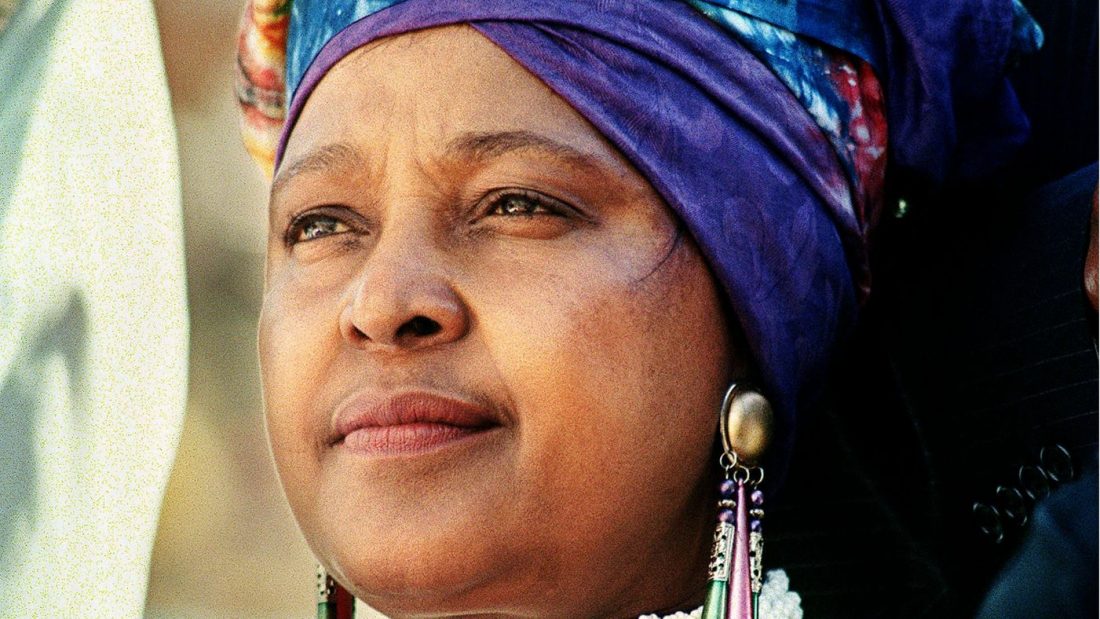
Winnie Madikizela-Mandela has emerged as the most recognised female liberation figure among young South Africans, with 51% naming her Africa’s greatest female liberation fighter in new findings from the Africa Youth Survey.
The findings, released on Monday, National Women’s Day in South Africa, show a wide margin between Madikizela-Mandela and other female liberation figures. Albertina Sisulu was named by 6% of respondents, while Helen Joseph received 5%.
The survey also ranked Madikizela-Mandela as the leading woman when respondents were asked to identify up to three people they believed sacrificed the most for the anti-apartheid movement.
She was selected by 36% of respondents, placing her behind former President Nelson Mandela, who received 61%, and one percentage point behind Steve Biko, who was selected by 37%.
The findings further indicate strong recognition of Madikizela-Mandela’s place in the anti-apartheid struggle. Eighty-nine per cent of respondents agreed that she was one of the greatest icons of the movement, including 58% who strongly agreed.
Similarly, 81% agreed that she sacrificed the most among leaders of the liberation struggle.
The survey also found that 84% of young South Africans described Madikizela-Mandela as a fallen hero who was prepared to sacrifice laws and lives in pursuit of revolution and redress, while 76% said her actions and legacy should be assessed within the context of the apartheid system.
The Issues
The findings highlight a continuing reassessment of South Africa’s liberation history among a generation born largely after the end of apartheid.
The survey data presents strong recognition of Madikizela-Mandela’s contribution while also reflecting the complexity surrounding her legacy. The findings show that young respondents are not necessarily viewing her through a purely celebratory lens, but are placing her actions within the political and social conditions of apartheid.
The results also come against the backdrop of continuing concerns about the position of women in contemporary South Africa.
Ninety-five per cent of respondents said they were concerned about gender-based violence and femicide, including 81% who described themselves as very concerned.
A further 93% expressed concern that women’s rights were not adequately protected, while 82% agreed that Africa still lacked sufficient female leaders and role models.
What’s Being Said
Ivor Ichikowitz, Founder and Commissioner of the Africa Youth Survey and Executive Producer of The Trials of Winnie Mandela, said the findings reflected how a younger generation was reassessing the country’s liberation history.
“Young South Africans see Winnie Mandela as a central protagonist in the liberation story, a woman who carried the struggle in public while paying an extraordinary private price.”
Ichikowitz said the findings suggested that young people were seeking a more comprehensive understanding of the liberation struggle rather than a simplified account of its key figures.
He also linked the findings to renewed public interest generated by The Trials of Winnie Mandela, a seven-part documentary series that premiered on Netflix in April 2026.
What’s Next
The findings form part of the Africa Youth Survey 2026, commissioned by the Ichikowitz Family Foundation and conducted by PSB Insights.
The 2026 survey interviewed 4,901 young Africans aged between 18 and 24 across 16 African countries in March 2026. According to the organisers, it is the largest edition of the recurring survey since its launch in 2020.
The survey has covered 28 African countries and more than 18,000 face-to-face interviews since its inception.
The latest findings are expected to contribute to continuing discussions about Africa’s liberation history, women’s leadership, gender-based violence and the views of the continent’s younger population.
Bottom Line
The Africa Youth Survey places Winnie Madikizela-Mandela firmly at the top of young South Africans’ ranking of female liberation figures, with 51% naming her Africa’s greatest female liberation fighter. The findings also show that admiration for her historical role exists alongside a broader demand among young South Africans for stronger female leadership, greater protection of women’s rights and action against gender-based violence.