Key points
- The Alternative Bank hosted the “Beyond Interest” forum to promote non-interest finance as a catalyst for long-term economic growth.
- Lagos Governor Babajide Sanwo-Olu said government should create conditions that attract private capital rather than compete with investors.
- Former Lagos Governor Babatunde Fashola urged investors to prioritise productive, long-term investments over short-term returns.
- Financial sector leaders called for ethical capital allocation to strengthen infrastructure, job creation and sustainable economic development.
Main story
Senior policymakers, investors and financial sector leaders have called for greater adoption of non-interest finance as a strategy for mobilising long-term capital into productive sectors of Nigeria’s economy.
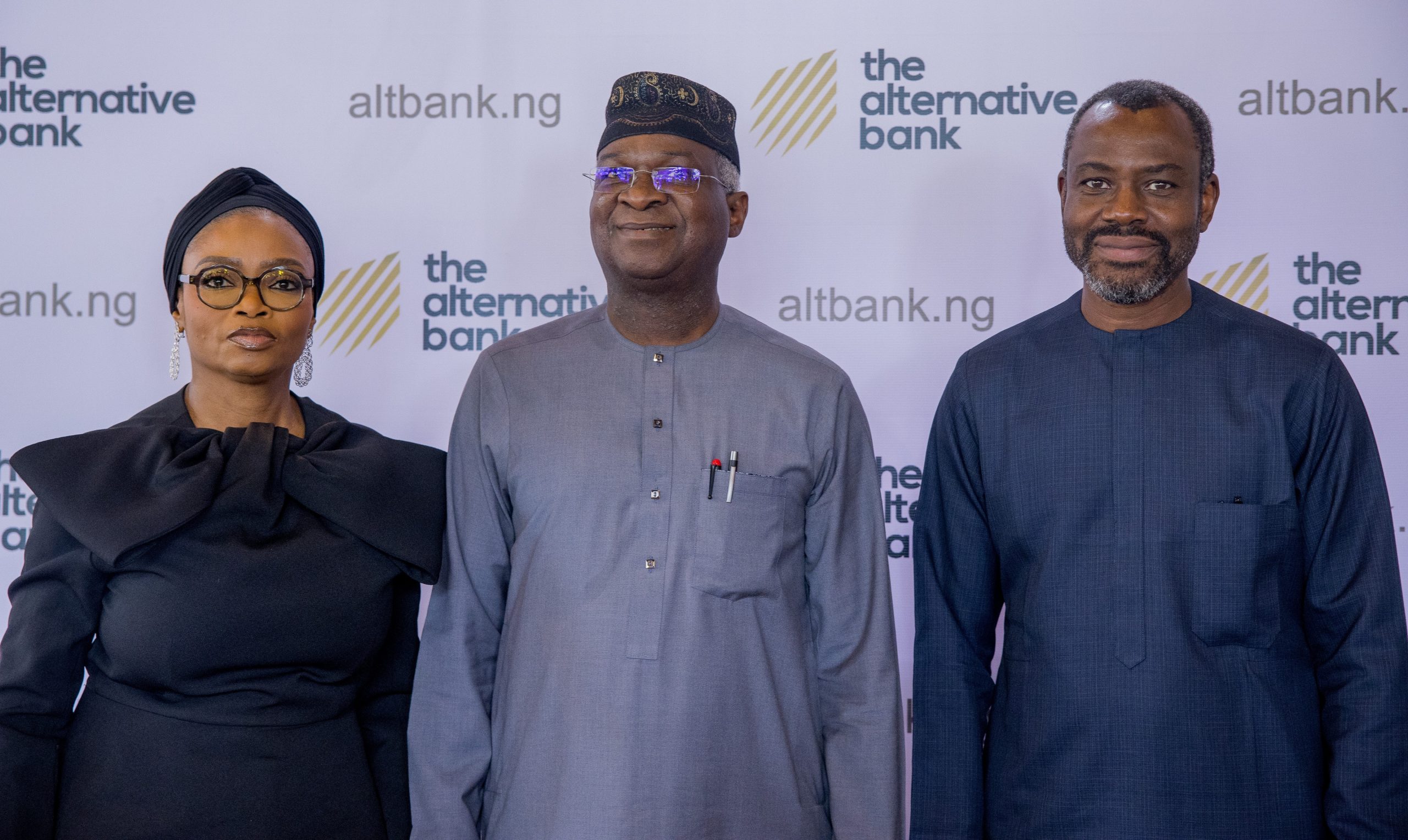
The call was made on Thursday at the “Beyond Interest” private intelligence forum organised by The Alternative Bank in Victoria Island, Lagos.
The event brought together investors, entrepreneurs, wealth creators and institutional decision-makers to explore how ethical finance can support infrastructure development, enterprise growth and sustainable wealth creation.
Chairman of The Alternative Bank, Muhtar Bakare, said Nigeria’s biggest challenge was not a shortage of capital but the absence of patient capital capable of supporting long-term economic transformation.
He said investments should be evaluated not only by the financial returns they generate but also by their ability to build productive capacity, create jobs and strengthen economic resilience.
Lagos State Governor Babajide Sanwo-Olu said government should serve as an enabler of private investment by providing infrastructure and creating a conducive business environment.
Represented by the Commissioner for Finance, Abayomi Oluyomi, the governor cited Lagos’ infrastructure programme, recent dual bond issuance and development of the Lekki corridor as examples of public investments designed to improve private-sector confidence.
Former Lagos State Governor and former Minister of Works and Housing, Babatunde Fashola urged investors to focus on financing productive assets capable of delivering lasting economic and social value rather than pursuing short-term financial gains.
Promoter of Non-Interest Banking in Nigeria and Board Member of Sterling Financial Holdings Company Plc, Abubakar Suleiman, said The Alternative Bank had evolved from a non-interest banking window established in 2014 into an institution with assets approaching ₦500 billion and nearly one million customers.
He said ethical finance should assess investments based on their impact on customers, employees, communities, infrastructure and the environment, alongside financial returns.
Suleiman cited the bank’s WasteBanc recycling initiative and Nigeria’s sovereign Sukuk programme as examples of investments capable of delivering both commercial returns and measurable developmental impact.
Also speaking, Group Chief Innovation and Technology Officer at Meristem, Dr Stanley Jacob, argued that Africa’s primary financial challenge was inadequate infrastructure rather than insufficient liquidity.
Executive Director of Tugrande Alliance Limited, Ajibola Tobi-Osho, said Nigeria’s challenge had shifted from macroeconomic instability to inefficient capital allocation, noting that significant liquidity remained parked at the Central Bank instead of financing productive businesses.
The issues
Nigeria continues to face a significant financing gap despite improved liquidity within the financial system. Experts argue that much of the available capital is concentrated in short-term investments rather than sectors capable of driving industrialisation, employment and infrastructure development. Advocates of non-interest finance believe ethical investment models can mobilise patient capital, strengthen financial inclusion and improve long-term economic productivity while delivering competitive returns.
What’s being said
“What we lack is not effort. We lack capital that stays long enough to turn effort into capacity, capacity into durable jobs and durable jobs into stability. That is why the distinction between extractive and productive capital matters.” – Muhtar Bakare, Chairman, The Alternative Bank:
“The future of finance is not only about the price of capital; it is increasingly about the quality of the economic activity that capital enables. Lagos is not only open for business; Lagos is prepared to do business.” – Babajide Sanwo-Olu, Governor, Lagos State (represented by Abayomi Oluyomi, Commissioner for Finance):
“The Alternative Bank has shown that non-interest banking can grow, win customers, and generate profit. The business case for ethical capital already exists. Our task is to apply it with discipline.” – Abubakar Suleiman, Board Member, Sterling Financial Holdings Company Plc:
What’s next
Stakeholders are expected to continue advancing discussions on expanding non-interest finance, attracting long-term investment into productive sectors and strengthening partnerships between government, financial institutions and private investors to support sustainable economic growth.
Bottom line
Participants at the forum argued that Nigeria’s long-term economic transformation will depend less on the availability of capital and more on directing patient, ethical investment towards infrastructure, businesses and productive sectors capable of creating lasting economic value.