









Key points
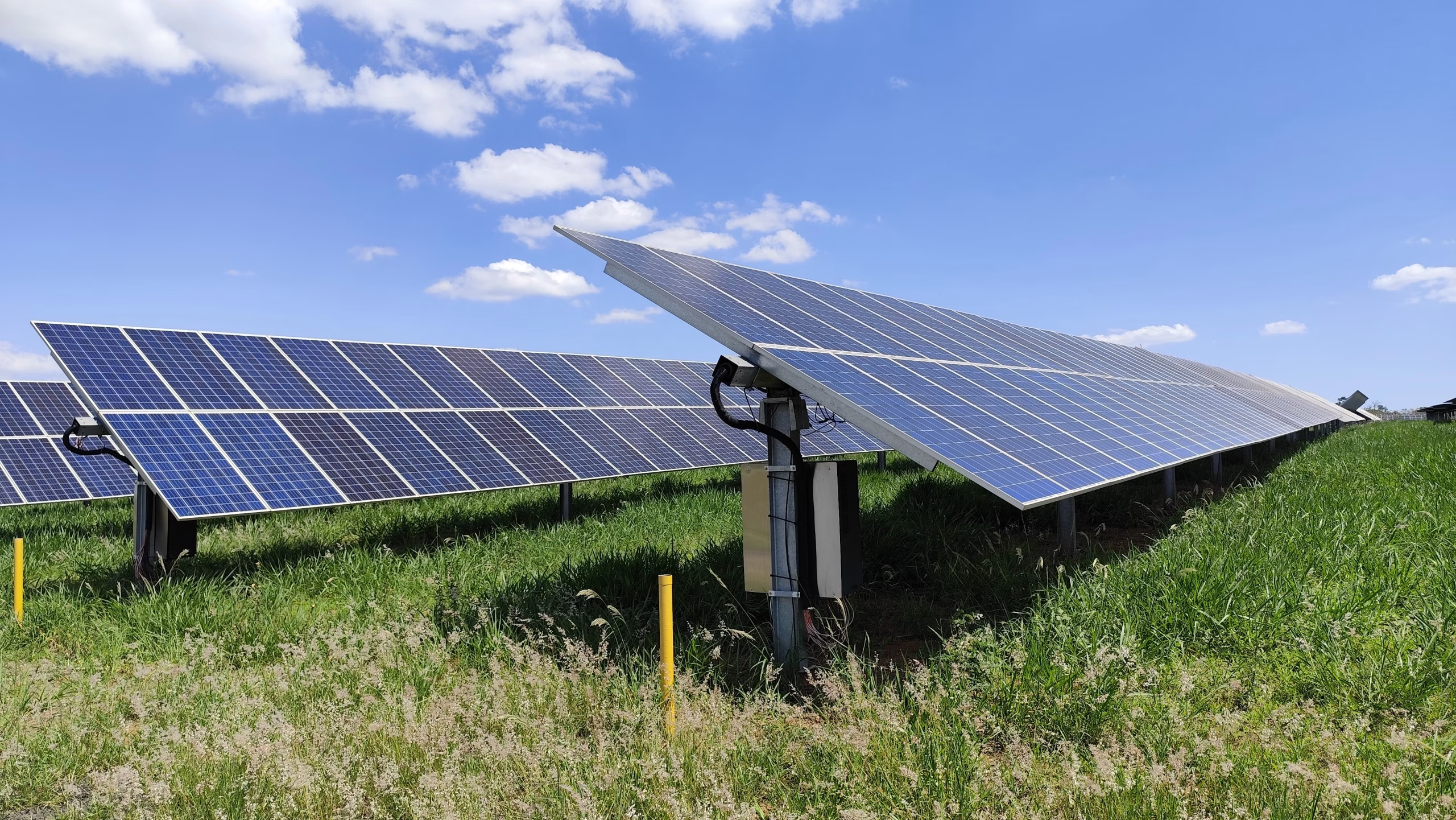
- FGC Ilorin’s 1996 alumni donated a solar-powered borehole, sports equipment and three 3D printing machines to the school.
- The projects are aimed at improving water supply, sports development and technology education.
- The alumni opposed proposals to privatise Unity Schools, warning it could limit access for low-income families.
- The school appealed for greater alumni support to complement government funding.
Main story
The 1996 alumni of Federal Government College (FGC), Ilorin, have donated a solar-powered borehole, sports equipment and three 3D printing machines to improve learning and student welfare at the school.
Speaking during the inauguration on Monday in Ilorin, the President of the 1996 class, Chukwuyere Izuogu, said the projects were designed to address key needs in water supply, sports development and technology education while giving back to the institution that shaped their lives.
He said the solar-powered borehole, fitted with an overhead tank, would provide a reliable supply of clean water for students and staff, ending recurring water shortages.
Izuogu said the sports equipment would help revive sporting activities, while the three 3D printing machines would expose students to modern design and manufacturing technologies.
According to him, one of the printers, donated by a United States-based alumnus, Shola Adekanye, is valued at about N3 million.
“The world is moving towards innovation and design. With this 3D printer, our students can now transform their ideas into prototypes, whether for footwear or other products,” he said.
On the proposed privatisation of Unity Schools, Izuogu warned that such a move could make quality education unaffordable for many Nigerian families.
He said the Federal Government’s management of the schools had helped preserve affordability while promoting national unity across ethnic, religious and socio-economic backgrounds.
Chairman of the reunion committee, Enahoro Oherein, said the projects took about six years to complete after the COVID-19 pandemic disrupted the association’s original plans.
He said the alumni initially planned to install solar lights but changed direction after discovering that other alumni sets had already undertaken similar projects.
Instead, the group rehabilitated an existing but non-functional borehole by converting it into a solar-powered water system.
Receiving the projects, the Principal of FGC Ilorin, Paul Agbo, described the intervention as a significant contribution to the school’s development.
He called for greater alumni involvement in supporting public schools, noting that government alone could not meet all infrastructure needs.
Agbo also opposed calls to privatise Unity Schools, saying they had produced generations of accomplished Nigerians from diverse backgrounds.
The 1996 alumni pledged to continue supporting the school through mentorship programmes and the maintenance of the donated facilities.
The issues
The intervention highlights the growing role of alumni associations in addressing infrastructure gaps in public schools. It also renews debate over the future of Unity Schools, with alumni and school administrators arguing that privatisation could undermine affordability and the institutions’ role in promoting national integration.
What’s being said
“The world is moving towards innovation and design. With this 3D printer, our students can now transform their ideas into prototypes.” — Chukwuyere Izuogu, President, FGC Ilorin 1996 Class.
What’s next
The solar-powered water system and other donated facilities are expected to become operational immediately, while the alumni plan to return with mentorship initiatives and continue maintaining the projects.
Bottom line
By investing in water, technology and sports infrastructure, the FGC Ilorin 1996 alumni have demonstrated how former students can complement government efforts while preserving access to quality public education.








, Ilorin, have donated a solar-powered borehole, sports equipment and three ...)