







More Nigerians Are Hearing About Renewable Energy. But What Does It Actually Mean?
Not too long ago, renewable energy was a phrase that rarely came up outside government policy papers, climate conferences or conversations among engineers. Today, it has found its way into everyday discussions in Nigeria.
Businesses are investing in solar to reduce electricity costs. More households are installing rooftop systems to rely less on generators. Banks now advertise green financing. Governments are announcing clean energy projects, while entrepreneurs are building businesses around solar panels, batteries and other energy technologies.
The subject has become impossible to ignore. Yet for all the attention renewable energy now receives, one question continues to surface.
What exactly is renewable energy?
It sounds technical, but the idea itself is remarkably straightforward. Renewable energy is simply energy that comes from sources nature keeps replacing. Unlike petrol, diesel or coal, these resources are not used up forever after one use. They are replenished naturally, allowing them to be used again and again.
Take the sun, for example. Every morning it rises whether anyone chooses to harness its energy or not. A solar panel installed on your roof today will still have sunlight to collect tomorrow, next week and next year. The same principle applies to wind, flowing rivers and even the heat stored beneath the earth’s surface. These are resources that nature continually renews. Fossil fuels work very differently. Every litre of diesel poured into a generator is gone once it has been burned. The crude oil used to produce that fuel took millions of years to form underground, yet it is consumed within a matter of hours. Once it is used, it cannot be replaced within our lifetime.
That simple distinction lies at the heart of renewable energy. It is also worth remembering that the electricity itself never changes. The light bulb in your living room shines the same way whether the electricity came from a diesel generator, a hydroelectric dam or a rooftop solar system. What changes is the source that produced the electricity in the first place. Once that idea becomes clear, understanding renewable energy becomes much less intimidating.
What Does Renewable Energy Mean?
Many explanations describe renewable energy using scientific terms, but everyday life offers a much easier way to think about it.
Imagine two wells. One is fed by a natural underground spring. Each time someone fetches water, fresh water gradually flows back into the well. It continues replenishing itself because the source never really stops. The second well has no spring beneath it. Once the water has been used up, the well remains empty until somebody fills it again. Renewable energy works much like the first well.
The source keeps returning. The sun rises every day. Rivers continue flowing after the rainy season. Crops grow again after harvest. Wind patterns change from day to day, but they never disappear permanently. Nature keeps replacing these resources without human intervention.
That does not mean renewable energy is available in exactly the same quantity every moment of every day. Solar panels produce less electricity on cloudy days than on bright sunny afternoons. Hydropower stations may generate less electricity during prolonged dry seasons when river levels fall. The important difference is that the source itself is not permanently exhausted. Unlike fossil fuels, nature restores these resources continuously. That is why they are called renewable.
What Are the Main Types of Renewable Energy?
Although renewable energy covers several technologies, most people regularly come across only a handful of them. Some are already familiar parts of Nigeria’s electricity system, while others remain largely untapped.
Solar Energy
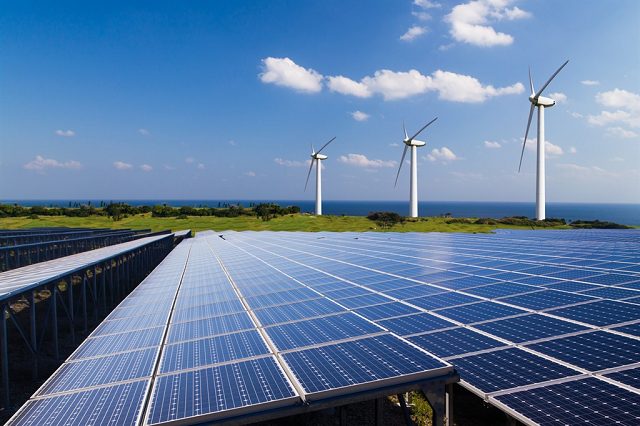
For most Nigerians, renewable energy has become almost synonymous with solar power. That is hardly surprising. Drive through many neighbourhoods in Lagos, Abuja, Port Harcourt or Ibadan today and you are likely to notice solar panels mounted on rooftops that did not have them just a few years ago. Businesses are increasingly turning to solar to reduce diesel expenses, while many households see it as a way to cope with unreliable electricity supply. Solar panels do not create energy out of thin air. They simply capture sunlight and convert it into electricity that can power homes, offices, schools, hospitals and factories.
Nigeria is particularly well suited to this technology because of its abundant sunshine throughout the year. In many parts of the country, solar systems can generate electricity for several hours every day, making them one of the country’s fastest-growing energy solutions. If you have ever seen solar panels quietly producing electricity on a neighbour’s roof while generators roar nearby, you have already seen renewable energy in action.
Hydropower
Long before rooftop solar became popular, Nigeria was already using renewable energy on a large scale. Hydroelectric power stations have supplied electricity to the national grid for decades. Instead of burning fuel, these plants rely on flowing water. As water passes through massive turbines inside a dam, it spins the machinery that generates electricity before continuing downstream. Many Nigerians who receive electricity from the national grid have probably used hydropower without ever realising it. Although hydroelectricity cannot solve all of Nigeria’s energy challenges on its own, it remains one of the country’s oldest and most important renewable energy sources.
Wind Energy
Wind energy follows a different approach. Instead of relying on sunlight or flowing water, it captures the movement of air. Large wind turbines rotate whenever the wind blows, converting that movement into electricity.
Countries such as Denmark, Germany and the United Kingdom have invested heavily in wind farms because their weather conditions make them particularly suitable for this technology. Nigeria has experimented with wind energy in some parts of the country, but it has not expanded nearly as rapidly as solar. One reason is simple. Nigeria’s greatest natural advantage lies in the amount of sunshine it receives throughout the year, making solar a more practical option for many locations.
Biomass Energy
Not every form of renewable energy depends on the weather. Biomass energy comes from materials that would otherwise be treated as waste. Agricultural residue, animal waste, wood offcuts and other organic materials can all be converted into useful energy instead of being discarded. For a country with a large farming sector like Nigeria, this represents an opportunity that has not yet been fully explored. Instead of allowing certain types of waste to rot or be burned unnecessarily, they can be processed into fuel or electricity that supports homes and businesses.
Geothermal Energy
Another renewable energy source is geothermal energy, although it receives far less attention in Nigeria. Geothermal systems make use of heat stored naturally beneath the earth’s surface. In countries with significant volcanic activity, that underground heat can be converted into electricity or used directly for heating. Nigeria has not developed geothermal energy on any significant commercial scale, but globally it remains an important part of the renewable energy mix.