




Keypoints
- Rivers State Governor Siminalayi Fubara has presented a N1.85tn appropriation bill for the 2026 fiscal year.
- More than N1.4tn is earmarked for capital expenditure, while recurrent spending is projected at over N413bn.
- The state plans to spend N533bn on works and infrastructure, N315bn on education and N105bn on healthcare.
- Rivers projects over N487bn in internally generated revenue and N936bn from FAAC-related inflows.
Main Story
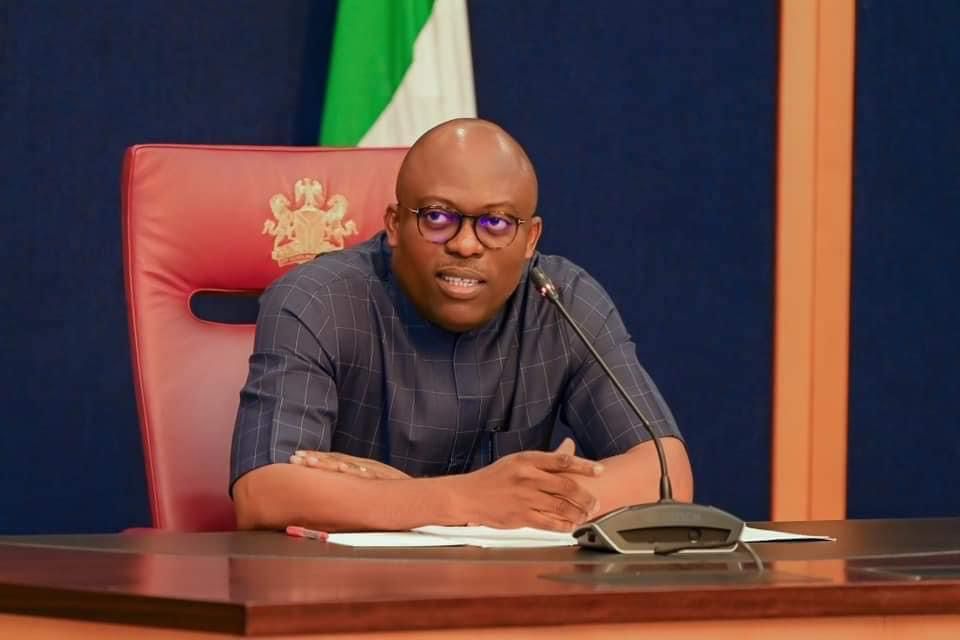
Rivers State Governor Siminalayi Fubara has presented a N1.85tn budget proposal for the 2026 fiscal year to the State House of Assembly, placing infrastructure, education and healthcare at the centre of the government’s spending priorities.
Fubara presented the appropriation bill, tagged “Budget of Resilience for Growth and Development,” on Friday in Port Harcourt.
The governor said the state’s projected operating revenue for 2026 represents a 24.49 per cent increase over the adjusted 2025 budget estimates, supported by expectations of stronger Federation Account Allocation Committee inflows, derivation revenue and internally generated revenue.
A breakdown of the spending plan shows that more than N1.4tn has been allocated to capital projects, while over N413bn is proposed for recurrent expenditure.
Fubara said the capital budget had increased from more than N713bn in 2025 to over N1.4tn in 2026 as the state intensifies investment in infrastructure and public services.
Under the capital expenditure framework, N533bn is allocated to works and infrastructure, N315bn to educational development and N105bn to healthcare delivery. The Rivers State House of Assembly is allocated N41bn.
Sectoral allocations also include N625bn for the economic sector and N278bn for administration, while N65bn is earmarked for the law and justice sector.
On recurrent expenditure, the government projects N154bn for personnel costs covering salaries across ministries, departments and parastatals, while N15bn is set aside for new recruitments.
The budget also provides N55bn for monthly pensions, N20bn for gratuities and another N20bn for legacy pension gratuities.
Interest payments on domestic loans are projected at N28bn, while N30bn is allocated to long-term domestic loan principal repayments. Overheads for ministries, departments and agencies are estimated at N36bn.
Fubara said the government had proposed at least a 50 per cent increase in overhead expenditure to enable MDAs to meet operational costs and improve service delivery.
To finance the budget, Rivers State projects more than N487bn in internally generated revenue.
FAAC inflows, including derivation funds, value-added tax and exchange gains, are expected to contribute N936bn, while N48bn is projected from opening and closing balances.
Total capital receipts from domestic loans, grants and asset sales are estimated at more than N382bn.
The governor said the assumptions and fiscal objectives underpinning the 2026 budget were detailed in the state’s 2026–2028 Medium-Term Expenditure Framework, which had already been considered by the House of Assembly.
The Issues
The 2026 budget raises key questions around revenue performance, capital project execution and the state’s ability to sustain its ambitious infrastructure spending.
The heavy dependence on FAAC, derivation revenue and other federally linked inflows could expose budget implementation to fluctuations in oil earnings and broader macroeconomic conditions.
The proposed rise in capital spending will also place greater emphasis on transparency, procurement oversight and timely project delivery.
Meanwhile, allocations for debt servicing, pensions and gratuities remain significant recurrent obligations that could affect fiscal flexibility.
What’s Being Said
Siminalayi Fubara, Governor of Rivers State
“Our primary priorities for the 2026 financial year include economic growth, human capital development, socio-economic infrastructure and social investment.”
“Although we acknowledge the delay in preparing the budget, we assure a strong implementation, consistent with our commitment to accountability, transparency, and responsible management of public resources.”
Fubara said the budget reflects the needs and aspirations of Rivers residents and is designed to build a secure, prosperous and resilient state.
What’s Next
The Rivers State House of Assembly is expected to scrutinise the appropriation bill before passage and transmission to the governor for assent.
Attention will likely focus on the state’s revenue assumptions, capital expenditure programme and funding sources, particularly the projected N382bn in capital receipts from loans, grants and asset sales.
Budget implementation and the delivery of major infrastructure, education and healthcare projects will also be closely monitored during the fiscal year.
Bottom Line
Rivers State’s N1.85tn 2026 budget signals an aggressive capital investment drive, with more than three-quarters of the spending plan directed towards projects and development programmes. The success of the “Budget of Resilience for Growth and Development” will, however, depend on revenue performance, fiscal discipline and the government’s ability to translate its N1.4tn capital allocation into measurable projects and public services.