








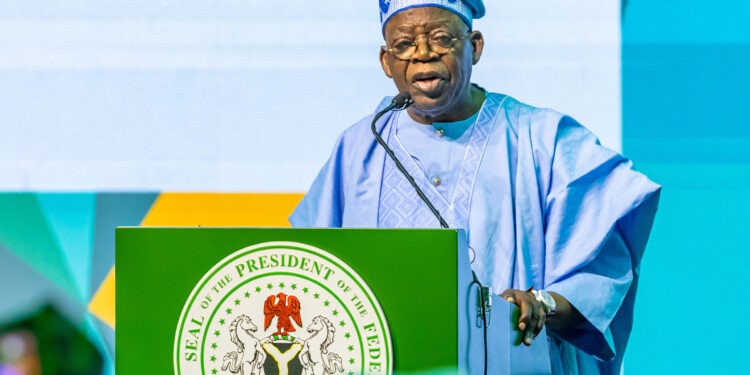
…president gives anti-graft agency 30 days to investigate alleged fraud, while police intensify manhunt for PFIPC promoter amid growing political and legal fallout.
Key Points
- Bola Tinubu has directed the Independent Corrupt Practices and Other Related Offences Commission (ICPC) to investigate the alleged fake Presidential Foreign Intervention Promotion Council (PFIPC).
- The ICPC has been given 30 days to identify collaborators and submit a comprehensive report.
- The Senate of Nigeria says it has received no petition on the matter and insists the controversy remains an executive issue.
- The Nigeria Police Force has launched a manhunt for the alleged PFIPC promoter, while the Force CID in Abuja has taken over the investigation.
- Former Vice President Atiku Abubakar, former SGF Babachir David Lawal and the Yoruba Ronu Leadership Forum have weighed in on the controversy.
Main Story
President Bola Tinubu has ordered the Independent Corrupt Practices and Other Related Offences Commission (ICPC) to investigate the activities of the alleged Presidential Foreign Intervention Promotion Council (PFIPC), describing the organisation as a fictitious body with no legal or constitutional basis.
The President directed the anti-corruption agency to conclude its investigation within 30 days, identify all individuals involved in the alleged scheme and recommend reforms to prevent similar occurrences in the future.
The directive was conveyed in a statement by the President’s Special Adviser on Information and Strategy, Bayo Onanuga, who said the PFIPC was never established by the Federal Government.
According to the Presidency, one Adeniyi Adeyemi Matthew allegedly presented himself as the Director-General of the non-existent council using forged appointment letters and other official documents to seek government recognition, diplomatic support, visa facilitation and the opening of bank accounts in the names of purported government agencies.
Beyond investigating the principal suspect, Tinubu directed the ICPC to uncover all collaborators, trace the origin and movement of funds, determine whether any public officials, financial institutions or intermediaries facilitated the alleged activities, and identify institutional weaknesses exploited by those behind the scheme.
The President also instructed all Ministries, Departments and Agencies (MDAs) to cooperate fully with the investigation by providing all relevant records and documents upon request.
Meanwhile, the Senate of Nigeria distanced itself from the controversy, insisting that it had not received any petition requiring legislative action.
Chairman of the Senate Committee on Media and Public Affairs, Yemi Adaramodu, said the allegations and counter-allegations surrounding the PFIPC were matters for the executive arm of government.
He also rejected claims that the National Assembly created or inserted any budgetary allocation for the alleged agency, noting that the Senate only considers matters properly brought before it through established legislative procedures.
As the political controversy intensified, the Nigeria Police Force launched a nationwide manhunt for Adeniyi Adeyemi.
Police operatives reportedly visited his family home in Ogbomoso on two occasions in search of the suspect. However, the Oyo State Police Command clarified that it was not handling the investigation, stating that the case had been transferred to the Force Criminal Investigation Department (FCID) at Force Headquarters in Abuja because of its national significance.
The development has also attracted political reactions.
Former Vice President Atiku Abubakar criticised the reported arrest of Adeyemi’s father, describing it as an abuse of power and arguing that Nigerian law does not recognise substituted arrest.
Similarly, the Yoruba Ronu Leadership Forum criticised the ₦10 billion defamation suit filed by the Chief of Staff to the President, Femi Gbajabiamila, against Adeyemi, arguing that the legal action could undermine ongoing investigations.
Through his legal counsel, Pinheiro LP, Gbajabiamila issued a 72-hour ultimatum demanding the retraction of allegations made against him during a press conference on June 25, warning that failure to comply would result in civil and criminal proceedings.
Adding another dimension to the controversy, former Secretary to the Government of the Federation, Babachir David Lawal, faulted the Office of the Secretary to the Government of the Federation for allegedly failing to detect the purported fake agency.
Lawal argued that the SGF’s office serves as the government’s clearing house for ministries, departments and agencies and should have identified any irregularities before documents relating to the PFIPC progressed through official channels.
He also questioned how the alleged organisation reportedly obtained a government budget code and advanced through the federal budgeting process despite lacking legal recognition.
The Issues
The PFIPC controversy has raised serious concerns about document verification, institutional oversight and internal controls within the Federal Government.
It also highlights broader questions about how individuals allegedly obtained forged government documents, sought official recognition and reportedly navigated parts of the public administration despite claims that the organisation had no legal existence.
The unfolding investigations are expected to test the effectiveness of Nigeria’s anti-corruption institutions and administrative safeguards against impersonation and fraud.
What’s Being Said
Bayo Onanuga
The President has directed the ICPC to investigate the alleged use of forged government documents, identify all collaborators and recommend reforms to prevent future occurrences.
Yemi Adaramodu
“If any of the feuding parties or any concerned Nigerian forwards a petition to the Senate… the matter will be considered through the appropriate legislative process.”
Atiku Abubakar
“There is no provision in Nigerian law for substituted arrest.”
Babachir David Lawal
“If an agency is received, processed and forwarded without somebody in the SGF’s office asking exactly who these people are, then there is a dereliction of duty.”
What’s Next
The ICPC is expected to conclude its investigation within 30 days and submit its findings to the President.
Meanwhile, the Nigeria Police Force continues its search for the alleged PFIPC promoter, while the legal dispute involving Chief of Staff Femi Gbajabiamila and Adeniyi Adeyemi is expected to proceed if the demand for a retraction is not met within the stipulated period.
Bottom Line
The alleged PFIPC scandal has evolved beyond claims of impersonation into a wider test of institutional accountability. As multiple agencies investigate the matter and political scrutiny intensifies, the outcome could expose weaknesses in government processes and shape future reforms aimed at preventing abuse of official identity and public institutions.








 to investigate ...)