






Key points
- Iranian Foreign Minister Abbas Araghchi stated that the United States, not Iran, is responsible for the blockade of the Strait of Hormuz.
- Araghchi claimed the waterway is open to commercial vessels that “cooperate with our Navy forces” and pay fees for passage.
- The U.S. imposed a naval blockade on Iranian ports in mid-April to cut off oil revenues, following the start of the war in February.
- President Donald Trump recently halted “Operation Freedom,” a military mission to reopen the strait, in favor of diplomatic efforts.
- International law experts argue that Iran’s requirement for coordination and fees violates the right of transit passage.
Main Story

Iranian Foreign Minister Abbas Araghchi said on Thursday that the blockade of the Strait of Hormuz was caused by the United States, not Iran.
Araghchi made these remarks to the state broadcaster Press TV on the sidelines of the BRICS foreign ministers’ meeting in New Delhi. He stated that the waterway is open for all commercial vessels as long as they cooperate with Iranian Navy forces, asserting that the current situation could be defused if the U.S. lifts its “illegal blockade.”
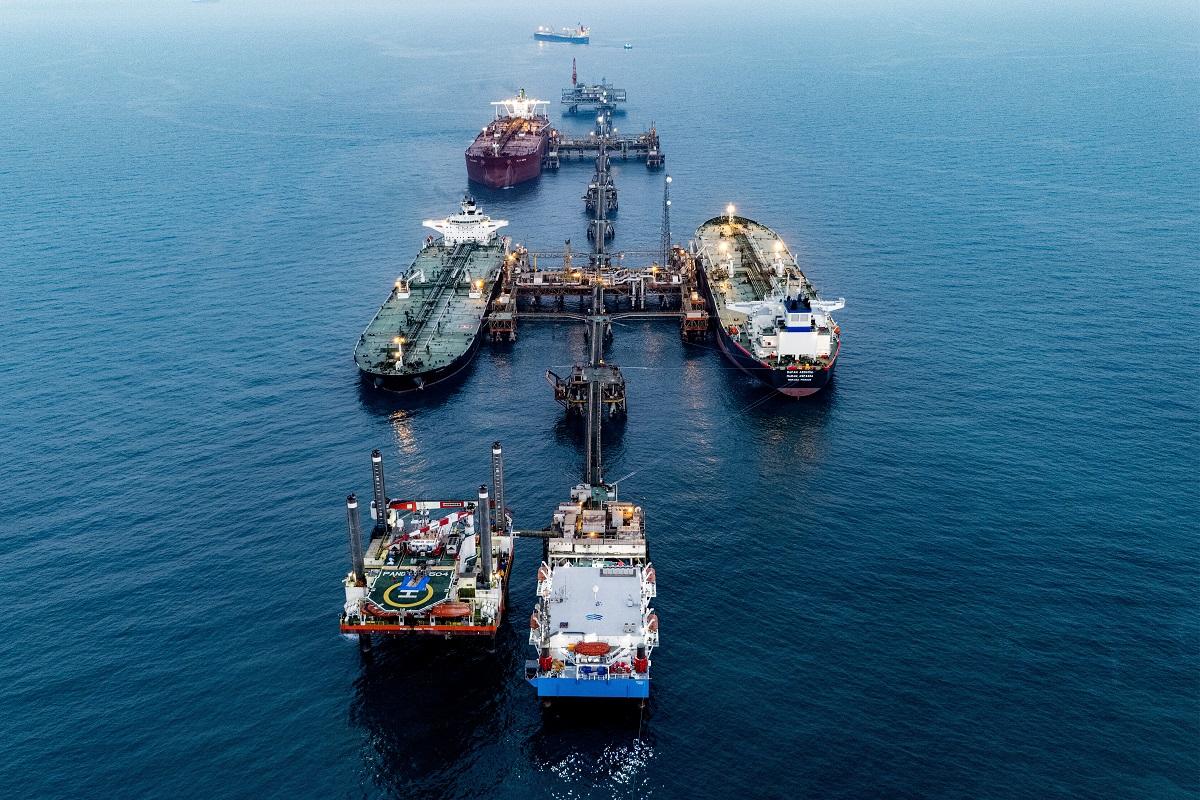
Shortly after the war began at the end of February 2026, Iran’s armed forces took control of the Strait of Hormuz, a central hub for global energy trade.
While Tehran emphasizes that the strait is not technically blocked, shipping companies must coordinate with Iranian contact points and pay high fees to pass through a specific corridor near the coast.
These actions, along with reports of mines and attacks, have brought traffic in the critical waterway largely to a standstill, causing global fuel prices to soar. Tensions remain high despite a ceasefire that took effect in early April, as exchanges of fire between U.S. and Iranian forces continue to threaten the regional stability.
The Issues
- The “fees” and coordination required by Iran are viewed by international law experts as a violation of the United Nations Convention on the Law of the Sea (UNCLOS) regarding transit passage.
- Global energy markets are under extreme pressure as the shut-in of over 14 mb/d of Gulf production depletes inventories at a record pace.
- The risk of a “hot war” remains high; although “Operation Freedom” was halted for diplomacy, any miscalculation in the narrow strait could reignite full-scale conflict.
What’s Being Said
- “The Strait of Hormuz is now suffering first and most from the U.S. aggression and the blockade that they have imposed on it,” Abbas Araghchi told Press TV.
- Araghchi stated the waterway is open for all commercial vessels as long as they “cooperate with our Navy forces.”
- International law experts argue the current Iranian protocol “violates the right of transit passage.”
- Regarding the U.S. stance, President Donald Trump recently cited “diplomatic efforts” as the reason for pausing military operations to reopen the strait.
What’s Next
- Diplomatic observers are monitoring the BRICS meeting in New Delhi for any potential mediation efforts from member states to resolve the maritime standoff.
- Shipping companies and insurance underwriters await a formal “safe passage” agreement before resuming regular traffic through the Gulf.
- Energy analysts expect continued price volatility as long as the U.S. naval blockade on Iranian ports and the Iranian counter-measures remain in place.
Bottom Line
The Strait of Hormuz remains the world’s most volatile energy chokepoint, with Iran and the U.S. locked in a narrative battle over who is legally responsible for a blockade that has crippled global oil transit.