








Keypoints
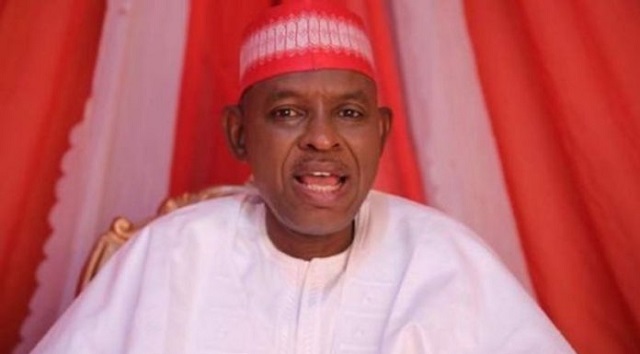
- Dr. Terfa Kene, President of the Association of Public Health Physicians of Nigeria (APHPN), warns that the country lacks enough public health specialists because of a massive overall shortage of medical doctors.
- The shortage has forced a reliance on task shifting, where community health extension workers perform duties originally meant for medical officers of health.
- Brain drain remains a significant factor, with Kene describing a leakage in the professional pipeline as doctors migrate for better global opportunities.
- While APHPN has over 3,000 registered members, the total number of practitioners nationwide remains unknown due to registration gaps and data limitations.
- The association has announced plans for a national secretariat and a telemedicine hub to provide free or low-cost consultations to underserved and hard-to-reach areas.
Main Story
Nigeria’s frontline defense against epidemics is facing a critical manpower shortage. In an interview in Abuja on Tuesday, April 28, 2026, APHPN President Dr. Terfa Kene explained that the country cannot produce enough public health physicians because the foundation; the supply of general medical doctors is crumbling.
Since one must first be a doctor to specialize in public health, the national deficit of medical professionals has created a bottleneck that leaves communities vulnerable.

Public health physicians are the backbone of preventive care, working in universities, local governments, and NGOs to manage disease outbreaks and health policy.
However, Dr. Kene noted that as quickly as Nigeria trains these specialists, they are lost to the “global village” as they seek better working conditions abroad.
To bridge this gap, the association is turning to innovation, planning a new national estate that will house a telemedicine center. This facility aims to use technology to project medical expertise into remote villages where a physical doctor might not be available.
The Issues
The primary challenge is the pipeline-leakage gap; Nigeria is essentially subsidizing the healthcare systems of wealthier nations by training doctors who migrate almost immediately after specialization. Authorities must solve the problem of task-shifting limitations, as community health workers, while valuable, do not have the advanced training required to manage complex public health policies or major epidemic responses.
Furthermore, there is a workforce-data risk; without an accurate record of exactly how many public health physicians are practicing, the government cannot effectively plan for future health emergencies. To succeed, the APHPN and the Ministry of Health must create a more attractive domestic environment—potentially through the welfare projects like the proposed national estate—to convince specialists that their future lies within Nigeria.
What’s Being Said
- “You have to be a medical doctor before you become a public health physician. We don’t have enough doctors,” stated Dr. Terfa Kene.
- Kene noted that because of the shortage, the system is “doing task shifting” where community health officers fill the gaps left by doctors..
What’s Next
- The APHPN is expected to launch a formal fundraising campaign for its national secretariat and telemedicine hub to improve member welfare and service delivery.
- The association is anticipated to work on a comprehensive digital registry to finally close the data gap and determine the exact number of practitioners in Nigeria.
- Public health experts are likely to advocate for improved rural incentives to encourage specialists to work at the local government level rather than staying in urban centers or moving abroad.
- Telemedicine pilot programs are expected to be tested in identified hard-to-reach areas once the association’s new technological devices are deployed.
Bottom Line
Nigeria’s public health system is currently running on “borrowed time” by relying on lower-level health workers to do the jobs of specialized physicians. Dr. Kene’s call for a national secretariat and a telemedicine network shows that the association is trying to build its own infrastructure to survive the brain drain, but the root cause—the shortage of basic medical doctors—remains a hurdle that only significant government reform can clear.