







By Boluwatife Oshadiya | March 15, 2026
Key Points
- U.S. President Donald Trump calls on global powers to deploy naval vessels to keep the Strait of Hormuz open amid escalating Middle East tensions
- The strategic waterway carries more than 20 million barrels of oil daily, roughly one-fifth of global consumption
- Rising threats to shipping after U.S.–Israeli strikes on Iranian targets have intensified fears of disruption to global energy supply
Main Story
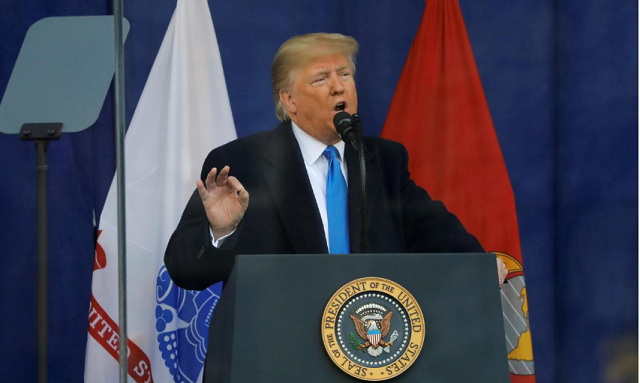
U.S. President Donald Trump on Saturday urged allied nations to send naval forces to help secure the Strait of Hormuz, one of the world’s most critical oil transit routes, as tensions in the Middle East threaten global energy supplies and maritime trade.

In a statement posted on his social media platform Truth Social, Trump said several major economies affected by the growing instability in the Gulf should contribute military assets alongside the United States to ensure that commercial shipping continues uninterrupted.
The call comes after a series of attacks on tankers and mounting threats to maritime traffic following escalating hostilities involving Iran, Israel, and the United States.
“Many countries, especially those who are affected by Iran’s attempted closure of the Hormuz Strait, will be sending War Ships, in conjunction with the United States of America, to keep the Strait open and safe,” Trump wrote.
He specifically named China, France, Japan, South Korea, and the United Kingdom as countries that should help safeguard the route, describing the disruption as an “artificial constraint” on global energy markets.
The White House reinforced the message hours later in a post on X, quoting the president: “One way or the other, we will soon get the Hormuz Strait OPEN, SAFE, and FREE!”
The Strait of Hormuz, located between Iran and Oman, is widely regarded as the most important energy chokepoint in the world. According to international energy data and shipping analysts, more than 20 million barrels of crude oil and petroleum products pass through the narrow waterway each day, representing roughly 20 percent of global oil consumption.
Any disruption to the route has immediate consequences for global oil markets. Energy prices have already shown signs of volatility in recent weeks as traders respond to the risk of supply disruptions.
The tensions follow joint U.S. and Israeli strikes in late February targeting Iranian military infrastructure, which Washington said were aimed at weakening Iran’s missile and drone capabilities. Tehran has since retaliated with missile launches and drone attacks across the region, while also warning it could disrupt shipping through the Strait of Hormuz.
Shipping companies and insurers have begun reassessing risk levels in the Gulf, with some vessels reportedly diverting routes or delaying transits through the strait.
What’s Being Said
“Many countries … will be sending War Ships, in conjunction with the United States of America, to keep the Strait open and safe,” Donald Trump, President of the United States.
“One way or the other, we will soon get the Hormuz Strait OPEN, SAFE, and FREE,” White House statement quoting President Donald Trump.
“Any prolonged disruption in the Strait of Hormuz would send shockwaves through global energy markets and could trigger a sharp spike in oil prices,” said Helima Croft, Head of Global Commodity Strategy, RBC Capital Markets.
What’s Next
- Naval deployments by the United States and potential allies could increase in the coming days if threats to shipping intensify.
- Oil markets are expected to remain volatile as traders monitor security developments in the Gulf region.
- Diplomatic channels between Western powers and Iran may intensify in an effort to prevent a broader regional conflict and ensure the continued flow of energy supplies through the Strait of Hormuz.