









By Boluwatife Oshadiya | May 29, 2026
Key Points
- A new US report estimates that about 30,000 armed Fulani militants are operating across Nigeria
- The report says the militants caused more deaths linked to religious violence than insurgent and criminal groups in the past year
- Federal and state governments were criticised for slow security responses and weak protection of vulnerable communities
Main Story
The United States Commission on International Religious Freedom (USCIRF) has estimated that about 30,000 armed Fulani militants are currently operating across Nigeria, warning that the groups have become some of the deadliest non-state actors fuelling religious violence and insecurity in the country.
In its May 2026 report titled “Nonstate Violators of Religious Freedom in Nigeria: Fulani Militants,” the commission said the armed groups operate in clusters ranging from 10 to 1,000 fighters and have intensified attacks across Nigeria’s Middle Belt and Southern regions.
According to the report, the violence has left thousands dead, displaced communities, and deepened religious tensions, particularly between farming communities and armed herders.
The commission stated that Fulani militant attacks accounted for more deaths linked to religious violence over the last year than attacks carried out by insurgent organisations and criminal gangs.
USCIRF said many attacks targeted Christian communities, although Muslim communities had also suffered kidnappings, raids, and killings.
The report noted that the militants frequently launch night attacks on isolated rural settlements using motorcycles, automatic rifles, and machetes, often forcing residents to flee from contested lands and farming areas.
Among the incidents highlighted was the June 2025 attack in Benue State that reportedly killed at least 200 people, including internally displaced persons sheltering at a Catholic mission.
The commission also referenced the Yelwata massacre in Benue, where more than 200 Christians were reportedly killed and over 3,000 displaced.
USCIRF added that several attacks were deliberately timed around Christian holidays such as Easter and Christmas to maximise psychological impact.
The report further revealed that at least 1.3 million people have been displaced across the Middle Belt due to violence linked to Fulani militants and other armed groups.
The commission criticised Nigerian security agencies for what it described as consistently delayed responses to attacks on vulnerable communities.
The Issues
The report comes amid worsening insecurity across Nigeria’s North-Central region, where violent clashes involving herders, armed bandits, and farming communities have escalated in recent years.
Analysts have repeatedly linked the violence to competition over grazing land, climate pressure, weak rural policing, and the proliferation of illegal weapons. However, religious organisations and advocacy groups have increasingly framed the attacks as targeted religious persecution.
Nigeria has also faced growing international scrutiny over religious freedom concerns following the decision by US President Donald Trump to redesignate Nigeria as a Country of Particular Concern in October 2025.
Security experts say the absence of coordinated intelligence-sharing, weak prosecution of armed groups, and inadequate state policing structures continue to undermine efforts to contain the violence.
What’s Being Said
“Violence by Fulani militants caused the highest number of deaths among all religious communities in Nigeria over the last year as compared to attacks by organised insurgent groups and criminal gangs,” the USCIRF report stated.
“Victims have long reported that security forces are consistently slow to respond to attacks on their communities,” the commission added.
The report also quoted the Miyetti Allah Cattle Breeders Association of Nigeria as denying allegations of support for militant violence.
“We do not support, condone, harbour, finance, or protect any form of criminality, extremism or violence,” the association stated.
Meanwhile, security analysts have warned that growing displacement and retaliatory violence could further destabilise already fragile communities in Benue, Plateau, Kaduna, and Niger states if urgent interventions are not implemented.
What’s Next
- Nigerian security agencies are expected to intensify operations in North-Central states following renewed international attention on the crisis
- The proposed US Nigeria Religious Freedom and Accountability Act of 2026 could increase diplomatic pressure and possible sanctions linked to religious violence allegations
- State governments are likely to expand ranching and grazing reform initiatives aimed at reducing recurring clashes between herders and farming communities
Bottom Line
The Bottom Line: The USCIRF report adds fresh international pressure on Nigeria’s security architecture at a time when violent attacks across rural communities continue to expose gaps in intelligence, response coordination, and long-term conflict management. Beyond the religious dimension, the crisis increasingly reflects a broader failure to address land competition, rural insecurity, and armed non-state violence nationwide.

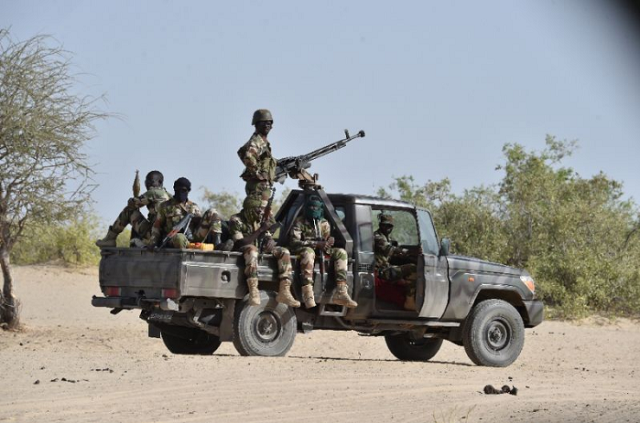









 has estimated that about 30,000 armed Fulani militants...)