









KEY POINTS
- Independent National Electoral Commission (INEC) and National Peace Committee (NPC) say Nigeria’s democracy is at a critical crossroads ahead of 2027.
- Electoral reforms, including GIS mapping and voter register sanitisation, are underway to strengthen credibility.
- Political leaders, civil society and security agencies urged to uphold the Peace Accord and restore public trust.
MAIN STORY
The Independent National Electoral Commission (INEC) and the National Peace Committee (NPC) have declared that Nigeria is at a “very critical stage” in its democratic journey, calling for a paradigm shift from the “politics of power” to people-centred governance ahead of the 2027 general elections.
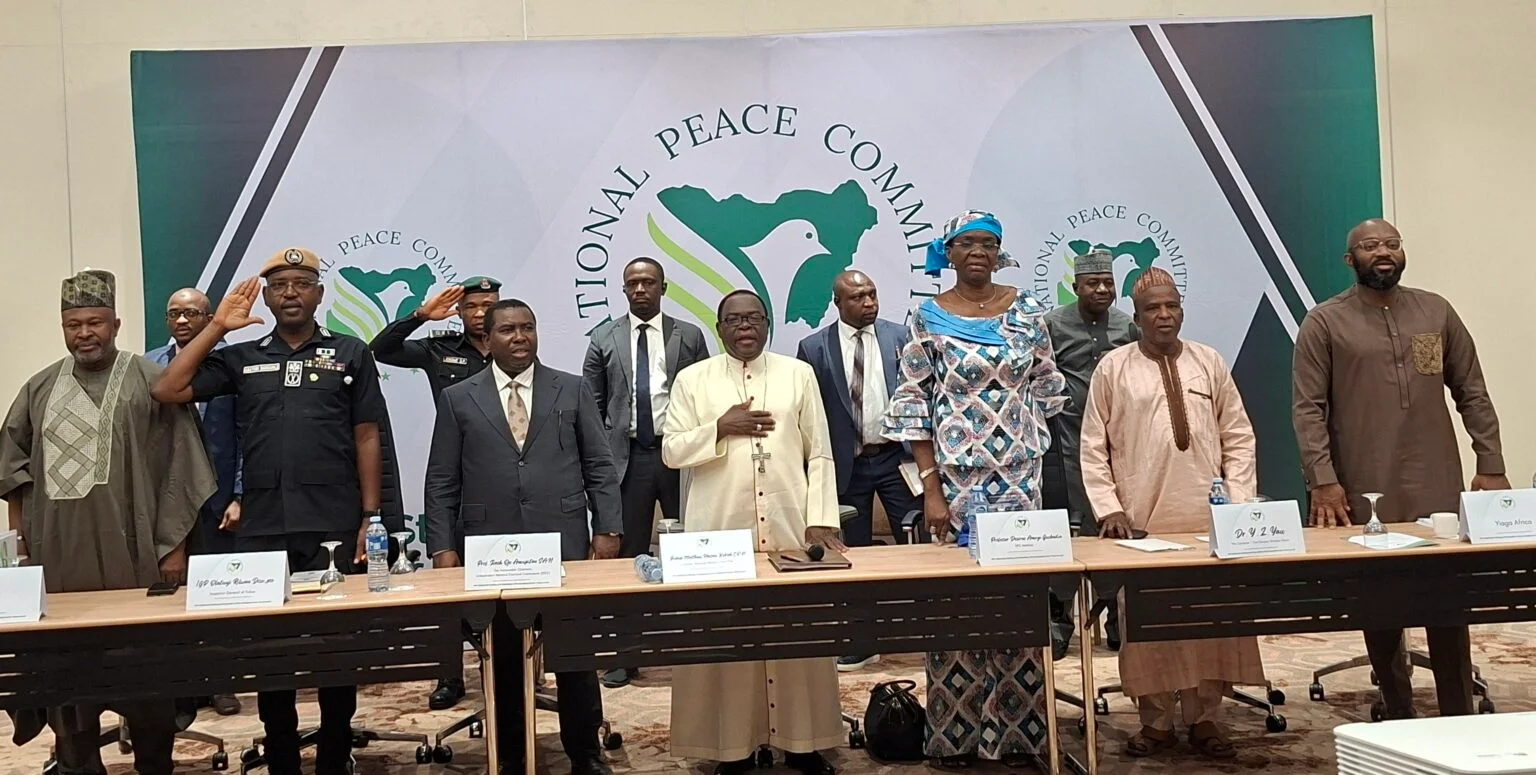
The call was made on Monday in Abuja during a stakeholders’ meeting tagged ‘Briefing and Presentation of the Annotations to the Peace Accord’, organised by the NPC in collaboration with The Kukah Centre and supported by the European Union.
Speaking at the event, INEC Chairman, Prof. Joash Amupitan, described Nigeria’s electoral environment as diverse, complex and intensely competitive. However, he lamented that since independence, politics has often been conducted in ways that undermine national development.
According to him, Nigeria has historically pursued “the politics of power” rather than “the politics of the people,” a trend he said has stalled progress at a time when the country should be breaking free from underdevelopment and aligning with developed nations.
He characterised recurring electoral disputes and malpractice as “unfortunate monsters” that must be decisively confronted to safeguard democracy.
Amupitan underscored the strong link between democracy and development, noting that countries once economically behind Nigeria have advanced significantly by strengthening democratic institutions.
He disclosed that INEC is currently reviewing its regulations in preparation for 2027, with plans to introduce Geographic Information System (GIS) mapping of polling units, enhance voter interaction platforms, sanitise the voters’ register by removing duplicates and deceased persons, and intensify collaboration with law enforcement agencies to curb vote buying.
THE ISSUES
Nigeria’s electoral process continues to grapple with declining voter turnout, allegations of electoral malpractice, legal disputes, and concerns over the implementation of technology in elections.
NPC Chairman, former Head of State, Abdulsalami Abubakar, represented by NPC Convener, Bishop Mathew Kukah, acknowledged growing scepticism about politicians’ commitment to the Peace Accord.
He admitted that some Nigerians question whether signatories genuinely intend to abide by its provisions. Nonetheless, he stressed that compliance is a collective responsibility involving citizens, civil society organisations, and political actors.
Abubakar explained that the newly annotated Peace Accord aligns its provisions more closely with constitutional requirements to enhance both moral and legal authority. Since its establishment in 2014, the accord has served as a framework for dialogue, mediation and confidence-building among political stakeholders.
He maintained that while laws are vital, discipline, integrity and good faith from political leaders are indispensable for credible elections.
WHAT’S BEING SAID
Security agencies also outlined measures to strengthen election integrity.
Representing the police, Commissioner of Police in charge of Election Planning, Monitoring and Evaluation, Abayomi Shogunle, said the force has adopted a predictive analytics model to improve security planning. He noted that the system, tested during recent off-cycle elections including the Anambra governorship poll and FCT elections, analyses historical data to anticipate potential flashpoints.
Shogunle further called for urgent action to combat misinformation, fake news and disinformation during elections.
The Chairman of the Inter-Party Advisory Council (IPAC), Yusuf Dantalle, described the last general elections as largely credible but criticised certain provisions of the Electoral Act 2023. He argued that mandatory direct primaries and high compliance costs have narrowed political participation and disadvantaged smaller parties.
Dantalle also advocated greater independence in the appointment and funding of INEC leadership to shield the commission from political interference.
Similarly, the Convener of the Nigeria Civil Society Situation Room, Yunusa Ya’u, warned of declining voter turnout and eroding public trust. He expressed disappointment that mandatory electronic transmission of results was not fully entrenched in the amended law, despite public demand.
Executive Director of Yiaga Africa, Samson Itodo, cautioned that compressed timelines introduced in the 2026 Electoral Act could pose risks ahead of 2027. While commending some reforms, he warned that shortened funding windows for INEC and high financial thresholds for party registration could undermine inclusiveness.
Itodo also urged political actors to treat election technology infrastructure as critical national assets.
WHAT’S NEXT
As preparations intensify for 2027, stakeholders are expected to engage in further consultations on electoral reforms, technological improvements, and legislative amendments.
INEC’s planned regulatory reviews, alongside strengthened security coordination and civil society monitoring, are likely to shape the credibility of the next general elections.
Observers say restoring public trust, ensuring compliance with the Peace Accord, and addressing legal ambiguities in the Electoral Act will be critical to avoiding heightened political tensions.
BOTTOM LINE
With 2027 on the horizon, Nigeria’s democratic institutions face a defining test. While reforms and technological upgrades are underway, stakeholders agree that laws alone cannot guarantee credible elections. A shift towards responsible leadership, institutional integrity and collective accountability may ultimately determine whether Nigeria consolidates its democracy or remains trapped in cycles of electoral distrust.





 and the National Peace Committee (NPC) have declared that Nigeria ...)