








Key points
- Vice President Kashim Shettima inaugurated the first phase of the Northern corridor deployment for Compressed Natural Gas (CNG) and Electric Vehicles (EV).
- The deployment includes 15 CNG vehicles (10 CNG and 5 bi-fuel), 7 electric vehicles, and 200 CNG tricycles.
- The federal government has commissioned 4,000 CNG-powered trucks, with a target to reach 15,000 vehicles to save N1.7 trillion annually in logistics costs.
- Kano was selected as the launch site due to its position as a regional commercial hub connecting markets across the Sahel.
- Eight additional CNG stations are planned for establishment across Northern Nigeria before the end of 2026.
Main Story
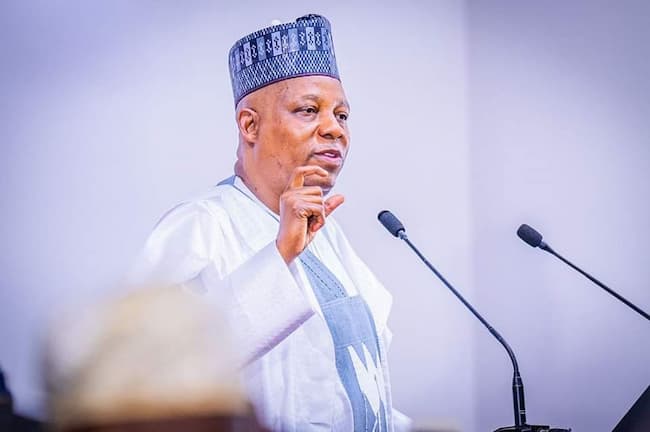
Vice President Kashim Shettima has on Thursday inaugurated Compressed Natural Gas (CNG) and Electric vehicles, signaling the activation of the Northern corridor.
The inaugurated vehicles under the first phase deployment included 15 CNG (10 CNG and 5 bi-fuel), 7 EV and 200 CNG tricycles. Inaugurating the vehicles under the Presidential Initiative on Compressed Natural Gas and Electric Vehicles (Pi-CNG & EV), Shettima said the initiative was to expand access to alternative fuel transportation and reduce dependence on traditional fuels.
The Vice President, represented by his Deputy Chief of Staff, Sen. Ibrahim Hassan-Hadejia, stated that Kano sitting at the center of the regional commercial ecosystem makes it the ideal location for the launch.
He noted that Nigeria possesses over 200 trillion cubic feet of gas reserves, making the transition to gas-powered mobility an economic necessity to reduce transportation costs which negatively impact food prices and manufacturing.
Governor Abba Kabir-Yusuf of Kano State expressed readiness to key into the initiative, describing transportation as the backbone of the state’s economy.
The Issues
- High dependence on expensive traditional fuels continues to drive inflation in food prices and logistics, necessitating the shift to Nigeria’s abundant gas reserves.
- The success of the transition depends on the rapid expansion of refueling infrastructure, with only eight additional stations currently planned for the entire Northern region by year-end.
- Technical capacity for conversion and maintenance remains a hurdle, though the government views this as an opportunity for youth employment and engineering services.
What’s Being Said
- “Northern Nigeria represents one of the largest transportation and logistics markets on the African continent and Kano sits at the centre of that opportunity,” said Vice President Kashim Shettima.
- “President Bola Tinubu understood that Nigeria could not continue to depend entirely on expensive traditional fuel systems while sitting on over 200 trillion cubic feet of gas reserves,” Shettima added.
- “This transition also creates opportunities for our young people through technical training, conversion technology, engineering services and new businesses that will emerge around the ecosystem,” the Vice President noted.
- “Transportation is not just a convenience for us in Kano, it is the backbone of our economy,” stated Governor Abba Kabir-Yusuf.
- “From Kano, we will continue expanding across Kaduna, Gombe, Maiduguri, Katsina and other strategic corridors in Northern Nigeria,” said Ismaeel Ahmed, CEO of Pi-CNG & EV.
What’s Next
- The Presidential Initiative on CNG & EV will move to expand its activation across other strategic Northern cities including Kaduna, Gombe, Maiduguri, and Katsina.
- Eight new CNG refueling stations are expected to be completed and commissioned across the North before the end of the year.
- The government aims to scale the current fleet of CNG trucks to 15,000 units to achieve the projected N1.7 trillion annual savings in logistics.
Bottom Line
The activation of the Northern CNG and EV corridor marks a shift from fuel subsidy relief to a long-term economic strategy aimed at leveraging Nigeria’s gas reserves to permanently lower regional logistics and transportation costs.







 and Electric vehicles, signaling the activation ...)