




Key points
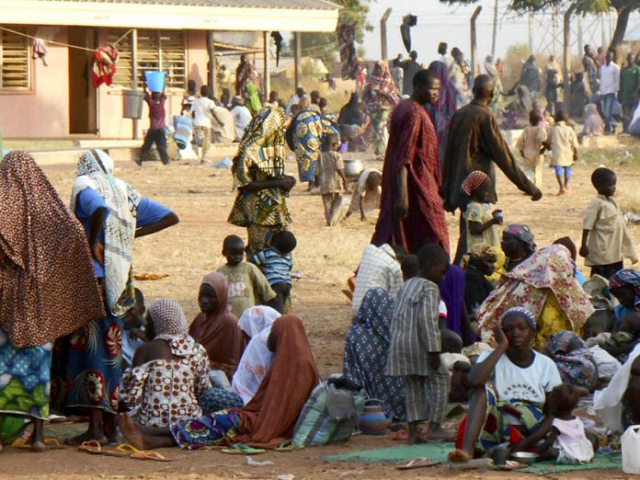
- The UN says it remains committed to long-term solutions for Internally Displaced Persons (IDPs) in Nigeria.
- About 3.5 million IDPs are currently hosted across Nigeria, especially in conflict-affected regions.
- Over 200,000 children and adolescents were reached through education and skills programmes in 2025.
- Nearly 150,000 people were supported with livelihood opportunities and about 40,000 got civil documentation.
- Stakeholders emphasise stronger collaboration between humanitarian, development and peacebuilding efforts.
Main Story
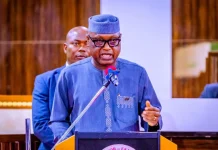
The United Nations Resident and Humanitarian Coordinator in Nigeria, Mohamed Fall, has reaffirmed the organisation’s commitment to advancing durable solutions for Internally Displaced Persons (IDPs) in the country.
Fall made the statement at the first Project Steering Committee meeting of the Sustainable Urban Integration of Displaced Population in Adamawa, Yobe and Kano States (SIDPIN), organised by the International Organisation for Migration (IOM) in Abuja. The meeting also reviewed the European Union Support for Protection, Assistance and Durable Solutions in Sokoto (SPADS) project and explored ways to strengthen collaboration for displaced persons and host communities across the BAY states and other affected areas.
Fall said the UN is focused on long-term solutions that promote dignity, self-reliance and social inclusion. He said through its Common Programme on Durable Solutions, the UN reached more than 200,000 children and adolescents in 2025 with education and skills development programmes, while nearly 150,000 people accessed sustainable livelihoods and about 40,000 regained civil documentation.
He said displacement must be seen beyond humanitarian response alone.
“Displacement is also a development challenge and a human rights imperative. No one should be left behind in the long journey towards dignity.”
He added that the momentum for durable solutions in Nigeria must continue to grow. Minister of Humanitarian Affairs and Poverty Reduction, Prof. Nentawe Yilwatda, represented by Permanent Secretary Olubunmi Olusanya, said stronger collaboration among stakeholders is essential to achieving lasting solutions for displaced populations. He said humanitarian assistance must be combined with development and peacebuilding efforts to be effective. Ambassador and Head of the EU Delegation to Nigeria and ECOWAS, Gautier Mignot, said sustainable recovery requires investment in opportunities and stronger local economies.
He added that planning, economic analysis and private sector involvement are key to sustainable investment.
The Issues
- Large population of IDPs (about 3.5 million) in Nigeria.
- Need for coordinated humanitarian, development and peacebuilding approaches.
- Limited access to livelihoods, education and documentation for displaced persons.
- Need for sustainable investment in recovery and reintegration.
- Weak long-term integration structures in affected communities.
What’s Being Said
- UN Resident and Humanitarian Coordinator, Mohamed Fall, said: “We must continue to build on local solutions that are owned by communities and on practical examples that can be expanded and sustained.”
- He added: “Displacement is also a development challenge and a human rights imperative. No one should be left behind in the long journey towards dignity.”
- Minister of Humanitarian Affairs and Poverty Reduction, Prof. Nentawe Yilwatda (represented by Olubunmi Olusanya), said: “While humanitarian interventions remain indispensable, experience has shown that durable solutions require a more integrated approach that bridges humanitarian action, development efforts and peacebuilding initiatives.”
- EU Ambassador Gautier Mignot said: “We need to build a future, and this future is still largely unbuilt. This can only happen if we focus on sustainable investment.”
What’s Next
- Continued implementation of SIDPIN and SPADS projects across affected states.
- Strengthening coordination between UN, EU, government and development partners.
- Expansion of livelihood, education and documentation support programmes.
- Increased focus on sustainable investment and private sector participation.
Bottom Line
Nigeria’s displacement crisis is increasingly being reframed as a development challenge, with stakeholders pushing for long-term, coordinated solutions that move beyond emergency aid toward sustainable reintegration and economic inclusion.