






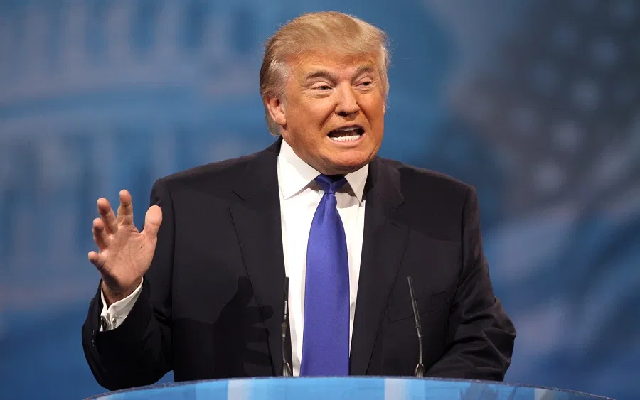
KEY POINTS
- Republican candidates endorsed by US President Donald Trump lost Senate races in South Carolina, North Carolina, Texas and Michigan.
- The defeats contributed to Democrats taking control of the US Senate.
- Trump-backed candidates lost to Democrats Annie Andrews, Roy Cooper, James Talarico and Abdul El-Sayed.
- Analysts attributed the setbacks partly to divisions within the Republican Party and voter dissatisfaction with the economy and the administration’s policies.
MAIN STORY
US President Donald Trump suffered a series of defeats in the 2026 midterm elections after Republican candidates he endorsed lost Senate races in four states, helping Democrats secure control of the chamber.
In an analysis by Damilola Charles of the News Agency of Nigeria (NAN), the outcomes in South Carolina, North Carolina, Texas and Michigan exposed the limits of Trump’s influence over voters beyond the Republican Party’s internal selection process, despite his efforts to shape the party around his political movement.
According to the News Agency of Nigeria (NAN), Trump had spent years backing candidates aligned with his political positions and challenging Republicans he considered insufficiently loyal. His endorsements were intended to strengthen his preferred candidates, but the election results showed that support from the president was not enough to secure victories in the general election.
South Carolina produced one of the most significant results. The state had not elected a Democratic senator since 1998 and had backed Trump by 18 percentage points in the 2024 presidential election. However, Democrat Annie Andrews defeated Republican Darline Graham, whom Trump had supported.
A similar outcome occurred in North Carolina, where former Democratic Governor Roy Cooper defeated Trump’s preferred candidate, Michael Whatley, a former national Republican campaign official.
In Texas, Trump had intervened in the Republican primary to support Attorney General Ken Paxton over Senator John Cornyn. Cornyn was considered by some Republicans to have a stronger prospect in the general election, but Trump backed Paxton instead. Democrat James Talarico subsequently won the Senate race, giving Democrats a seat they had not held since 1988.
Michigan also went to the Democrats, with former US Representative Mike Rogers, Trump’s preferred candidate, losing to Democrat Abdul El-Sayed. El-Sayed’s victory also made him the first Muslim elected to the US Senate.
The four defeats came amid declining public support for Trump. Reuters polling cited in the report showed that his popularity before the midterm elections was lower than it had been in the aftermath of the January 6, 2021 attack on the US Capitol.
That decline, alongside voter concerns about living costs, tariffs and the war in Iran, contributed to questions within the Republican Party about whether Trump’s political standing had become a disadvantage for its candidates.
THE ISSUES
The results have raised questions about the effectiveness of Trump’s influence over Republican nominations and the consequences of prioritising personal loyalty when selecting candidates for competitive elections.
His intervention in Texas illustrates the potential cost of disputes over party nominations. By backing Paxton against Cornyn, Trump helped determine the Republican candidate, but the party ultimately lost the seat to Talarico.
In North Carolina, the circumstances were different but also reflected tensions between Trump and established Republicans. Incumbent Senator Thom Tillis had decided not to seek re-election after a public disagreement with the president over proposed Medicaid cuts in Trump’s tax and spending legislation.
Thomas Kahn, a professor at American University, argued that Trump’s involvement in the Texas primary had cost Republicans a seat they could have retained with Cornyn as their candidate. He also linked the North Carolina outcome to Tillis’s decision not to run again.
Former North Carolina Governor Pat McCrory, a Republican, said Trump’s interventions in party primaries had created divisions among Republicans in different states. He pointed to the dispute in South Carolina, where Trump’s opposition to local Republican figures had further divided the party.
The results also suggest that the president’s endorsement did not overcome voter concerns about the administration’s handling of economic and foreign policy issues. Republican strategist Doug Heye linked the defeats to frustration over high prices associated with tariffs and the war in Iran.
WHAT’S BEING SAID
“This is a Trump Quake.” – Doug Heye, Republican strategist.
“Trump spent the year telling voters what was important to him, not to them.” – Doug Heye, Republican strategist.
“He essentially gave that seat away to Democrats.” – Thomas Kahn, professor at American University, referring to the North Carolina Senate seat.
“I think President Trump’s greatest strength was he had a common touch with the working-class people. He lost that skill. He better regain that skill for the good of the country.” – Pat McCrory, former North Carolina Governor.
WHAT’S NEXT
Democrats’ control of the Senate will change the balance of power in Washington and give the party greater influence over legislation, government appointments and congressional oversight during the remainder of Trump’s term.
For Republicans, the losses are likely to intensify internal discussions about candidate selection, the president’s role in party decisions and the need to reconnect with voters concerned about the cost of living.
Trump rejected the suggestion that his absence from the ballot contributed to the outcome, insisting in a social media post that Republicans would have won by a landslide if he had been a candidate.
BOTTOM LINE
The defeats of Trump’s preferred Senate candidates show that his influence over Republican primaries does not automatically translate into support from the wider electorate. The results have also exposed divisions within the party and placed greater scrutiny on the political costs of allowing presidential loyalty to shape candidate selection.