







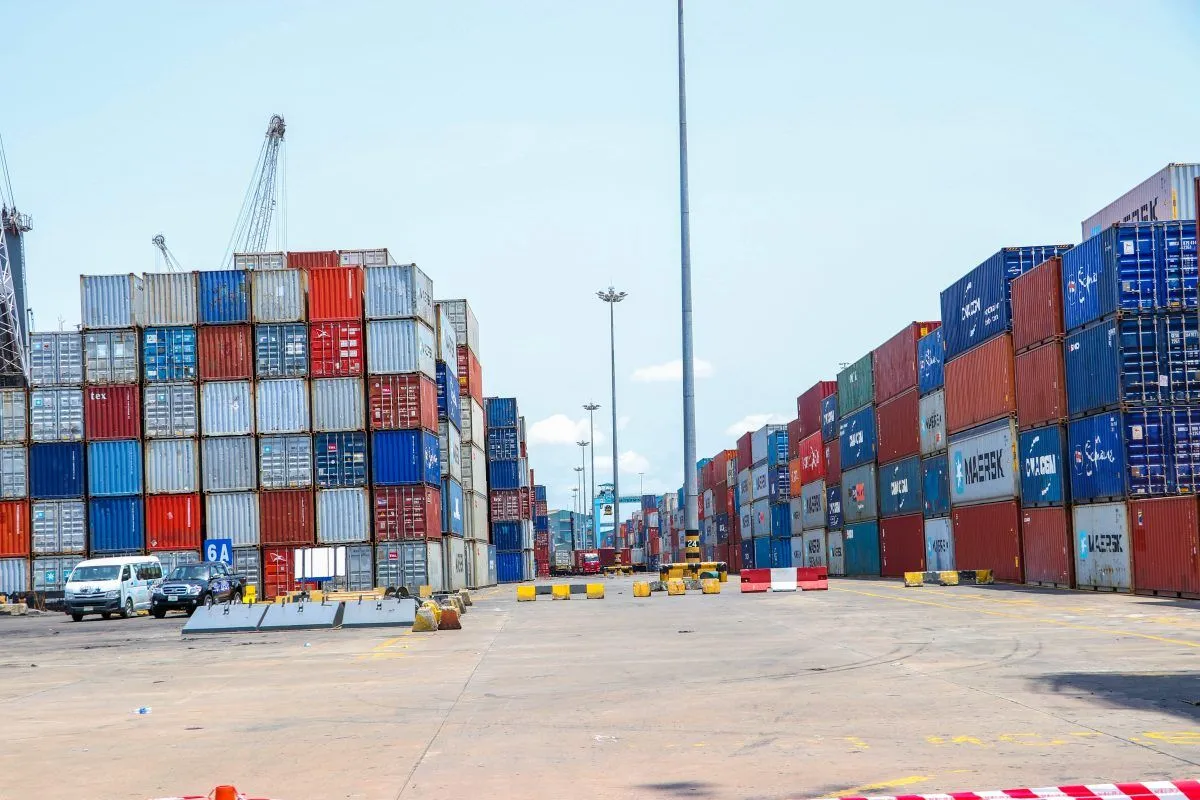
From electronics to textiles, China shipped a record $24.9bn worth of goods into Nigeria in 2025. Here are the top 7 categories and the bonus 3 where the money is moving and what it means for entrepreneurs, resellers and retailers.
Key points
- China’s exports to Nigeria hit a record $24.9bn in 2025, a 31.7% surge from $18.9bn in 2024.
- Electrical & electronic equipment is the single largest category at $2.88bn, followed by machinery at $2.13bn.
- The top 5 categories alone account for over $8.78bn, roughly 44% of total exports.
- Vehicles and vehicle parts, plastics, steel products, textiles and apparel complete the top 7.
- Nigeria accounts for more than a quarter (30%) of all goods imported from China across West Africa.
- For local entrepreneurs and resellers, each category represents both a supply pipeline and a margin opportunity.
The story
Nigeria’s commercial relationship with China is no longer just a trade statistic, it is a structural feature of the Nigerian economy. China’s exports to Nigeria climbed to a record $24.9 billion in 2025, reversing three consecutive years of decline and confirming what traders, importers and market watchers have long known: the supply chain runs through China.
For the entrepreneur sourcing goods from Guangzhou. For the Alaba reseller pricing inverters and solar panels. For the Balogun cloth merchant deciding what rolls to stock. For the spare parts dealer in Ladipo. The story of China-Nigeria trade is the story of Nigerian commerce itself.

The bilateral trade figure represents more than a quarter of Nigeria’s total import bill of $46.7 billion in 2025, according to Nigeria’s National Bureau of Statistics (NBS). Put differently: one in every four dollars Nigeria spends on imports goes to China. Asia as a whole accounted for $21.7 billion of Nigerian imports in 2025 and China alone drove $13 billion of that on the NBS measure, with independent trade trackers citing higher figures of up to $24.9 billion using UN COMTRADE and bilateral Chinese customs data.
But which goods are actually moving? BizWatch Intelligence breaks down the seven product categories that dominate China’s export basket to Nigeria and the business case inside each one.
| #1 | Electrical & Electronic Equipment | $2.88 Billion |
If one category defines the Nigeria-China trade corridor, it is this one. Electrical and electronic equipment covering consumer electronics, power cables, transformers, solar panels, inverters, generators, phones, and components is China’s single largest export to Nigeria at $2.88 billion, according to UN COMTRADE data for 2023 (the most granular available), a figure that has almost certainly grown further given the 31.7% jump in total trade by 2025.
The category is as wide as it is deep. At the consumer end sit smartphones, flat-screen TVs, audio equipment, and domestic appliances. At the industrial end: power distribution units, switchgear, transformers, wiring harnesses for construction projects, and solar energy components that are reshaping off-grid households and commercial operations across the country.
The Business Angle: Nigeria’s power deficit – chronic and well-documented, has made energy-adjacent electronics a near-recession-proof category. Inverter systems, solar charge controllers, lithium batteries, and solar panels are moving at scale. Resellers who understand the difference between a 48V lithium iron phosphate battery and a conventional lead-acid system are commanding premium margins. For electronics traders, the arbitrage opportunity lies in sourcing certified, quality-assured Chinese brands and not commodity grey-market units, as consumer sophistication rises.
| #2 | Industrial Machinery & Mechanical Equipment | $2.13 Billion |
Boilers, nuclear reactors (non-nuclear in trade classification terms), turbines, compressors, milling machines, pumps, packaging equipment, and processing lines. Industrial machinery is China’s second-largest export to Nigeria at $2.13 billion. The category sits at the heart of Nigeria’s manufacturing and agro-processing aspirations.
Much of this machinery is flowing into Nigeria’s food processing sector, its growing pharmaceutical and FMCG manufacturing base, its construction industry, and the dozens of small and medium industrial parks scattered across states from Ogun to Kaduna to Rivers. Chinese machinery brands like Zoomlion, XCMG, and lesser-known but widely distributed factory equipment labels, have established deep distribution networks.
The Business Angle: The opportunity here is less in direct resale and more in servicing, installation, spare parts distribution, and financing. As Chinese machinery proliferates, technical support and aftersales service are chronically underserved. Entrepreneurs who can bridge Chinese OEMs and Nigerian factory operators through agency agreements, warranty servicing, or import-finance facilitation are in a structurally advantaged position.
| #3 | Vehicles & Vehicle Parts | $1.34 Billion |
Motor vehicles, motorcycles, tricycles (Keke Marwa), commercial trucks, and critical vehicle components and spare parts represent $1.34 billion of China’s export basket to Nigeria. This category has real implications on the street level.
Completely Knocked Down (CKD) and Semi-Knocked Down (SKD) motorcycle kits, largely sourced from Chinese manufacturers, have long dominated the Nnewi auto parts ecosystem and the wider motorcycle assembly industry. The NBS data flagged CKD petrol motorcycles (50–250cc) as a notable import line, valued at ₦54.64 billion in Q1 2025 alone. Tricycles that power the last-mile transport economy from Aba to Maiduguri are overwhelmingly of Chinese provenance.
The Business Angle: The vehicle parts corridor between China and Nigeria is one of the most competitive and well-established trade routes in the bilateral relationship, but it remains fragmented. Traders who can consolidate orders, verify quality, and deliver reliable supply chains have a structural advantage over the crowded market of individual container importers. The emerging opportunity is in electric motorcycles and tricycles, where Chinese manufacturers are aggressively targeting African markets with low-cost two- and three-wheelers.
| #4 | Plastics & Plastic Articles | $1.26 Billion |
Plastics – raw polymer resins, finished plastic products, and packaging materials clock in at $1.26 billion, making them China’s fourth-largest export to Nigeria. The NBS data specifically called out polypropylene (valued at ₦6.77 billion in a single quarter) as a notable line item, reflecting the downstream demand from Nigeria’s packaging and consumer goods manufacturing sector.
The category spans everything from HDPE pipes and fittings for water distribution to plastic chairs, buckets, crates, PVC conduit, and the raw material inputs that feed Nigeria’s domestic plastic fabricators. Chinese plastic goods have effectively displaced many locally-manufactured alternatives at the lower price point.
The Business Angle: The opportunity here is bifurcated. At one end, raw polymer import and distribution to local manufacturers is a volume game with thin margins but scale potential. At the other end, finished plastic goods, particularly construction-grade materials like PVC pipes, plastic windows, and composite panels are growing demand segments, as Nigeria’s housing and infrastructure market expands. Retailers who can differentiate on product quality and construction-grade certification (as opposed to commodity plastic ware) can build defensible positions.
| #5 | Articles of Iron & Steel | $1.17 Billion |
Iron and steel products – structural sections, rods, sheets, pipes, wire and fasteners form China’s fifth-largest export category to Nigeria at $1.17 billion. The category is a direct reflection of Nigeria’s construction and infrastructure boom, which despite its uneven pace, continues to generate sustained demand for building materials.
Chinese steel has been both a solution and a controversy in the Nigerian market. It has made construction materials more accessible and affordable; it has also crowded out the ambitions of domestic steel producers. The Ajaokuta Steel saga remains unresolved, but in the meantime, Chinese steel fills the gap at Alaba and in hardware markets from Warri to Kano.
The Business Angle: For hardware retailers and building materials distributors, Chinese steel imports have compressed margins over the past decade. The play now is on value-added products – pre-cut sections, fabricated structural components, or specialist applications like solar mounting rails and industrial shelving, where Chinese supply is combined with local fabrication to create a differentiated offer. Importers who can verify and certify steel grade specifications for construction buyers are also finding a premium segment.
| #6 | Man-Made Filaments & Synthetic Textiles | Top-10 Category |
Synthetic fibres, woven fabrics, polyester and nylon materials, lace fabrics, and embroidered textiles represent a sizeable component of China’s export basket to Nigeria. This category sits at the intersection of fashion, tradition, and commerce in a country where the textile market is one of the largest in sub-Saharan Africa.
Chinese lace fabrics and synthetic Ankara-style prints have become ubiquitous in Nigerian markets – sold in Balogun Market in Lagos, Wuse Market in Abuja, and textile markets in Aba, Kano, and Port Harcourt. The volume is staggering. Some estimates suggest that Chinese-made fabrics account for the majority of the fabric sold at retail level in Nigeria, with locally-woven aso-oke and domestic cotton prints commanding smaller but higher-value premium segments.
The Business Angle: The margins in the mid-tier synthetic fabric trade have been squeezed by the sheer volume of imports and the prevalence of large importers. The growth opportunity is in curated product lines – quality fabrics for wedding aso-ebi markets, fashion-forward synthetic knits for clothing manufacturers, or branded fabric lines sold through social commerce channels. The traders winning in this space are those who have combined China sourcing capability with local market intelligence and social media distribution.
| #7 | Articles of Apparel & Clothing | Top-10 Category |
Ready-to-wear clothing and apparel accessories complete the top seven. Chinese garment exports to Nigeria span the entire price spectrum – from low-cost fast fashion flooding street markets to mid-range work wear and children’s clothing distributed through supermarkets and online platforms.
The category has reshaped the retail fashion landscape. Chinese apparel sold under generic labels or through reseller brands – has made fashion accessible at price points that domestic manufacturers struggle to match. The rise of social commerce and influencer-driven fashion retail in Nigeria has, paradoxically, both accelerated the category’s growth (by enabling resellers with zero inventory to source directly from Chinese wholesale platforms like 1688 and Alibaba) and created new competitive pressure (as consumers begin to seek locally-branded alternatives).
The Business Angle: The winning model is no longer simply ‘import and sell.’ The resellers gaining traction are those who curate, brand, and build community around Chinese-sourced product lines. Private labelling – importing unbranded apparel and attaching a locally-built brand identity is the premium play. For logistics-savvy entrepreneurs, the even bigger opportunity is in connecting the growing market of micro-importers to freight forwarding and consolidation services that make small-volume China sourcing commercially viable.
BONUS — TOP 10 COMPLETE
More categories you should know
We said top 7 but the full picture has 10 categories. Here are the three that complete it, and why they matter for your business.
| #8 | Furniture, Lighting, Signs & Prefabricated Structures | Top-10 Category |
This category spans a wide spread of goods under one umbrella: household and office furniture, mattresses and bedding, indoor and outdoor lighting fixtures, illuminated advertising signs, and prefabricated building units and modular structures. It recorded one of the sharpest import growth rates in Nigeria in 2024 – a 500% year-on-year acceleration, according to WorldsTopExports trade data – a step-change in demand, not gradual drift.
The furniture component is directly linked to Nigeria’s urbanisation story. As apartment living grows in Lagos, Abuja, Port Harcourt and secondary cities, flat-pack and ready-assembled Chinese furniture has become the default for mid-income households and Airbnb operators furnishing residential units at scale. On the lighting side, LED retrofit products, solar-powered outdoor lights, and decorative interior lighting are all moving in large volumes. The prefabricated structures segment – modular site offices, container conversions, and prefab residential units is growing quietly but steadily as Nigeria’s construction sector looks for faster, cheaper build options.
The Business Angle: The furniture resale market in Nigeria is dominated by showroom and catalogue models, but e-commerce is disrupting this fast. Instagram and TikTok-driven furniture retailers who source directly from Chinese manufacturers are capturing younger, apartment-dwelling consumers. The prefab structures segment is an underdeveloped niche – logistics firms, oil and gas companies, and educational institutions all need modular site infrastructure, and there are very few organised local distributors.
| #9 | Organic Chemicals & Miscellaneous Chemical Products | ~$392M+ |
Chemical imports from China cover two distinct sub-streams. The first is organic chemicals – compounds used as raw material inputs for Nigeria’s pharmaceutical manufacturers, agrochemical formulators, and industrial processors. This includes active pharmaceutical ingredients (APIs), synthetic dye intermediates, and petrochemical derivatives.
The second stream is miscellaneous chemical products – industrial solvents, adhesives, coatings, cleaning agents, and specialty formulations used across agriculture, food processing, construction, and light manufacturing.
BusinessDay data puts miscellaneous chemical products at $392.67 million as a standalone line. When organic chemical sub-categories are added, the combined chemical basket is one of the more commercially significant, if less visible components of the Nigeria-China trade corridor. Nigeria’s pharmaceutical sector alone, which has been scaling up domestic manufacturing capacity, relies heavily on Chinese APIs for everything from antimalarials to antibiotics.
The Business Angle: The chemicals trade is a B2B play – the money is in supply agreements with manufacturers, processors, and institutional buyers rather than retail distribution. For entrepreneurs with the right regulatory compliance (NAFDAC licensing, Material Safety Data Sheet documentation, bonded warehouse capacity), Chinese chemical supply chains represent a structurally underserved distribution opportunity in Nigeria. As Nigeria’s manufacturing base expands, demand for industrial chemical inputs will only grow.
| #10 | Human Hair, Feathers & Artificial Flowers | Top-10 Category |
This may be the most visibly Nigerian entry on the entire list. The grouping brings together processed human hair products – wigs, extensions, weaves, frontals, closures – alongside prepared feathers, bird skin materials, and artificial flowers. China is the world’s dominant manufacturer of hair extensions, and Nigeria, with one of the most dynamic beauty and personal care markets on the continent, is one of its biggest customers.
The scale is hard to overstate. Walk through any market from Balogun to Onitsha Main Market, and the Chinese-origin hair extension – whether raw bundles, wigs, frontals, or closures dominates shelf and table space. The beauty economy around hair is not incidental; it is a multi-billion naira sector in its own right, employing millions across retail, installation (salons), and distribution. Artificial flowers and event decoration materials from China feed Nigeria’s thriving events industry, one of the busiest in Africa.
The Business Angle: The human hair trade is one of the most established China-Nigeria commercial corridors, but also one of the most disrupted by social commerce. Direct-to-consumer brands sourcing from Guangdong’s hair manufacturing hubs and selling through Instagram, WhatsApp catalogues and TikTok storefronts have compressed the margins of traditional market traders. The winning position now is brand equity – resellers who have built a verified reputation for consistent quality are commanding premiums over commodity importers. The artificial flowers and event decor segment, meanwhile, is a lower-profile but surprisingly high-volume niche given the scale of Nigerian celebrations culture.
What’s being said
China’s growing dominance in Nigeria’s import structure has sparked a broad policy and business debate. The Chinese Ambassador to Nigeria, Yu Dunhai, has publicly flagged Nigeria as China’s second-largest export destination on the African continent – a position that reflects the depth of bilateral commercial integration. At the FOCAC Summit, President Bola Tinubu acknowledged the relationship as ‘flourishing’ while calling for more equitable trade terms.
Economists and trade analysts have raised persistent concerns about the structural imbalance – Nigeria imports finished and semi-finished goods worth multiples of what it exports back (mostly raw materials: sesame seeds, copper cathodes, aluminium, tin ore). The trade deficit with China stood at over $21 billion in 2024 by some estimates. The call for import substitution is not new; what is shifting is the recognition that for Nigerian entrepreneurs, the more immediate opportunity is not to replace Chinese goods, but to capture more of the value chain that runs through them.
What’s next
Several forces will shape the trajectory of China-Nigeria trade in the near term. The naira’s relative stabilisation after the 2023–2024 devaluation has improved import payment capacity – a key driver of the 2025 surge. The ₦15.41 currency swap agreement between the two countries, renewed in 2024, is intended to reduce dollar dependency in bilateral transactions, though uptake has been gradual.
On the import side, the Nigerian government’s continued infrastructure push – roads, housing, power and rail will sustain demand for Chinese machinery and building materials. On the consumer side, the growth of Nigeria’s digital commerce ecosystem is enabling a new generation of micro-importers who are sourcing directly from Chinese platforms, compressing the traditional importer-distributor chain.
The wild card is tariff and trade policy. Any move by the Nigerian government to impose protective tariffs on categories like electronics, steel, or textiles sectors where domestic production aspirations exist – could create significant supply shocks for resellers and retailers dependent on Chinese imports.
Bottom line
China’s trade dominance in Nigeria is not a trend to resist, it is a landscape to navigate. For entrepreneurs, resellers, and retailers, the $24.9 billion question is not whether Chinese goods will continue to flow into Nigeria, but who will capture the value along the way. The traders and business builders who will win over the next decade are those who combine China sourcing capability with local market intelligence, quality differentiation, brand building, and customer relationships that commodity importers cannot replicate.
For now the categories are clear, the opportunities are real but the margin is in the execution.