Key Points
- Bola Tinubu has inaugurated the Presidential Working Group on the National Policing Bill.
- The committee, chaired by Femi Gbajabiamila, will prepare the legal framework for implementing state police.
- Members include the Attorney-General of the Federation, National Security Adviser, Inspector-General of Police, NBA President and representatives of the Nigeria Governors’ Forum.
- The proposed National Policing Bill will outline operational standards, accountability mechanisms, human rights safeguards and federal-state coordination.
- Stakeholders say the reform could strengthen community policing but stress the need for safeguards against abuse.
Main Story
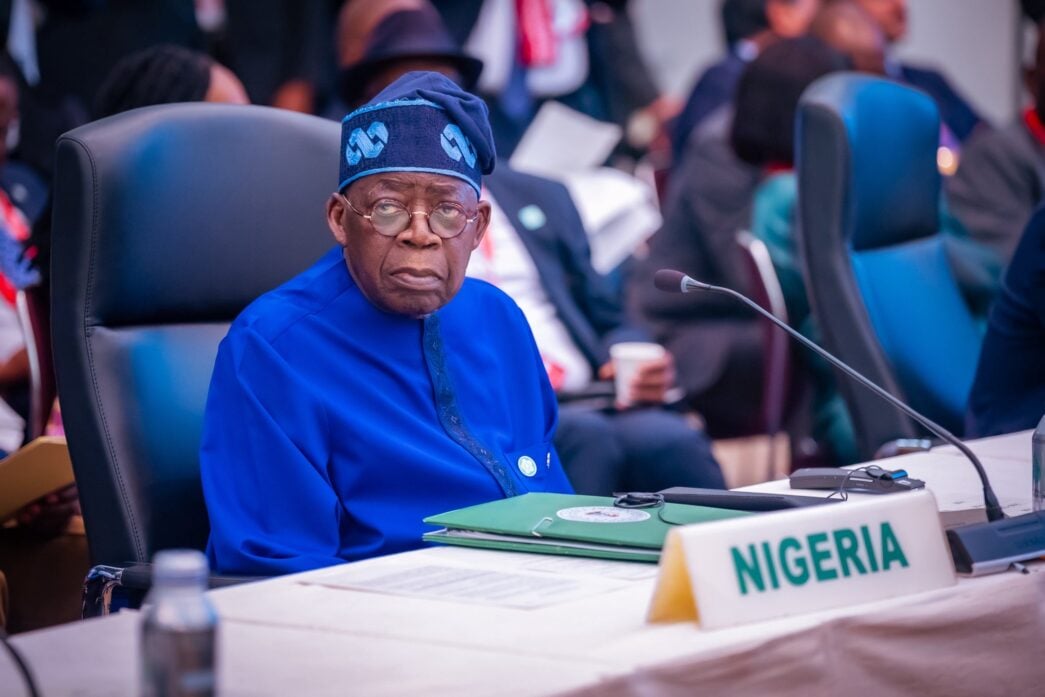
President Bola Tinubu has inaugurated the Presidential Working Group on the National Policing Bill, marking a significant step towards implementing state police across the country.
The committee, inaugurated on Tuesday at the Presidential Villa in Abuja, is tasked with developing the legal framework required to operationalise Nigeria’s proposed dual policing structure following the passage of the Constitution Alteration (State Police) Bill, 2026 by the Senate.
Representing the President at the inauguration, the Chief of Staff, Femi Gbajabiamila, said while the constitutional amendment establishes the legal basis for state police, the National Policing Bill would provide the operational framework necessary for implementation.
According to Tinubu, the proposed legislation will address critical issues including minimum policing standards, state readiness certification, federal-state coordination, accountability mechanisms, human rights safeguards, personnel transition and fiscal requirements.
He said the committee had been constituted to produce an implementation-ready draft of the National Policing Bill for transmission to the National Assembly immediately after the constitutional amendment process is concluded.
The President also directed the panel to recommend additional legal instruments required to ensure the smooth implementation of the proposed dual policing system.
Gbajabiamila will chair the committee, while members include the Attorney-General of the Federation and Minister of Justice, Lateef Fagbemi; the National Security Adviser; the Inspector-General of Police; the President of the Nigerian Bar Association (NBA); the Chairman of the Nigeria Governors’ Forum (NGF); the Chairman of the NGF Committee on State Police; and a dedicated secretariat.
Speaking at the event, Fagbemi described the initiative as timely given Nigeria’s current security challenges and urged governors to facilitate the speedy ratification of the constitutional amendment by their respective state Houses of Assembly.
President of the NBA, Afam Osigwe, reaffirmed the association’s support for the establishment of state police, arguing that Nigeria’s security demands can no longer be effectively managed by a single national police force.
However, Osigwe stressed the need for robust legal safeguards to ensure accountability and prevent political misuse or oppression under state-controlled policing structures.
Representing the Nigeria Governors’ Forum, Dapo Abiodun pledged the support of state governors towards the implementation of the reform.
He disclosed that governors were working towards ensuring that the constitutional amendment would be considered and passed simultaneously by the 36 state Houses of Assembly once transmitted.
Abiodun described the proposed state police system as a response to long-standing public demands for decentralised and community-based policing, adding that the reform validates the effectiveness of regional security outfits such as Amotekun.
According to him, if each state recruits about 6,000 officers, nearly 200,000 additional security personnel could be deployed nationwide to complement the existing federal police structure.
The Issues
Nigeria’s security architecture has long been criticised for its highly centralised structure, with growing calls for state policing to improve local intelligence gathering and rapid response to security threats.
Supporters argue that decentralising policing will enhance community security and complement federal efforts, while critics warn that without strong legal safeguards, state police could become vulnerable to political interference, abuse of power and human rights violations.
The success of the proposed reform will largely depend on the legal framework governing oversight, funding, operational standards and accountability.
What’s Being Said
Bola Tinubu
“The Constitution Amendment Bill establishes the framework for dual policing, but it does not operationalise it. That work is left to the National Policing Bill.”
Lateef Fagbemi
“There is no denying the fact that we are in a critical moment security-wise, and all hands must be on deck.”
Afam Osigwe
“We must ensure we do not create a monster. The right legal framework must guarantee accountability and prevent oppression.”
Dapo Abiodun
“This bill has answered the cries of Nigerians about cascading policing and removing it from the Exclusive Legislative List.”
What’s Next
The Presidential Working Group is expected to produce a comprehensive draft National Policing Bill for submission to the National Assembly following the completion of the constitutional amendment process.
The constitutional amendment must still be ratified by at least two-thirds of the 36 state Houses of Assembly before the proposed state police framework can become law.
Bottom Line
The inauguration of the Presidential Working Group signals the Federal Government’s determination to move beyond constitutional amendments towards the practical implementation of state policing. While the initiative promises to reshape Nigeria’s security architecture through decentralised law enforcement, its success will depend on a legal framework that balances operational efficiency with accountability, oversight and the protection of citizens’ rights.