









Nigeria’s economic recovery yet to ease hardship as Rewane warns of election, global risks
Despite a stronger naira, declining inflation and rising stock market returns, Nigerian households continue to struggle with high living costs, while political uncertainty and global conflicts threaten the country’s economic outlook.
Nigeria’s improving economic indicators have yet to translate into substantial relief for households, as persistently high prices, weak purchasing power and rising business costs continue to weigh on the economy.
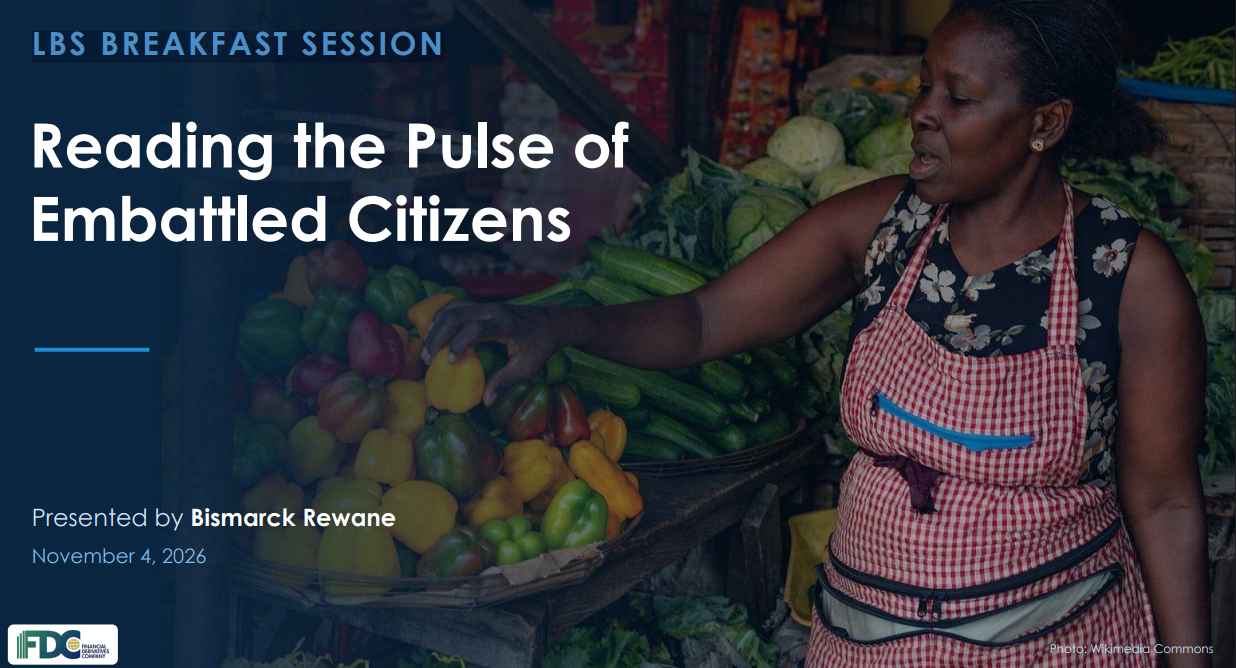
This was the central concern raised by economist and Managing Director of Financial Derivatives Company (FDC), Bismarck Rewane, in a presentation titled Reading the Pulse of Embattled Citizens at the Lagos Business School (LBS) Breakfast Session on November 4, 2026.
Rewane’s assessment highlighted a growing disconnect between Nigeria’s improving macroeconomic performance and the experiences of citizens, warning that the country’s recovery remains vulnerable to domestic political developments and external economic shocks.
The presentation examined six major issues, including exchange rate stability, inflation, monetary policy, geopolitical tensions, investment opportunities and the outlook for the festive season.
Naira stability expected to continue, but risks remain
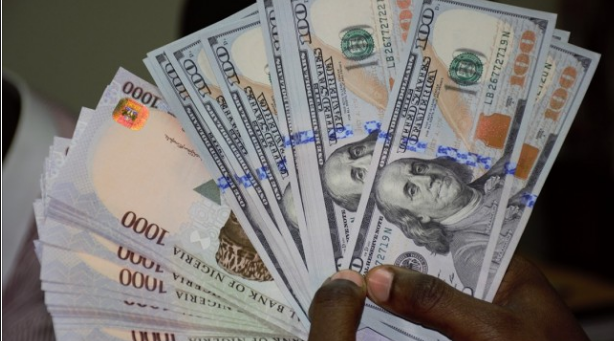
Nigeria’s foreign exchange market has recorded significant improvements since the naira fell to a record official low of ₦1,669.15/$ in late 2024.
According to the presentation, the currency appreciated to approximately ₦1,332/$ in October 2026, while the gap between the official and parallel market rates narrowed from over 60 per cent to 28 per cent.
External reserves also climbed to approximately $55.22 billion, their highest level in 18 years, providing the Central Bank of Nigeria (CBN) with a stronger buffer to manage foreign exchange pressures.
Rewane attributed the naira’s recovery to tight monetary policy, attractive interest rates that have encouraged foreign portfolio investments, and improved foreign exchange inflows.
However, he cautioned against assuming that the currency would continue appreciating indefinitely.
FDC’s outlook assigns a 55 per cent probability to the naira trading between ₦1,300 and ₦1,450/$ over the next six to 12 months. The presentation also gives a 25 per cent probability to further appreciation to between ₦1,250 and ₦1,320/$, while the possibility of renewed depreciation to between ₦1,450 and ₦1,600/$ carries a 20 per cent probability.
Weaker oil receipts, foreign portfolio investment outflows and stronger demand for dollars were identified as major risks to the currency.
Seasonal demand associated with festive imports and election-related spending could also put temporary pressure on the foreign exchange market.
Despite these risks, FDC advised Nigerians against buying dollars purely to speculate on another naira depreciation, arguing that the currency was unlikely to fall below ₦1,450–₦1,500/$ under the prevailing conditions.
Instead, individuals were advised to purchase foreign exchange for known obligations, such as international school fees and travel expenses.
The presentation also highlighted the unequal effects of a stronger naira. While consumers and import-dependent businesses could benefit from cheaper imports, exporters would receive fewer naira for every dollar earned.
It further warned that sustained currency appreciation without improvements in domestic production could expose Nigeria to Dutch disease, an economic condition in which a booming sector weakens the competitiveness of other industries, particularly manufacturing and agriculture.
Falling inflation has not restored purchasing power
Although Nigeria’s headline inflation declined from 15.39 per cent in August to 14.63 per cent in September 2026, the presentation questioned whether the improvement was translating into better living conditions.
The distinction, according to Rewane’s analysis, is that falling inflation does not necessarily mean falling prices. It means prices are increasing at a slower rate.
The presentation showed that average food prices increased by 14.13 per cent between September 2025 and September 2026, while energy and transport prices recorded an average increase of 47.91 per cent.
A 50kg bag of rice, for instance, rose from ₦72,000 to ₦80,000 within the period. The price of a kilogram of chicken increased from ₦5,000 to ₦6,500, while a 12.5kg cylinder of cooking gas rose from ₦16,195 to ₦20,000.
Transport costs also increased by 71.43 per cent, from ₦700 to ₦1,200 per trip.
These increases explain why households continue to experience financial pressure despite the decline in the inflation rate.
The presentation further noted that the national minimum wage of ₦70,000 has lost considerable purchasing power since its introduction.
Using the September inflation rate of 14.63 per cent, FDC estimated that a worker earning ₦70,000 monthly loses approximately ₦107,209 in annual purchasing power.
It also identified the rebasing of the Consumer Price Index and changes to the inflation basket as factors that contributed to the decline in reported inflation, alongside a stronger naira, lower import tariffs and improved harvests.
Rewane’s assessment therefore distinguished between improvements arising from lasting structural changes and those influenced by temporary or statistical factors.
For businesses, the presentation recommended adapting to consumers’ reduced spending capacity without necessarily abandoning established brands or sacrificing profit margins.
Suggested strategies included smaller packaging, affordable product variations, refill packs, value bundles and loyalty programmes.
FDC projected that inflation could average 14.60 per cent under its base-case scenario, although increased election spending, currency depreciation and food or fuel supply shocks could push it higher.
The presentation argued that sustainable improvements in purchasing power would require higher productivity, better infrastructure, improved food storage and lower production costs rather than temporary financial relief.
Interest rate cuts may not translate into improved living standards
Another concern raised in the presentation was the relationship between Nigeria’s monetary policy and the wider economy.
The CBN reduced its Monetary Policy Rate (MPR) by 350 basis points to 23 per cent in September 2026, following improvements in inflation.
The decision contrasted with the position of major global central banks, including the United States Federal Reserve and the European Central Bank, which maintained their interest rates at their October meetings.
Rewane’s analysis indicated that Nigeria’s relatively high interest rates continued to attract foreign portfolio investors seeking better returns.
The October Open Market Operations (OMO) auction recorded stop rates of 17.63 per cent for 138-day bills and 17.14 per cent for 180-day bills.
FDC argued that these attractive returns, alongside foreign reserves exceeding $50 billion, were helping to sustain foreign investor interest and support the naira.
However, the presentation warned that lower domestic interest rates could eventually reduce the attractiveness of Nigerian assets to foreign investors, potentially triggering capital outflows.
It also identified a possible increase in imports as another consequence of cheaper domestic credit.
According to the analysis, increased import demand could widen Nigeria’s trade deficit, particularly because oil, which accounts for a significant share of exports, remains subject to production constraints.
The presentation further raised concerns about cross-border smuggling, arguing that differences in interest rates and currency conditions between Nigeria and neighbouring countries could make informal trade more attractive.
On the question of whether lower interest rates would improve citizens’ living standards, FDC argued that the transmission of monetary policy benefits to households remained weak.
Much of the available credit still goes to government, while high operating costs and weak consumer demand continue to limit private-sector expansion.
It therefore maintained that productivity growth, rather than interest rate reductions alone, would be necessary to improve incomes and living standards.
2027 elections and global conflicts pose risks to economic recovery
Rewane also identified growing geopolitical uncertainty and the approaching election cycle as important factors investors should monitor.
The presentation examined six major conflict zones in 2026, compared with two in 2025, including the Russia-Ukraine war, tensions involving Israel, Gaza and Lebanon, the United States and Iran conflict, tensions between the United States and Venezuela, Pakistan-Afghanistan hostilities and escalating insecurity around Yemen and the Red Sea.
These developments have implications for Nigeria through oil prices, food imports, shipping costs and foreign investment.
The presentation noted that Brent crude had risen to $114.74 per barrel as of November 3, 2026, representing an 88.9 per cent increase year-to-date.
While higher oil prices could increase Nigeria’s foreign exchange earnings and government revenue, they could also raise domestic fuel and transportation costs.
Similarly, disruptions to grain shipments and agricultural supply chains could increase food import costs and worsen inflation.
The presentation also examined the potential economic consequences of political developments in Brazil, Israel and the United States, alongside upcoming elections across Africa.
Eight major elections were identified between November 2026 and August 2027, with Nigeria’s general election scheduled for January 16, 2027.
FDC warned that political instability could affect Nigeria’s investment climate, particularly because foreign portfolio investments accounted for approximately 85 per cent of the country’s total capital importation in 2025.
The country recorded $23.22 billion in total capital inflows during the year, including $19.74 billion in portfolio investment.
The presentation argued that political uncertainty could cause investors to demand higher returns, withdraw funds or postpone investment decisions.
This could reduce foreign exchange liquidity, increase pressure on the naira and undermine confidence in the economy.
However, it stressed that the greatest concern was not necessarily the elections themselves but the possibility that political developments could undermine economic reforms, investor confidence and stability.
FDC advised investors to pay attention to the acceptance of election results, court proceedings, protests and developments during the first 100 days of the next administration.
Stock market rally presents opportunities and valuation risks
Despite the economic challenges facing households, Nigeria’s capital market has experienced significant growth.
The Nigerian Exchange All-Share Index (ASI) had gained 63.42 per cent in 2026, according to the presentation.
However, Rewane cautioned that rising share prices did not necessarily reflect corresponding improvements in corporate earnings.
The presentation noted that several major companies, including MTN, Seplat and Dangote Cement, had recorded share price increases that outpaced their profit growth.
This has raised concerns about stretched valuations and the possibility of profit-taking among investors.
The anticipated listing of Dangote Refinery on the Nigerian Exchange in late November was identified as another major development that could influence market liquidity.
FDC valued the refinery at approximately ₦700.41 per share, compared with its proposed public offer price of ₦525.
Its analysis placed the refinery’s valuation at 6.43 times enterprise value to earnings before interest, taxes, depreciation and amortisation (EV/EBITDA), below the 7.74 times peer average.
The presentation also highlighted the refinery’s improved financial performance, including a reported $4.73 billion net profit for the first nine months of 2026, reversing a $117.2 million loss recorded during the corresponding period of 2025.
Revenue rose by 144.5 per cent to $22.48 billion, while EBITDA increased to $5.52 billion.
Nevertheless, FDC warned that the IPO could temporarily draw funds away from existing listed companies as investors reposition their portfolios.
It advised investors to prioritise companies with strong earnings, take profits where valuations have become excessive and approach the refinery’s public offer in stages.
The broader message was that investors should focus on the ability of companies to generate sustainable profits rather than simply follow rising share prices.
Detty December faces slower growth amid election and weather concerns
The approaching festive season is expected to generate economic activity, but Rewane’s presentation suggested that the usual December spending boom could be weaker in 2026.
FDC projected that revenue from Detty December activities could reach approximately ₦420 billion, representing a 5.9 per cent increase from the ₦396.5 billion recorded in 2025.
However, the number of confirmed major shows had declined from more than 40 in 2025 to over 25 in 2026, while the number of international artistes expected to perform had fallen from six to four.
The presentation attributed the slower outlook to election-related uncertainty, insecurity, higher travel costs and changing weather conditions.
With Nigeria’s January 16, 2027 general election approaching, December falls within the political campaign period, potentially affecting the movement and spending patterns of visitors.
FDC expects some international visitors to arrive earlier in November and leave Nigeria in early December rather than remain throughout the festive season.
Weather conditions associated with El Niño could also disrupt outdoor concerts, festivals and beach activities.
The presentation identified possible changes in rainfall and temperature as factors that could affect event attendance, hospitality businesses and demand for beverages.
For the creative economy, slower festive spending could mean reduced performance fees for artistes, increased competition for bookings and weaker revenue for businesses that depend on large events.
FDC advised event organisers and businesses to bring forward promotions, consider smaller indoor events and offer more affordable packages to consumers.
Its conclusion was that Detty December would still take place, but would likely be earlier, shorter and cheaper than previous editions.
Cybersecurity and global energy shocks among emerging threats
Beyond the immediate economic and political issues, the presentation examined 14 possible global developments over the next six to 12 months that could affect Nigeria.
These included the possibility of the Russia-Ukraine war ending, a change in relations between the United States and Iran, political changes in France, tensions between China and Taiwan, a collapse of major cryptocurrency exchanges and cyberattacks on international food and supermarket chains.
FDC classified a number of these developments as unlikely but potentially disruptive to oil prices, food supply, foreign exchange markets and investment flows.
However, it identified cyberattacks on food and supermarket chains and possible power shortages in Europe and the United Kingdom as among the more likely scenarios.
A major cyberattack could disrupt food distribution, create shortages and increase the cost of imported goods, while also exposing Nigerian retailers and financial institutions to greater cybersecurity risks.
Meanwhile, energy shortages in Europe could increase demand for Nigerian liquefied natural gas (LNG), although higher household energy bills abroad could reduce the amount of money Nigerians in the diaspora send home.
The presentation advised businesses and investors to prepare for unexpected developments by testing their financial exposure to different oil price scenarios, maintaining adequate foreign exchange cover and strengthening cybersecurity systems.
Nigeria faces a fragile year-end economic outlook
Looking towards November and December, FDC expects the naira to trade between ₦1,350 and ₦1,450/$ as festive and pre-election demand puts pressure on the foreign exchange market.
Headline inflation is projected to remain between 14 and 15 per cent by December, while the CBN is expected to maintain its benchmark interest rate at 23 per cent.
External reserves are projected to remain between $54 billion and $56 billion, providing support for exchange rate stability.
The presentation also expects the Purchasing Managers’ Index (PMI) to remain above the 50-point threshold into December, indicating continued expansion in business activity, although growth could moderate in January.
Oil production increased from 1.50 million barrels per day in August to 1.53 million barrels per day in September, supported by stable pipeline operations and the restart of the Obodo field.
However, year-end maintenance could affect production in December, while volatile oil prices could create additional fiscal pressure ahead of the elections.
Overall, Rewane’s assessment suggests that Nigeria is entering the final months of 2026 with stronger economic buffers but unresolved structural weaknesses.
The stronger naira, declining inflation and rising stock market returns represent important improvements. However, the continued erosion of household purchasing power, weak productivity, high operating costs and political uncertainty remain major obstacles to a more inclusive recovery.
The central challenge, therefore, is not simply sustaining improvements in economic statistics but ensuring that they translate into stronger production, better business conditions, improved incomes and a measurable improvement in the everyday lives of Nigerians.