






Key points
- Tanzanian President Samia Hassan has advocated stronger pan-African and international cooperation to advance peaceful nuclear energy development.
- The declaration was delivered at the Nuclear Energy Innovation Summit for Africa (NEISA 2026) held in Kigali.
- Authorities noted that sustaining regional industrialization and mineral processing requires immediate long-term grid diversification.
- Tanzania is actively evaluating small modular reactors and micro modular reactors to fulfill its national development objectives.
- Bilateral energy cooperation advanced concurrently through a newly signed memorandum of understanding between Tanzania and Rwanda.
Main Story
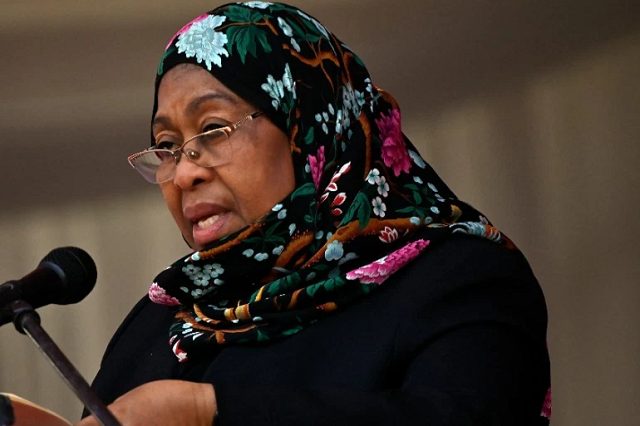
Tanzanian President Samia Hassan has called for stronger cooperation among African countries and international partners to advance peaceful and sustainable nuclear energy development.
Speaking at the Nuclear Energy Innovation Summit for Africa in Kigali, Hassan argued that the continent’s structural economic transformation depends heavily on securing affordable, high-yield base load power capable of driving industrialization, mining, and modernized transit infrastructure.
She emphasized that traditional generation methods cannot independently sustain the surging electricity demands triggered by rapid urbanization and digital expansion under the Tanzania Development Vision 2050 framework.
To address these long-term capacity requirements, Hassan announced that Tanzania is officially integrating nuclear technology into its national energy diversification strategy.
She indicated that the government is specifically prioritizing emerging low-power innovations, including small modular reactors and micro modular reactors, to achieve flexible grid integration.
To secure the necessary operational safety standards, Hassan stressed that African states must collectively build robust regulatory systems, mobilize infrastructure financing, and train skilled human capital.
Following the summit deliberations, Hassan met with Rwandan President Paul Kagame to sign a bilateral memorandum of understanding designed to accelerate cross-border energy sector collaboration.
The Issues
- Over-reliance on single-source power generation leaves industrial corridors highly vulnerable to climate-induced grid disruptions.
- Outdated regulatory frameworks across Sub-Saharan Africa complicate the standard licensing procedures required for radioactive materials.
- High initial capital expenditures for nuclear infrastructure strain national budgets, requiring novel public-private financing models.
What’s Being Said
- President Samia Hassan stated that “it is in this context that Tanzania is advancing consideration of nuclear energy as part of our long-term energy diversification strategy.”
- She described the ongoing Kigali summit as an important platform to help Africa move “from ambition to implementation” in developing reliable and sustainable energy systems.
What’s Next
- Energy ministries in Dar es Salaam will initiate technical pre-feasibility assessments for the deployment of small modular reactors.
- Joint regulatory committees from Tanzania and Rwanda will formulate harmonized safety protocols under the newly signed energy memorandum.
- The African Union will review the summit recommendations to establish standardized training modules for nuclear engineering talent across the continent.
Bottom Line Emphasizing that industrialization demands diversified base load power, Tanzanian President Samia Hassan has initiated plans to incorporate modular nuclear reactors into her nation’s long-term energy strategy while sealing a strategic energy cooperation pact with Rwanda.