Global oil prices fell on Tuesday as concerns over weak fuel demand in the United States weighed heavily on market sentiment. The decline followed disappointing manufacturing data that pointed to an extended slowdown in industrial activity — coinciding with the country’s longest-running government shutdown.
Adding to downward pressure, eight member countries of the OPEC+ alliance — including both OPEC and non-OPEC producers — postponed previously planned output increases for early next year, a move interpreted by traders as an acknowledgment of potential oversupply risks.
Brent crude futures slipped 0.4% to $64.56 per barrel from Monday’s $64.81 close, while US benchmark West Texas Intermediate (WTI) also dropped 0.4% to $60.66 per barrel.
The OPEC+ coalition, led by Saudi Arabia and Russia and including Iraq, the UAE, Kuwait, Kazakhstan, Algeria, and Oman, had initially agreed to increase production by 137,000 barrels per day (bpd) in December. However, according to OPEC’s statement, the next phase of the output adjustment will now take effect in March 2026 instead of January, due to seasonal considerations.
The postponement — part of a gradual unwinding of the 1.65 million bpd voluntary output cuts introduced in April 2023 — triggered renewed speculation that global oil supply could outpace demand next year. Despite this, the alliance reiterated its commitment to flexibility, pledging to pause or reverse policy shifts if market conditions require.
On the demand side, weak US economic data added to the bearish outlook. The Institute for Supply Management (ISM) reported that its manufacturing Purchasing Managers Index (PMI) fell to 48.7 in October, signaling continued contraction for the eighth consecutive month. Analysts say this points to sluggish industrial activity and weaker fuel consumption during the winter season.
Investors are also monitoring the American Petroleum Institute’s (API) upcoming weekly crude inventory report for fresh supply cues. Market data shows that speculative traders increased their net long positions in ICE Brent by 119,046 contracts last week, leaving a total of 171,567 long positions as of Tuesday.
Meanwhile, Russia — one of the world’s top diesel exporters — faces ongoing production disruptions due to Western sanctions and Ukrainian drone attacks targeting its refining infrastructure. This has intensified uncertainty in the global middle distillate market.
According to Baker Hughes’ latest report, active US oil rig counts declined by six to 414 last week, reflecting continued pressure on drilling activity amid softer prices. Still, data from the US Energy Information Administration (EIA) shows that US crude production reached a record 13.79 million bpd in August, up 2.9% year-on-year.
Analysts warn that expectations of an oversupplied market in 2026 could limit US production growth, keeping global oil prices under sustained downward pressure.
Nigeria’s interbank lending rates remained stable this week, reflecting the liquidity surplus that continues to shape the domestic money market. The sustained level of excess cash within the banking system has kept funding costs tight while encouraging financial institutions to increase placements with the Central Bank of Nigeria’s (CBN) Standing Deposit Facility (SDF).
With subdued lending appetite and declining returns on Treasury bills, banks have been redirecting idle funds to the CBN’s 24.5% interest-yielding SDF — a safer alternative to private-sector lending, which carries higher credit risk.
Analysts noted that system liquidity remained robust, climbing to ₦3.1 trillion, an increase of ₦587 billion from the previous level, according to recent investment reports. AIICO Capital Limited stated that the rise was mainly driven by a surge in deposits at the SDF window, which reached ₦2.9 trillion, while the Standing Lending Facility (SLF) window recorded ₦30.2 billion.
Similarly, Coronation Merchant Bank reported that system liquidity began last week at ₦3.12 trillion and peaked midweek at ₦4.81 trillion following inflows from the Federation Account Allocation Committee (FAAC). The figure, however, eased by ₦648.47 billion week-on-week to ₦2.47 trillion, partly due to mop-up activities from Federal Government Bond and Open Market Operations (OMO) auctions totaling ₦672.96 billion.
At the start of the new week, interbank rates held firm, with the overnight lending rate unchanged at 24.88%. Analysts described this as an indicator of stable liquidity and muted borrowing demand among commercial banks. Cowry Asset Management also reported that banks maintained higher balances at the CBN’s SDF window, adding ₦14.3 billion in just one week.
Although short-term rates remained anchored, medium-term tenors witnessed modest upward adjustments of 8, 17, and 25 basis points respectively. Overall, the overnight rate and Open Purchase Rate were steady at 24.86% and 24.50%.
Market analysts predict that funding costs will likely remain within the current range, barring significant liquidity withdrawals or an aggressive OMO intervention from the CBN.
In the Treasury Bills secondary market, yields displayed a mixed performance. Short- and mid-tenor bills — one-month, three-month, and six-month maturities — expanded by 19, 17, and 19 basis points respectively, while the 12-month tenor compressed by 9 basis points. The composite average yield on T-bills edged slightly lower by 1 basis point to 17.45%, underscoring sustained investor demand and positive sentiment across the fixed-income market.
Investors turned their attention to Nigeria’s secondary bond market this week after the Debt Management Office (DMO) offered fewer securities than expected at its latest auction, leaving yield-hungry asset managers to seek alternatives in the open market.
The renewed demand for Federal Government of Nigeria (FGN) bonds pushed benchmark yields slightly lower, as traders capitalized on the attractive pricing of existing issues. Market analysts say the buying momentum reflects growing confidence in the local debt market, amid expectations that the Central Bank of Nigeria (CBN) could deliver one final interest rate cut before year-end 2025.
The optimism follows steady disinflation trends and a firmer naira, although analysts caution that a rate adjustment could narrow banks’ net interest margins. Average yields in the secondary market dropped by 3 basis points to 15.87%, compared with the prevailing inflation rate of 18.02%.
At last week’s auction, the DMO reopened the August 2030 (5-year) and June 2032 (7-year) bonds, offering ₦260 billion in total. Despite overwhelming demand totaling ₦1.06 trillion — a bid-to-offer ratio of 4.07 times — the DMO allotted only ₦313.78 billion, translating to a bid-to-cover ratio of 3.37 times.
Investors showed a stronger preference for longer-dated securities, while stop rates eased by 17 and 35 basis points to 15.83% and 15.85% respectively. Analysts say this reflects the government’s continued effort to manage borrowing costs and control debt service pressures.
Looking ahead, fixed-income traders expect activity in the bond market to remain buoyant ahead of the October supply calendar. Many investors are positioning strategically in anticipation of the next Monetary Policy Committee (MPC) meeting, which could influence short- and long-term yield movements.
Analysts at several investment firms noted that the combination of steady inflation moderation, robust liquidity, and attractive real returns may sustain investor appetite for naira-denominated assets in the coming months.
The Chairman of Keystone Bank, Mrs. Ada Chukwudozie, has honoured a group of young Nigerian innovators for their exceptional contributions to science and technology at the recent Science and Technology Expo held in Abuja.
The award, which celebrated outstanding creativity among students and startups, reflects the bank’s growing commitment to youth empowerment and innovation-driven development.
Speaking at the event, Chukwudozie commended the winners for their ingenuity and perseverance, noting that their innovations demonstrate Nigeria’s potential to lead Africa’s technological transformation. “Innovation is the new currency of progress. Supporting young minds to think creatively is how we build the Nigeria of tomorrow,” she said.
She emphasized that Keystone Bank would continue to support youth-led initiatives that align with national goals of technological advancement and job creation.
The recognition comes amid increasing efforts by both public and private sectors to nurture local innovators. Recently, the Federal Government announced plans to launch a ₦50 million grant for STEMM students to boost innovation and entrepreneurship — a development BizWatch Nigeria earlier reported.
Industry observers say the alignment of corporate and government initiatives could play a pivotal role in positioning Nigeria as a hub for science and technology talent.
The FAPSCON 2025 conference concluded with recognition for several emerging inventors and innovators across Nigeria’s tertiary institutions. Participants commended Keystone Bank for its sustained support of human capital development and technological advancement.
Despite the growing number of unsold luxury apartments across major Nigerian cities, the high-end real estate market has not yet shifted in favour of buyers.
Developers in Lagos, Abuja, and Port Harcourt continue to introduce new luxury projects even as existing ones remain largely unoccupied. Data from Estate Intel shows that over 700 ultra-luxury residential units are currently in the pipeline in Lagos alone, while total upcoming units in the segment are estimated at 1,436.
Similarly, listings on Nigeria Property Centre indicate that Lagos had about 47,000 homes for sale as of September 2025 — one of the highest levels in recent years.
Analysts say the apparent glut in supply has not translated into price reductions because many properties fail to meet buyer expectations in quality or design. Others note that some developers and investors hold their assets for prestige or long-term value rather than immediate sale.
Udo Okonjo, Chief Executive Officer of Fine & Country West Africa, explained that the mismatch between what developers offer and what buyers demand remains a key challenge. “Luxury is not for everyone,” she said. “Yes, we have vacant properties, but some are not built to what the market now demands.”
Market watchers say that while negotiation margins are widening and sales are taking longer to conclude, the market cannot yet be classified as a buyer’s market. Prices remain firm in prime locations such as Ikoyi, Banana Island, and Victoria Island, although softer in less exclusive neighbourhoods.
BizWatch Nigeria recently reported that housing costs in Lagos now consume as much as 70 percent of household income, a situation that further underscores the pressure on affordability even outside the luxury segment. Analysts say this trend highlights the widening gap between pricing in high-end developments and the spending power of average buyers.
Experts expect the current pattern to continue in the short term, noting that developers may need to rethink their pricing models and align better with evolving buyer preferences. Until that happens, sellers are likely to retain the upper hand in Nigeria’s luxury property market.
Nigeria’s agricultural sector is set for a significant boost as the Federal Government has announced that a $500 million World Bank loan will accelerate investment and competitiveness across key agricultural value chains.
The Minister of Agriculture and Food Security, Abubakar Kyari, said the intervention forms part of President Bola Tinubu’s Renewed Hope Agenda on food security, job creation, and rural industrialisation.
Kyari spoke in Abuja during a courtesy visit by a World Bank team led by Hardwick Ichale, Lead for Agriculture Value Chains for Growth (AGROW).
He noted that the loan is within the framework of the World Bank’s broader $14 billion, six-year Agri-Connect initiative, which aims to close productivity gaps in smallholder farming and strengthen linkages between farmers, processors, markets, and financial services.
“This facility will support farmer aggregation, expand market linkages, and integrate micro, small and medium enterprises into priority value chains,” Kyari said. “Our expectation is to see stronger processing capacity, more efficient value chains, and improved livelihoods in rural communities.”
He added that the initiative aligns with ongoing government programmes, including the Special Agro-Industrial Processing Zones (SAPZs), which are designed to attract private investment and promote youth and women participation in agribusiness.
Kyari further stressed the need for transparency, accountability, and organised farmer cooperatives to ensure optimum utilisation of the funding.
In his remarks, Ichale said the AGROW Project will target high-impact commodity chains — including rice, maize, soybean, and cassava — with emphasis on commercialisation, productivity, and inclusion.
“The goal is to enable farmers to see farming as a business,” Ichale said, adding that the initiative is expected to unlock jobs and attract greater private sector investment in agro-processing and logistics.
The project is expected to deepen Nigeria’s export potential and enhance the overall competitiveness of the agricultural sector.
Technology-driven insurance firms are increasingly seeking regulatory approval from the National Insurance Commission (NAICOM) to operate as web aggregators and accelerate digital distribution of insurance products across Nigeria.
So far, Mp-Platform Ltd, Insurance Hub Nig. Ltd, and P2Vest Tech Ltd have secured approval, while CBI Insuretech Limited and WRAPA Insuretech Limited have applied for licenses.
The push aligns with the provisions of the new Insurance Industry Reform Act (NIIRA) 2025, which allows technology partners to collaborate with licensed insurers to boost product reach and market penetration, particularly at the retail end of the value chain.
Web aggregators are regulated digital platforms that allow consumers to compare multiple insurance offerings, providing transparency, unbiased product information, and a simplified route to purchase.
Speaking at the West African Insurance Companies Association (WAICA) Education Conference, the Minister of State for Finance, Doris Uzoka-Anite, said insurance will only deliver real impact when it becomes accessible to everyday Nigerians, including farmers, traders, artisans, and micro-entrepreneurs.
She noted that digital distribution, micro-insurance, and parametric offerings designed to trigger instant payouts based on verified data would improve financial inclusion and deliver resilience at the grassroots.
NAICOM recently released operational guidelines for Insurtech activities following broad stakeholder consultations. The guidelines, effective 1 August 2025, set out the regulatory framework for licensing, compliance and supervision of tech innovators within the insurance ecosystem.
Commissioner for Insurance, Olusegun Omosehin, described the NIIRA 2025 as a turning point for the industry.
“The NIIRA is a transformative catalyst that accelerates innovation, supports the development of novel products, and elevates consumer protection to unprecedented levels,” he said.
Under the framework, partnering Insurtechs may only transact specified classes of insurance with licensed underwriters, while standalone Insurtechs may operate independently—excluding special risks such as oil and gas, marine and aviation, retirement annuities and insurance for government assets.
Insurtech operators are also required to comply with NAICOM’s prudential guidelines, including risk management, investment conduct, outsourcing controls and actuarial standards.
All existing institutions engaged in Insurtech-related services have until the end of September 2025 to fully comply within 30 days of the guidelines taking effect.
Nigeria’s insurance market continues to expand rapidly. Gross Written Premium (GWP) rose to N1.213 trillion in the second quarter of 2025—up 49.3 per cent year-on-year—while total industry assets climbed to N4.4 trillion, compared with N2.3 trillion in Q2 2024.
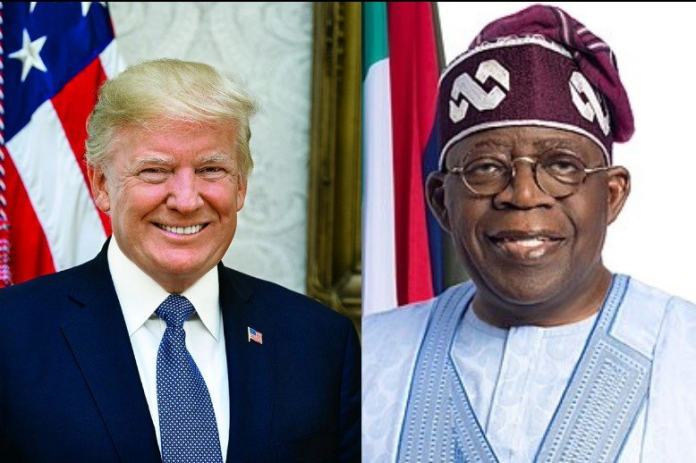
Nigeria’s financial markets opened November 2025 on a turbulent note as both the naira and equities tumbled sharply following controversial remarks from U.S. President Donald Trump, who hinted at possible military intervention in Nigeria over alleged religious persecution.
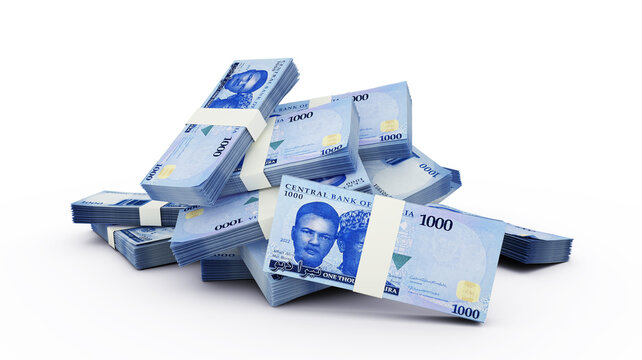
Latest figures from the Central Bank of Nigeria (CBN) revealed that the naira, which had reached a 2025 high of ₦1,421.73 per dollar, weakened to ₦1,436.34/$ on Monday — a 1.03 per cent depreciation or a ₦14.61 loss in a single trading day. At the parallel market, the local currency slid further to ₦1,455/$ amid surging investor anxiety and increased demand for foreign exchange.
The sharp decline followed a weekend of escalating diplomatic tension after Trump, via his Truth Social platform, accused Nigeria of “Christian genocide” and directed the U.S. Department of War to prepare for “possible action” should the alleged killings continue. His remarks, which labelled Nigeria as a “country of particular concern,” quickly sparked global debate and uncertainty over the political and economic fallout for Africa’s largest economy.
The reaction across the markets was swift. Trading sentiment at the Nigerian Exchange Limited (NGX) turned negative as the All-Share Index dropped by 0.25 per cent to close at 153,739.11 points, cutting year-to-date gains to 49.37 per cent. Market capitalisation fell by ₦245.88 billion to settle at ₦97.58 trillion.
Heavy selloffs in Aradel Holdings (-9.21 per cent) and Access Corporation (-3.07 per cent) led the downturn, as investor confidence wavered. Of the active stocks, 38 declined while 19 advanced. Union Dicon topped the gainers’ list with a 9.93 per cent rise, whereas Honeywell Flour Mills suffered the biggest loss, plunging 10 per cent.
Market activity also slowed considerably. Total traded volume and value fell by 87.94 per cent and 44.64 per cent respectively, to 627.5 million units worth ₦25 billion. United Bank for Africa (UBA) accounted for the largest share of trading, representing 21.8 per cent of the total volume (136.8 million units) and 22.2 per cent of total value (₦5.5 billion).
Sectoral performance showed a mixed picture. The Oil & Gas (-3.94 per cent), Commodities (-1.85 per cent), Insurance (-1.48 per cent), and Banking (-0.22 per cent) indices all closed in the red, while the Consumer Goods sector edged up 0.49 per cent. The Industrial Goods index ended the session flat.
In the fixed-income space, investor appetite for Nigeria’s Eurobonds also weakened. According to Cowry Asset Management, average yields rose by 5 basis points to 7.70 per cent as global investors turned risk-averse amid rising geopolitical tensions. Bloomberg data showed that Nigeria’s dollar-denominated bonds were the worst performers among emerging markets on Monday, with all ten Eurobond notes ranking among the global laggards. Bonds maturing in 2047 fell the steepest, losing 0.6 cents to 88.26 cents on the dollar before recovering slightly later in the day.
Despite the volatility, some market experts believe the panic may be short-lived. Tilewa Adebajo, Chief Executive Officer of CFG Advisory, told The PUNCH that the decline was likely “a temporary overreaction.”
“This looks like a short-term blip,” Adebajo noted. “International market prices are already stabilising, and given Nigeria’s recent removal from the FATF Grey List, long-term fundamentals remain solid.”
However, Dr. Muda Yusuf, Chief Executive Officer of the Centre for the Promotion of Private Enterprise (CPPE), cautioned that Trump’s rhetoric could seriously damage investor sentiment.
“The U.S. President’s threat of military intervention is unnecessary, destabilising, and economically damaging,” Yusuf said in a policy statement. “Such pronouncements raise investor risk perception and erode market confidence in Nigeria’s economy.”
He further advised that Nigeria should continue to strengthen its internal security and governance mechanisms while pursuing international engagement through dialogue rather than confrontation.
“Any form of unilateral military action,” Yusuf warned, “would endanger Nigeria’s economic stability, disrupt regional peace, and aggravate humanitarian challenges. The prudent path forward lies in diplomacy, cooperation, and mutual respect for sovereignty.”
As global observers await clarity on Washington’s next steps and Abuja’s diplomatic response, analysts agree that restoring investor confidence will depend heavily on calm policy communication, transparency, and consistency from both the Federal Government and the Central Bank of Nigeria.
The Kwara State High Court sitting in Ilorin has sentenced three men to death by hanging after they were found guilty of armed robbery and unlawful possession of firearms.
The convicts were arraigned before Justice M.O. Folorunso for robbing a victim of his Infinix Note 11 mobile phone at gunpoint on 2 March 2024, at about 6:00 a.m., in the Oko Erin area of Ilorin.
Delivering judgment on Tuesday, Justice Folorunso, who became emotional during the ruling, pronounced the death sentence, stating: “The three of you shall be hanged by the neck until you die.”
In the same sitting, the court discharged and acquitted two women—one of whom is pregnant—who were standing trial on a four-count charge of unlawful possession of firearms, aiding and abetting, kidnapping, and criminal conspiracy.
The women, identified as Aisha Haruna and Rabi Umar, were arrested on 25 June 2025 by operatives of the Police Anti-Kidnapping Squad in Babanla, Ifelodun Local Government Area, after the vehicle in which they were travelling was found to contain a rifle and 31 rounds of live ammunition. Other suspects in the vehicle reportedly fled.
During proceedings, the prosecution, led by Senior State Counsel, I. B. Olorundare, told the court that the women were intercepted by police and local vigilantes around 5:00 p.m. over suspected criminal activity.
However, delivering a judgement that lasted over an hour, Justice Folorunso held that the prosecution failed to prove its case beyond reasonable doubt, noting contradictions in police testimony.
The court also observed that although a rifle was recovered from one of the bags, the evidence did not establish whether it was an AK-47 or an AK-49, nor did it sufficiently link the women to an offence.
The judge subsequently discharged and acquitted the two, and ordered that their counsel provide transport fare to enable them return to their homes in Kaduna and Kammbi community, Moro Local Government Area.
Global tech giant Meta Platforms Inc. has reached an out-of-court settlement with Nigeria’s Data Protection Commission (NDPC) over a $32.8 million fine imposed earlier this year for alleged data privacy violations involving Nigerian users on Facebook and Instagram.
The agreement was formally adopted as a judgment by Justice James Omotosho of the Federal High Court, Abuja, after both parties presented their signed terms of settlement.
Meta, represented by Fred Onuobia (SAN), confirmed that the settlement terms, dated October 30 and filed on October 31, 2025, had been mutually agreed upon. The NDPC’s counsel, Adeola Adedipe (SAN), also consented to the application.
“The terms of settlement reached by both parties are hereby entered as the judgment of this court,” Justice Omotosho ruled.
The case, marked FHC/ABJ/CS/355/2025, stemmed from NDPC’s February 18 decision to sanction Meta with a $32.8 million remedial fine and eight corrective orders for allegedly breaching users’ privacy rights in relation to behavioural advertising.
Following the penalty, Meta filed a motion ex-parte seeking judicial review and an order to quash the NDPC’s enforcement decision. Although the court granted Meta leave to pursue judicial review, it declined to stay NDPC’s proceedings, instead opting for an accelerated hearing.
Both parties later informed the court that they had entered settlement discussions to resolve the matter amicably. Meta’s counsel had previously requested a suspension of rulings to allow negotiations to continue without prejudice.
NDPC’s objection had challenged the competence of Meta’s case, arguing it was non-compliant with Federal High Court procedural rules and lacked jurisdictional grounds. However, with the latest settlement, the dispute has now been formally resolved.
The fine against Meta marked a significant enforcement milestone under the Nigeria Data Protection Act, which was signed into law by President Bola Tinubu in June 2023 to strengthen citizens’ control over their digital data and promote accountability among tech platforms.
Nigeria’s private sector has recorded its strongest performance in six months, as improving macroeconomic conditions continue to bolster business activity and output.
According to the Stanbic IBTC Bank Nigeria Purchasing Managers’ Index (PMI) report for October, compiled by S&P Global, business activity and new orders rose at a faster pace compared to September, reflecting renewed growth momentum across key industries.
The headline PMI increased to 54.0 in October, up from 53.4 in September, indicating a solid improvement in private sector conditions — the highest reading since April 2025. The report also noted that business activity has now strengthened for 11 consecutive months.
The growth was underpinned by strong demand, new product launches, and easing inflationary pressures. Manufacturing led the expansion, while other sectors such as services, agriculture, and wholesale/retail also recorded positive gains.
Despite the stronger output, job creation remained modest, though businesses continued to hire additional staff for the fifth consecutive month to manage rising workloads. Purchasing activity and inventory levels also increased as firms prepared for further expansion.
The report noted that inflationary pressures eased during the period, with output prices rising at the second-slowest pace in five and a half years. Although input cost inflation rose slightly due to higher purchase and staff costs, it remained significantly lower than 2023 and early 2024 levels.
Power outages and delayed client payments created some operational bottlenecks, leading to minor backlogs. However, suppliers’ delivery times improved, indicating better supply chain conditions.
In a statement accompanying the report, Muyiwa Oni, Head of Equity Research, West Africa at Stanbic IBTC Bank, said that the PMI data indicates that Nigeria’s economy entered the final quarter of 2025 on a strong footing.
“Output and new orders growth picked up, supported by product innovation and moderating price pressures,” Oni said. “We expect inflation to ease further towards 15.8%–16.2% in October and below 15% by year-end as food prices stabilise during the harvest season.”
He added that the combination of stable exchange rates, lower inflation, and expectations of potential interest rate cuts would further stimulate real sector activity in the months ahead.
“With these factors at play, we project GDP growth at around 4.0% in 2025, led by stronger manufacturing and services performance,” Oni concluded.
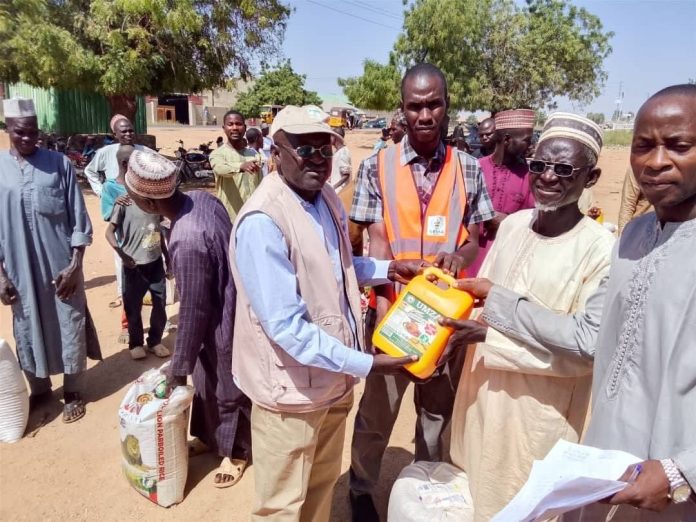
The National Emergency Management Agency (NEMA) has distributed relief materials to households affected by recent flooding in the Rimin Gado/Dawakin Tofa/Tofa Federal Constituency of Kano State.
NEMA’s Kano Operations Office, in collaboration with the Kano State Emergency Management Agency (SEMA) and the Office of the Member representing the constituency at the House of Representatives, carried out the distribution exercise, according to a statement posted on the agency’s official Facebook page on Tuesday.
According to NEMA, the intervention was targeted at communities hit hardest by the flooding and aimed at easing immediate hardship faced by displaced families.
“Affected households received essential food items including rice, maize, beans, vegetable oil, salt, seasoning cubes, and tomatoes to help cushion the impact of the disaster,” the agency said.
A representative of the Federal lawmaker commended NEMA and the Federal Government for the swift response, noting that the gesture would provide much-needed relief to families who have suffered losses.
Beneficiaries, the agency added, expressed gratitude to the Federal Government, NEMA, and their constituency representative, and prayed for protection against future occurrences. They also pledged to support disaster-risk reduction initiatives within their communities.
NEMA explained that the distribution was coordinated with officials from SEMA and security agencies to ensure transparency and maintain order throughout the process.
The relief exercise forms part of ongoing Federal Government efforts to support communities impacted by floods across Kano and other parts of northern Nigeria.
PUNCH Online had earlier reported that the NEMA Sokoto Operations Office, in partnership with the Nigeria Red Cross Society, recently distributed non-food items to flood-displaced households at the Ramin Kura IDP Camp in Sokoto South Local Government Area.
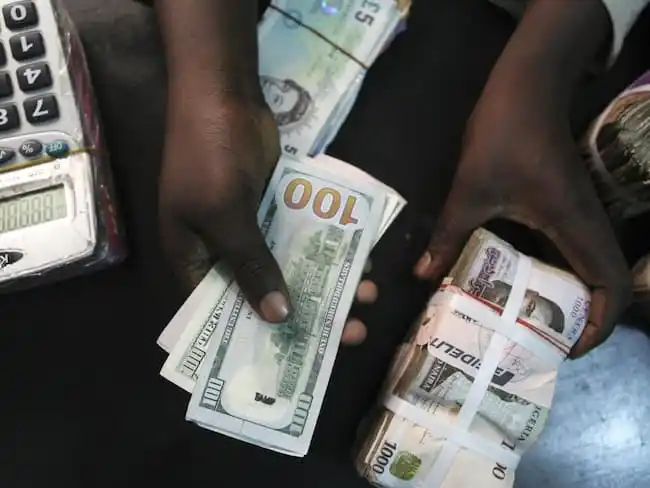
The exchange rate between the Naira and the US dollar, according to the data released on the FMDQ Security Exchange, the official forex trading portal, showed that the naira closed at 1445.00 per $1 on Tuesday, November 4th , 2025. The naira traded as high as 1430.00 to the dollar at the investors and exporters (I&E) window on Monday.
Dollar to naira exchange rate today black market (Aboki dollar rate):
The exchange rate for a dollar to naira at Lagos Parallel Market (Black Market) players sell a dollar for ₦1450 and buy at ₦1445 on Monday 3rd November, 2025, according to sources at Bureau De Change (BDC).
Please note that the Central Bank of Nigeria (CBN) does not recognize the parallel market (black market), as it has directed individuals who want to engage in Forex to approach their respective banks.
Dollar to Naira Black Market Rate Today
Dollar to Naira (USD to NGN)
Black Market Exchange Rate Today
Selling Rate
₦1450
Buying Rate
₦1445
Dollar to Naira CBN Rate Today
Dollar to Naira (USD to NGN)
CBN Rate Today
Highest Rate
₦1440
Lowest Rate
₦1430
Please note that the rates you buy or sell forex may be different from what is captured in this article because prices vary.
Nigeria’s state-owned energy firm, the Nigerian National Petroleum Company Limited (NNPC Ltd.), has reaffirmed that the country remains firmly on course to achieve a daily crude oil production capacity of two million barrels by 2027 and three million barrels by 2030.
The disclosure was made by Mr. Udy Ntia, Executive Vice President for Upstream at NNPC Ltd., during a session at the 2025 Abu Dhabi International Petroleum Exhibition and Conference (ADIPEC) — the world’s largest gathering for the global energy industry. The event, hosted by the Abu Dhabi National Oil Company (ADNOC), is taking place from November 3 to November 6 under the theme “Energy. Intelligence. Impact.”
Speaking during a panel titled “Beyond the Barrel: The Future of Upstream Strategy,” Ntia highlighted that NNPC’s upstream expansion strategy is built around collaboration, co-investment, innovation, and sustainability.
“Our goal is not just to produce more oil but to produce it smarter — cleaner, more efficiently, and more profitably,” Ntia explained.
According to him, Nigeria’s upstream sector is undergoing a transformation driven by technology and partnerships rather than competition. He identified three critical global factors influencing this shift — the energy transition, industry fragmentation, and rapid technological advancement.
Ntia emphasized that Artificial Intelligence (AI) and digital technologies are revolutionizing the oil sector by improving operational efficiency, enhancing decision-making, and unlocking potential in mature fields. “Technology is now the enabler of smarter investment and long-term value,” he added.
On the issue of energy transition and decarbonisation, Ntia noted that while Africa contributes less than three percent to global emissions, NNPC remains committed to responsible oil production. Ongoing efforts include gas monetisation, flare reduction, and commercial partnerships to minimize environmental impact.
The company’s pipeline initiatives — notably the Nigeria-Morocco Gas Pipeline — and refinery optimisation projects are key components of this decarbonisation drive. He explained that the company is adopting co-investment as a modern financing model, ensuring projects remain viable and bankable amid global shifts in the energy market.
“Co-investment is redefining how we fund projects. We are prioritising speed, bankability, and shared growth,” he said.
Ntia also urged greater collaboration between National Oil Companies (NOCs) and International Oil Companies (IOCs), describing them as partners in progress.
“The future is partnership-driven. Everyone benefits when we work together toward profitability, sustainability, and innovation,” he stated.
NNPC’s long-term strategy, he concluded, focuses on balancing energy security, profitability, and environmental stewardship — ensuring Nigeria remains a competitive force in the evolving global energy landscape.
For more than ten years, Nigeria’s aviation sector has operated under uncertainty. Airlines have struggled with trapped foreign funds, high leasing costs, aging infrastructure, and limited investor confidence. These challenges made profitability difficult and discouraged both local and international investment.
Recent policy actions by the Bola Tinubu administration are beginning to change that picture. The government’s clearance of over 700 million dollars in trapped foreign airline funds, along with its renewed commitment to the Cape Town Convention, has sent a strong message to the global aviation community. Confidence is gradually returning to the market, and investors are starting to see new opportunities emerging in a sector that was once seen as too risky.
Restoring Credibility in the Aviation Sector
Credibility is the foundation on which global aviation operates. By releasing the trapped funds, Nigeria has demonstrated that it is ready to meet international financial obligations and re-engage responsibly with the global industry. In previous years, many international leasing companies avoided Nigeria because they could not guarantee repossession of aircraft or repatriation of earnings.
The government’s renewed enforcement of the IDERA (Irrevocable Deregistration and Export Request Authorisation) framework now provides legal assurance to aircraft lessors and financiers that their assets and profits are secure. This policy change not only improves Nigeria’s reputation but also reopens the financing and leasing channels that are essential for any modern aviation economy.
As a result, investors who had previously withdrawn from the market are beginning to reconsider their position, while domestic operators now have better prospects for accessing credit and upgrading their fleets.
Market Response and Emerging Confidence
Evidence of renewed confidence is already visible. Air Algérie has expanded its services to Nigeria by introducing direct routes to Lagos and Abuja. Local carriers are also becoming more ambitious, placing new aircraft orders and seeking international partnerships that would have been unlikely a few years ago.
The larger opportunity, however, lies beyond passenger flights. Nigeria’s wider aviation value chain, which includes maintenance and repair (MRO), ground handling, catering, aviation finance, training, and cargo logistics, remains underdeveloped. With more than 20 million passengers travelling annually and an estimated 7 percent yearly growth in air traffic, the need for supporting infrastructure is increasing rapidly.
Investors who move early into these ancillary areas can secure strategic positions before the market becomes saturated. Sectors such as leasing, logistics hubs, airport services, and aviation training schools offer some of the most immediate potential for growth.
However, one of the government’s most significant initiatives under review is the establishment of a national aircraft leasing company. For years, Nigerian airlines have faced high financing costs and limited access to affordable leasing options because of the country’s perceived financial and regulatory risks.
A national leasing company, especially one supported by both public and private capital, could change that situation. It would allow airlines to access aircraft at more competitive rates while ensuring that a greater portion of the value created in the sector remains within the local economy.
For private investors and financial institutions, this initiative presents two clear avenues for participation. The first is through equity or co-investment in aircraft acquisition and regional sub-leasing. The second is through structured financing linked to aviation infrastructure such as hangars, simulators, and logistics facilities. If implemented effectively, this approach could position Nigeria as a regional leasing hub for West Africa.
Key Areas of Investment Potential
Several parts of the aviation industry are now positioned for renewed private investment.
1. Regional Connectivity: Air travel within West Africa continues to grow, but many routes remain underserved. Airlines that develop mid-range connections between secondary cities can create scalable business models while using Nigeria’s market size to anchor their operations.
2. Maintenance, Repair, and Overhaul (MRO): Most Nigerian airlines still conduct heavy maintenance abroad, which costs the industry millions of dollars each year. Building certified MRO facilities within the country could retain this expenditure and create new technical jobs.
3. Aviation Technology and Data Systems: As airlines modernise, demand is increasing for software solutions in areas such as scheduling, ticketing, fuel management, and predictive maintenance. Nigeria’s strong base of young tech talent provides an advantage for innovation in these areas.
4. Airport Infrastructure and Public-Private Partnerships: The government is seeking private participation in the modernisation of major airports. These partnerships provide long-term, stable returns for institutional investors, particularly those seeking dollar-denominated infrastructure assets.
Together, these segments represent a complete ecosystem where sustainable value can be built rather than extracted.
Remaining Challenges
Despite recent progress, some challenges remain. Exchange rate volatility, high aviation fuel costs, and limited domestic demand continue to affect airline profitability. Power supply issues and the cost of security around airports also increase operational expenses.
However, these are largely operational challenges rather than structural ones. The government’s commitment to regulatory consistency and investor protection is creating a clearer environment for business planning. Investors can now make long-term decisions with greater confidence that the rules will not change unexpectedly.
Outlook for the Sector
Nigeria’s aviation sector is entering a new phase. The government’s efforts to clear outstanding obligations and strengthen adherence to international standards have started to rebuild trust among global partners. The next steps will depend on consistent implementation, infrastructure expansion, and continued policy stability.
If these reforms are maintained, Nigeria has the potential to become a major aviation and logistics hub for West Africa within the next five years. The market fundamentals already exist, and investor interest is returning.
The question is no longer whether the industry will recover but how quickly it can translate policy reforms into long-term commercial growth.
Search for Common Ground (SFCG), a European Union-funded peacebuilding organisation, has released a Social Media Listening (SML) report analysing online conversations and digital engagement around key security-related themes in the Niger Delta, including drug abuse, cultism and public safety.
The report validated at a stakeholders’ meeting in Asaba, Delta State tracked how individuals and communities interact with these issues online, with the findings culminating in 26 recommendations aimed at informing government response, advocacy strategies, and policy formulation.
Stakeholders drawn from Bayelsa, Rivers, and Delta states participated in the session, including journalists, security agencies, oil sector regulators, and drug-control institutions.
Sunny Dada, Mass Media and Information Management Coordinator at SFCG, said the organisation hopes government and partners will implement evidence-based actions driven by the report’s data.
“We carried key stakeholders along to ensure that set actions reflect realities in the region,” he said.
He noted that SFCG programmes have reached more than 10 million people, stressing that although long-standing challenges cannot be erased in a short cycle, early gains were already visible.
Among the report’s recommendations are:
scaling up multimedia campaigns to counter the glamorisation of drug abuse and cultism;
strengthening partnerships with influencers, peer groups and community leaders for youth-focused behavioural change;
and conducting periodic validation meetings that compare online findings with real-world feedback.
Dada urged stakeholders not to allow funding constraints to derail implementation.
“If we continue to prioritise money while the region slides into another wave of violence, it will cost even more to fix,” he said, calling for government and donor agencies to provide sustained support.
Speaking at the meeting, Secretary of the Bayelsa State Peace Architecture, Preye Inebaraton, said the goal was to reduce crime and violence by enabling communities to own the peacebuilding process.
“For us in Bayelsa, we have institutionalised peacebuilding through the State Peace Commission. We can only flush out criminality when we collectively commit to peace,” he noted.
Ann Godwin, a journalist from Rivers State and member of the Common Ground Journalists Forum, said technology must be prioritised if the Niger Delta is to accelerate development.
“We are also leveraging the forum to promote peace and collaboration across the region,” she said.
The Advertising Regulatory Council of Nigeria (ARCON), the Association of Advertising Agencies of Nigeria (AAAN) and the National Institute of Marketing of Nigeria (NIMN) have renewed calls for deeper gender inclusion and stronger career pathways for women in Africa’s marketing communications sector.
The appeal was made in Lagos at the 2025 Women in Marketing and Communications Conference and Awards (WIMCA), which remains the largest gathering of women professionals in marketing and communications across the continent.
With the theme, “Bloom, Boom, Zoom: The Pursuit of Excellence,” industry leaders at the event challenged organisations to create systems that allow women to grow, lead, and assume strategic positions within the marketing value chain.
NIMN President, Bolajoko Bayo-Ajayi, described WIMCA as a platform that has evolved into a movement.
“I have never seen such an impressive number of women in marketing and communications gathered in one place. WIMCA continues to ignite ambition, confidence, and passion while pushing women towards enviable heights in management, communications, and marketing.”
AAAN President and Chairman, Heads of Advertising Sectoral Groups (HASG), Lanre Adisa, said the event has become a critical rallying point for female professionals.
“It is rich, impactful, and a must-attend for every woman seeking growth in the industry,” he said, adding that the networking and collaboration opportunities were invaluable.
Director-General of ARCON, Olalekan Fadolapo, said WIMCA’s influence would continue to shape the future of the marketing ecosystem.
“I commend the organisers for a well-structured event. I remain open to support initiatives that push its goals further,” he stated.
Delivering the keynote address, Chief Executive Officer of Entod Marketing, Iquo Ukoh, urged professionals to deliberately cultivate excellence.
“Excellence is a mindset and an identity — it is the difference between being good and being truly great,” she said.
Convener of WIMCA, Joshua Ajayi, said this year’s theme was designed to reflect three stages of professional evolution.
“To bloom is to grow; to boom is to thrive and make impact; and to zoom is to soar into new levels of leadership,” he explained.
The conference also featured the unveiling of the list of the 50 Most Influential Women in Marketing and Communications — a major highlight of the event.
The Nigerian government has debunked claims that President Bola Tinubu is scheduled to travel to Washington for a closed-door meeting with United States Vice President J.D. Vance.
In a statement posted on his official X account on Monday, Senior Special Assistant to the President on Media and Publicity, Temitope Ajayi, described the circulating reports as “false” and “misleading.”
The clarification follows widespread speculation that Tinubu was preparing for high-level diplomatic engagements in the U.S., amid global reactions to allegations of Christian persecution in Nigeria and a recent online post attributed to former U.S. President Donald Trump threatening possible military action.
Ajayi stressed that if the Nigerian leader were to visit the White House, such a meeting would be held with the U.S. President, not the Vice President.
“There’s a story that President Tinubu is going to the U.S. on Tuesday to see U.S. Vice President J.D. Vance. That story is not true,” Ajayi said. “If President Tinubu is going to the White House, he won’t be going to see a Vice President.”
Trump, in a recent post on his Truth Social account, threatened that the United States could “go in guns blazing” if Nigeria fails to halt alleged killings of Christians, warning that American support could be withdrawn.
The claims have since been dismissed by Nigerian authorities, who insist the Federal Government remains committed to tackling terrorism and violent extremism nationwide.
President Tinubu, also writing on X, said his administration is upholding constitutional guarantees on religious freedom and continues to engage religious leaders across faiths to promote peace and strengthen national security.
“Nigeria stands firmly as a democracy governed by constitutional guarantees of religious liberty,” he said. “Since 2023, our administration has maintained open and active engagement with Christian and Muslim leaders alike, and continues to address security challenges that affect citizens across faiths and regions.”
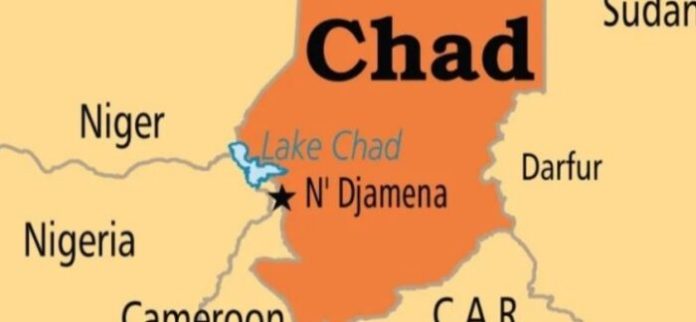
The Government of Chad has ordered the immediate closure of its border with Nigeria, citing rising security concerns and intelligence reports linked to alleged United States military activity in parts of West Africa.
Military sources in N’Djamena told regional security analyst, Zagazola Makama, on Monday that President Mahamat Idriss Déby Itno directed a full lockdown along the Chadian–Nigerian boundary after intelligence suggested that armed groups operating in northern Nigeria could attempt to cross into Chadian territory.
The Chadian military has since been placed on maximum alert, with armoured vehicles and heavily armed troops deployed to strategic transit points between both countries.
A senior military official, who spoke on condition of anonymity, said the move was “to ensure that no armed group or foreign force takes advantage of the current regional uncertainty to destabilise Chad.”
President Déby was also quoted as saying that “no armed group or foreign force will be allowed to enter Chadian soil under any disguise,” stressing that Chad’s territorial sovereignty remained non-negotiable.
The closure comes amid heightened tension across the Sahel and speculation over alleged U.S. military plans in the region — including threats recently attributed to former U.S. President Donald Trump over Christian killings in Nigeria.
Security analysts say Chad’s action appears to be a preventive measure aimed at safeguarding its borders and denying terrorist elements safe passage as alliances shift and conflict dynamics evolve across the Lake Chad Basin.
However, experts warn that while the move may be necessary from a defence standpoint, it could disrupt legitimate border trade and humanitarian movement between both countries — impacting communities that rely heavily on cross-border commerce.
Makama noted that the Chadian government has not disclosed how long the closure will last, but officials have pledged to review the situation as the regional security landscape develops.
In contrast, sources in Borno State — which shares a northeastern border with Chad — said there has been no observable change, insisting that movement across border communities remains unrestricted.
Amid ongoing geopolitical concerns, analysts have urged Nigeria to prioritise diplomatic engagement with Washington to forestall further escalation and to address the persistent activities of Islamist militants in the region.
Nigerian families are experiencing a measure of relief as food prices continue to decline across major markets, following two years of unprecedented cost-of-living pressure.
A new market survey indicated that prices of staple food items have fallen by an average of 30 per cent year-on-year, driven by the ongoing harvest season, improved security in key farming corridors, favourable weather conditions, and the impact of the federal government’s import waiver introduced last year.
In Lagos, the price of a 50kg bag of local parboiled rice has dropped to an average of ₦65,000 from ₦73,000 in October 2024 — an 11 per cent decrease. A 50kg bag of foreign parboiled rice now sells for ₦62,000, down from ₦82,000 last October, reflecting a 24 per cent decline. A big basket of tomatoes has also fallen by 30 per cent — from ₦50,000 to ₦35,000.
Similar trends have been recorded in Abuja, where a 50kg bag of local parboiled rice has dropped by 16 per cent to ₦63,000. A four-liter container of white garri now sells for about ₦1,600 — against ₦4,000 recorded last October — a 60 per cent decline. The popular measure known as “mudu” now sells for ₦2,500, down from ₦5,000.
Many Nigerians say the change is already easing household strain.
“I am so happy that food prices are dropping. I was able to buy more than I budgeted for. Before now, my feeding budget could no longer meet my family’s needs.”
A fruit vendor in Berger, Lagos, who identified herself as Esther, expressed hope that the trend continues. “We are seeing a good change. I want the prices to keep coming down,” she said.
Nigeria faced its worst cost-of-living crisis in 2024 when food inflation climbed to a record 40.87 per cent in June, pushing headline inflation to 34.19 per cent.
However, the latest consumer price index (CPI) figures show that food inflation has eased significantly to 16.87 per cent as of September 2025.
“This outsized food inflation decline may have been partly prompted by the recent material drop in market food prices and easing security concerns,” investment firm CardinalStone stated in a recent report.
For many families who spend more than half of their income on food, the drop has brought relief and hope.
“These days, the same money buys more. It feels like we can finally breathe a bit.” Boluwatife, a Unilag student, stated.