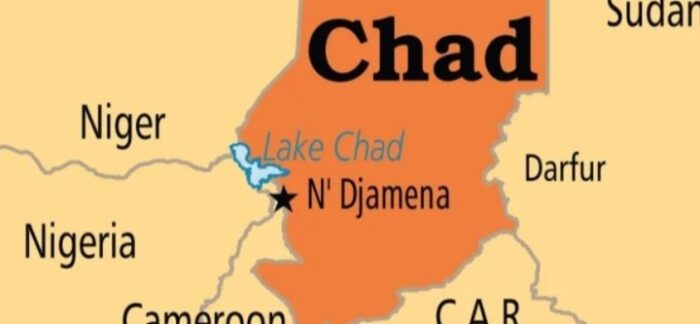
The Government of Chad has ordered the immediate closure of its border with Nigeria, citing rising security concerns and intelligence reports linked to alleged United States military activity in parts of West Africa.
Military sources in N’Djamena told regional security analyst, Zagazola Makama, on Monday that President Mahamat Idriss Déby Itno directed a full lockdown along the Chadian–Nigerian boundary after intelligence suggested that armed groups operating in northern Nigeria could attempt to cross into Chadian territory.
The Chadian military has since been placed on maximum alert, with armoured vehicles and heavily armed troops deployed to strategic transit points between both countries.
A senior military official, who spoke on condition of anonymity, said the move was “to ensure that no armed group or foreign force takes advantage of the current regional uncertainty to destabilise Chad.”
President Déby was also quoted as saying that “no armed group or foreign force will be allowed to enter Chadian soil under any disguise,” stressing that Chad’s territorial sovereignty remained non-negotiable.
The closure comes amid heightened tension across the Sahel and speculation over alleged U.S. military plans in the region — including threats recently attributed to former U.S. President Donald Trump over Christian killings in Nigeria.
Security analysts say Chad’s action appears to be a preventive measure aimed at safeguarding its borders and denying terrorist elements safe passage as alliances shift and conflict dynamics evolve across the Lake Chad Basin.
However, experts warn that while the move may be necessary from a defence standpoint, it could disrupt legitimate border trade and humanitarian movement between both countries — impacting communities that rely heavily on cross-border commerce.
Makama noted that the Chadian government has not disclosed how long the closure will last, but officials have pledged to review the situation as the regional security landscape develops.
In contrast, sources in Borno State — which shares a northeastern border with Chad — said there has been no observable change, insisting that movement across border communities remains unrestricted.
Amid ongoing geopolitical concerns, analysts have urged Nigeria to prioritise diplomatic engagement with Washington to forestall further escalation and to address the persistent activities of Islamist militants in the region.