Iceland prime Minister resigns after massive protest.
The Prime Minister of Iceland, Sigmundur Gunnlaugsson, announced his resignation from public office moments ago, according to media reports monitored by BizwatchNigeria. This marks the first major political fallout from the Panama Papers leak which was considered to be the largest data leak in history.
On Monday the International Consortium of Investigative Journalists (ICIJ), along with journalists across the world, exposed how the wealthy and political elite have been concealing their money in shell companies using the law firm Mossack Fonseca in Panama.
The revelations coming from this reporting have touched every quarter of the world implicating prominent leaders including the son of former UN Secretary General Kofi Annan, Nigeria’s Senate President Bukola Saraki, immediate past Senate President David Mark, Rtd. Gen. Theophilus Danjuma and numerous others.
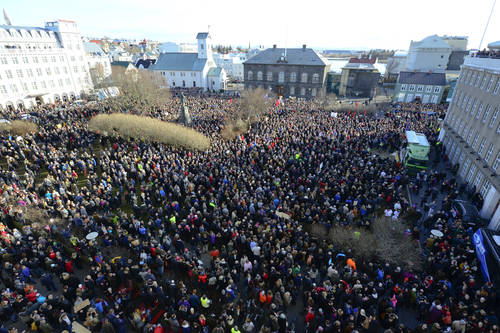
Mr. Gunnlaugsson was accused of concealing millions of dollars of his family’s assets. His resignation comes after a major showing of protesters in the Iceland capital Reykjavik.
According to the media report, Iceland Minister of Agriculture and Fisheries Sigurður Ingi Jóhannsson would likely be the next Prime Minister. It was him that announced the ex Prime Minister’s resignation.
Meanwhile, it was only Bukola Saraki among the Nigerians mentioned in the trending Panama Paper scandal that has bothered to respond to the allegations, others seems not bothered about the revelations.
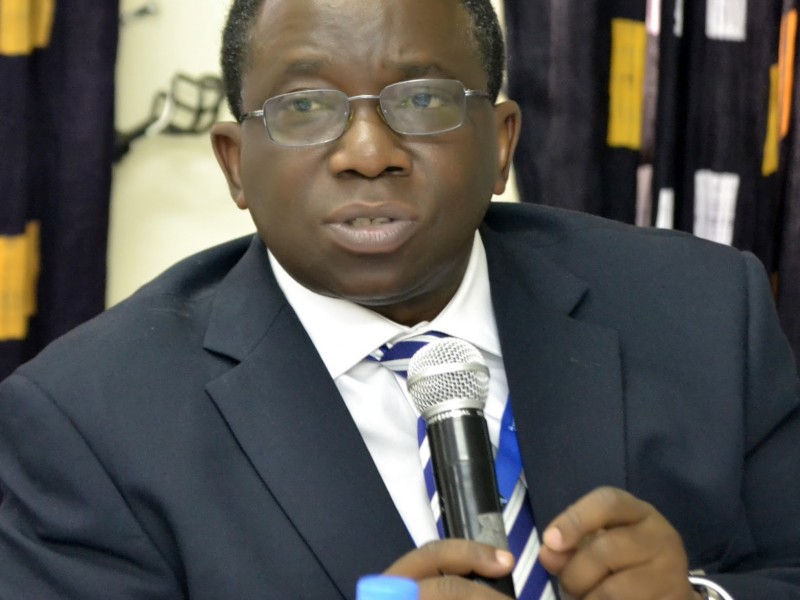
Nigeria’s Minister of Health, Prof. Isaac Adewole, has condemned the importation of mosquito nets and called on government’s research agencies to partner with some higher institutions of learning and healthcare products manufacturers to research the possibilities of producing it locally.
Aside mosquito nets, he also endorsed the use of local herbal drugs, but recommended that they should be produced under the supervision of Nigerian Institute of Pharmaceutical Research and Development (NIPRD) and the National Agency for Food and Drugs Administration and Control (NAFDAC).
Speaking at the presentation of ‘NAFDAC Guidelines 2016’, he pointed out that billions of “hard-earned” money was been used to import mosquito nets and other drugs that could be produced locally, and suggested that NAFDAC could partner with some Nigerian universities to enhance researches into local production of drugs.
He said, “when we came on board, what we were mandated to do was to develop the health agenda for the nation, doing so, we worked on delivering health to Nigerian citizens. The APC manifesto documented a new commitment to health, but we needed to build on this.”
He said, “we will make essential medicines available; make sure that we have self-sufficiency in local production and clinical practice. We will also ensure that we keep substandard products out of Nigeria.”
“I saw a challenge with the Pharmaceutical Society of Nigeria. I believe that many of the key products that we use in this country can be labeled as medical devices, including the Long-Lasting Insecticide Treated Nets. Please, ensure that these are produced in Nigeria,” he advised
In addition to this he said, ”we should also invest in local products. We call them traditional medicine, but, I want to call them Nigerian medicines. I think NIPRD will partner with us to research with their products, making sure that local preparations are available for Nigeria. I am sure NIPRD is aware of some of the commodities from the middle-belt such as the one that when taken can prevent Nigerian women from getting pregnant for the next one year. This should be made available.”
Niger’s electricity company, Nigelec has been forced to cut power supply to seven out of the nation’s eight regions amidst the continued, crippling fuel scarcity which has almost grounded all business activities in Lagos, the nation’s commercial capital.
A media statement released in Cotonou disclosed that the power outage has affected seven of the country’s eight regions for the past 72 hours.
”This situation has caused (NIGELEC’s) principal provider to limit to a third its normal imports, which is at the base of the current disturbances observed on networks lately,” it further read.
Adding that, “NIGELEC has found itself therefore with the obligation to proceed with rolling blackouts.”
Landlocked Niger Republic became an oil producer in 2011, but still imports about 70 percent of its power needs from the Nigeria.
Some Nigeria’s analysts pointed out that attempts by the government to correct past errors in the administration of importation of petroleum products into the country, since the four refineries were not refining enough, was partly responsible for the scarcity.
The removal of fuel subsidy, stoppage of questionable payments to importers of the product and high exchange rate of naira to dollar were the other factors blamed for the scarcity that started September, last year.
Less than 15 percent of the population of Niger, considered to be one of the world’s least developed countries, has access to electricity, according to the World Bank.
Meanwhile, Niger’s uranium-mining region Agadez, which has an independent power plant, has not been affected by the power cuts.
Mrs. Bisi Akodu, Partner & Heads Olisa Agbakoba Legal’s (OAL) Corporate Commercial and Public Sector Group
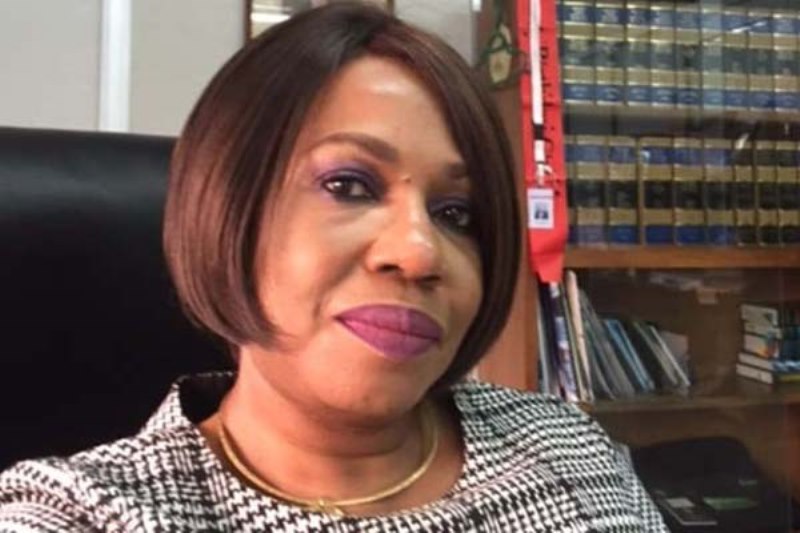
Mrs. Bisi Akodu is a partner at Olisa Agbakoba Legal and heads Olisa Agbakoba Legal’s (OAL) Corporate Commercial and Public Sector Group. In this interview, she spoke about problems affecting the growth of Nigerian businesses.
Q: To what extent do you think that access to good financing has affected Nigerian Businesses?
A: Every business whether it is a private business concern or a multi-national conglomerate requires finance for it to thrive and be competitive. In global economies, we have what you call small and medium sized businesses that represent the engine room of the economy because of their proliferation and the impact they have on the GDP of individual economies. These small businesses are referred to as small and medium enterprises (SMEs) and are represented in all sectors of the economy be it manufacturing, agriculture, trade and commerce, shipping and maritime services, hairdressing and so on and so forth.
It should be noted that despite the number of SMEs in Nigeria, they have not contributed significantly to the growth of the economy and this can be attributed to poor access to credit. SMEs have various needs and for this reason cannot be stereotyped in terms of finance requirements. SMEs require finance for various purposes but majorly to purchase or lease assets, for working capital and for expansion. There are three major problems that affect the growth of Nigerian businesses and these are: access to finance, macroeconomic conditions and poor infrastructure.
Access to finance is key to the growth of our SME class in Nigeria, although many government initiatives have been developed to provide solutions to this problem it persists. Now, let us consider the finance options open to SMEs. Banks are the traditional lending source for small businesses however, we know that banks only give short term funds by way of over draft facilities or short-term loans.
SMEs often do not have ‘bankable’ projects so in practice you would find that on approaching the bank for finance the SME would have to comply with the bank’s terms and conditions contained in its offer letter requiring substantial collateral as a prerequisite for granting the loan. In practical terms, many small businesses would be unable to fulfill the bank’s conditions so you find that a good business idea is starved of start-up funds or an existing business is prevented from carrying on businesses and folds up. To compound this situation if the bank is prepared to risk lending to the SME the interest rates are so prohibitive that often the business collapses and the borrowers of funds default in their payment to the bank. Therefore, to answer your question yes adequate financing has affected Nigerian businesses.
Q: Do issues around access to finance also affect firms that are publicly quoted
A: Let me first start by saying that a firm in the strict sense is not a limited liability company as it does not have a share capital. It is only public limited liability companies in Nigeria that can list their shares on the stock exchange and become quoted. I stated earlier that all businesses require finance at various stages for different reasons. Now, a private company’s source of finance is usually by way of debt or equity meaning loans or investments by shareholders.
Quoted companies generally have a wider range of funding sources than unquoted companies. A public quotation on a stock market increases a company’s external and internal profile. It can enhance the view that investors, shareholders and other stakeholders have of the company, its ambitions and the way in which it meets its obligations and adheres to regulatory requirements. Quoted companies can raise funds from the capital market by way of a public offering, rights issue or bond issue. The opportunities for fund raising for quoted companies are therefore many.
Q: Would you say Nigerian banks are just paying lip service to financing SMEs
A: The Central Bank of Nigeria (CBN) regulates Nigerian banks and lays down monetary policy guidelines for the banks to follow. Over the years there have been various CBN initiatives to find a solution to financing SMEs. Recall the Small and Medium Industries Equity Investment Scheme (SMIEIS) was a voluntary initiative of the Banker’s Committee which required all licensed banks to set aside 10 percent of their profit before tax (PBT) for equity investment in SMEs. The SMIEIS was thwarted by underlying issues related to cash flow, investment structuring, monitoring, liquidity and exit strategies. It was a very good plan but it did not work.
Again in 2013 the CBN launched the Micro, Small and Medium Enterprise development Fund (MSMEDF) with seed capital of N220 billion to bridge the huge financing gap in the MSME sub-sector. Under the terms of the scheme educational certificates which may include: SSCE, National Diploma, National Certificate of Education, National Business and Technical Examination Board would be taken as collateral for loans. Personally, I do not quite understand how this works in terms of collateral. The best that can happen is that the borrower would forfeit the certificate in case of default! The Bank of Industry recently launched the Small and Medium Enterprise Directorate, which was established to drive National Enterprise Development Programme (NEDEP). BOI is working vigorously towards ensuring that MSMEs account for at least 30 per cent of BOI’s risk assets by 2019 with a single digit ratio of non-performing loans to total loans. Other banks too have laudable programmes for SMEs so based on this I do not believe that the banks are paying lip service to funding SMEs. You must understand that the banks are constantly under pressure to ensure that risk assets perform, therefore most banks see lending to SMEs as risky business. The perception is that Nigerian banks are reluctant to lend to SMEs due to the amount of non-performing loans on their balance sheets and credit risk issues. The fall in oil prices has impacted negatively on the balance sheets of Nigerian banks as they have been exposed to high numbers of Non Performing Loans (NPLs) mainly in the oil and gas sector but also other sectors represented by small businesses. Therefore, you see the banks are tackling a host of challenges such as liquidity issues, non-performing loans, and foreign exchange trading restrictions that has made it difficult for them to perform their traditional lending role.
Q: Do you think that Crowdfunding, which is a contemporary approach to financing has a role to play in all this? And how does Crowdfunding work
A: I will answer the second part of your question first. The continued global financial depression has made funding businesses more acute. With this trend, it has been more and more difficult for small businesses to access credit or finance through traditional means: banks, private equity, angel finance etc. Crowdfunding is a way in which individuals, organisations and businesses can raise money through an online portal called a Crowdfunding platform to finance or re-finance their activities.
Some financial gurus will argue that Crowdfunding is not new that it is simply an approach to raising capital by appealing to a large group of people (the crowd) for small individual contributions of money. On this premise, you can say that Crowdfunding has existed in various forms as a legitimate fund raising model.
However, what is new is that an increasing number of entrepreneurs are looking at Crowdfunding to raise seed and early stage investment capital. There are three main Crowdfunding models: donation Crowdfunding used by individuals to raise finance for promotions, charities and the arts, loan-based Crowdfunding often called peer to peer (P2P) lending where individuals or businesses raise money by way of loans and pay the lenders interest in return and investment-based Crowdfunding where investors can invest in early stage unlisted companies in return for shares.
We see that the world has gone cyber, take internet commerce as an example of the enormity of online trading opportunities. Several years ago, most of us would have been reluctant to shop on line, now we find it not only stress free but also exciting. The internet enables us to interact socially and provides a source of information. Crowdfunding provides an efficient way to raise funds and has been done with more cost effectiveness than raising funds through banks or venture capital etc. Crowdfunding could prove to be a good model for funding Nigerian businesses.
Q: How would you describe its adoption in Nigeria and what legal structure do you think should be put in place by government to encourage its adoption in Nigeria
A: Crowdfunding per se has not been adopted as a finance model in Nigeria. Nigerian law is prescriptive of how companies can raise capital for their businesses. The main legislation on this topic is the Investment and Securities Act, 2007 that generally prohibits private companies offering their securities to the public, again the Securities and Exchange Commission (SEC) has developed rules and regulations how companies can raise finance through the issue of securities. SEC as the regulator of Nigeria’s capital market was established pursuant to the ISA, which grants the Commission general and specific rule making authority.
However, the Commission in exercising this authority has adopted a consultative procedure whereby inputs and comments are obtained from persons subject to its jurisdiction. Similarly, the Companies and Allied Matters Act, 2004 governing the formation and regulations of businesses and companies in Nigeria contains restrictions in terms of dealings with shares and debt securities. A holistic review of these laws would be required to provide legal and regulatory framework for Crowdfunding. Definitely, we need to establish legal and regulatory framework that will accommodate not only Crowdfunding but also other methods of financing such as factoring and invoice discounting.
Unlike in the UK where the Financial Conduct Authority regulates both loan based and Investment based Crowdfunding. Loan-based Crowdefunding in Nigeria will fall under CBN regulation whereas Investment based Crowdfunding will fall under SEC regulation, though there could be an overlap depending on the structure of the transaction. In comparison with western jurisdictions and the US, Nigeria’s financial services sector is still developing. In the United Kingdom financial services are regulated by the Prudential Regulation Authority whereas the Financial Conduct Authority (FCA) is responsible for general financial regulation and operates independently of the UK government.
The FCA regulates financial firms providing services to consumers and maintains the integrity of the UK’s financial markets. The FCA regulates both loan based and investment based Crowdfunding in the UK and this has instilled confidence in investors to partake in Crowdfunding. It is important to the growth of the economy that the development of Nigeria’s financial sector is taken as a top priority for government. A lot of work has been done under the CBN’s Financial Sector Strategy 2020 (FSS 2020) in pursuit of financial sector reform. In fact, Dr. Olisa Agbakoba as chair of the Legal Implementation Committee of FSS 2020 proposed some quick win bills that are yet to be passed by the National Assembly.
These bills when passed will add enormous value to financial services in Nigeria. Such Bills include, the Financial Sector Bill, Consumer Credit Bill, E-transaction Bill, Credit Reporting and Information Exchange Bill, Insolvency/Bankruptcy Bill, Alternative Dispute Resolution Bill and so many more that will provide the legal framework for a vibrant financial sector in Nigeria. It is only with the enabling framework that innovative financing models like Crowdfunding can work.
Q: Do you think that Crowdfunding platforms are safe for businesses and would-be investors alike
A: I do not have readily available statistics to state categorically that CFPs are a hundred percent safe or cannot be hacked into. There are a lot of considerations that need to be dealt with by the parties to Crowdfunding. Although Crowdfunding can be less rigorous than traditional fundraising it still requires a good deal of financial and legal advice. From the legal perspective, there are issues of intellectual property rights, tax considerations, regulation, due diligence requirements, contracts, legal structures and a host of legislation.
The fact that it is an online platform does not mean that it should be used for illegal purposes such as money laundering etc. It will be the duty of the CFP to ensure that the platform is designed to specification and all licenses are obtained and updated. The issuer company seeking to raise finance must also ensure that information being passed on to the crowd is true and not misleading. Investors must be conscious of the risks involved. In many jurisdictions there is a cap on the amount an investor can actually invest in any given Crowdfunding round. It is important to have some form of regulation in place as this will ensure investor confidence and monitor the use of the platforms.
Q: How do you think the Crowdfunding model could be effectively regulated?
Financial regulatory policies should be of interest to any government because companies, firms, consumers, and governments fund many of their activities through banks and securities markets. Furthermore, financial instability can damage the broader economy. Financial regulation is intended to protect borrowers and investors that participate in financial markets and mitigate financial instability. It is important that there should be regulation for Crowdfunding in Nigeria as in other jurisdiction, but there should not be over regulation.
In the UK the FCA developed new rules for Crowdfunding in 2014 and will conduct a post-implementation of the new rules this year 2016. In the United States Congress has passed an amendment to the SEC laws to provide for investment based Crowdfunding by way of the JOBS Act. You can see the spontaneity in passing key legislation in the UK and US, it is hoped that Nigeria’s National Assembly can see the importance of prioritising legislation for the financial sector. SEC as a member of the International Organization of Securities Commissions (IOSC) is collaborating with the Ontario Stock Exchange to develop the framework for Crowdfunding in Nigeria. I see great potential in Crowdfundingas an alternative to bank financing for Nigerian businesses.
Political economist Prof Pat Utomi will lead a team of discussants to discuss prospects of reshaping the Nigerian economy amidst dwindling oil prices at the second Media Conference of the School of Media & Communication, Pan Atlantic University and the Natural Resource Governance Institute. The event would hold Wednesday, April 13, at the Honeywell Auditorium of the Lagos Business School, Ajah.
Other speakers are Mr Gbenga Onayiga and the dean of the School of Media and Communication, Dr Ikechukwu Obiaya.
Discussants come from the oil industry, the media, development finance institutions and the academia.
Discussants include Mr Martin Ayankola, Editor of The Punch, Dr Kwima Nthara, an economist with the World Bank, Mr Toyin Akinosho, Publisher of Africa Oil & Gas Report and Dr Austin Nweze of the Pan Atlantic University.
Organised by the School of Media and Communication, Pan-Atlantic University in collaboration with the Natural Resource Governance Institute (NRGI), the one-day seminar will engender discussions aimed at articulating survival strategies and options available for Nigeria at the wake of the current fiscal realities. More importantly, the seminar hopes to enlist the media in articulating these strategies, and in ensuring sustained good governance in Nigeria.
According to a statement by the Director of Executive Education, School of Media & Communication, Pan Atlantic University, Isaac Ogugua Ezechukwu, “The seminar will examine key issues around the implications of oil price decline on the Nigerian economy, what the government’s response in terms of its policy positions should be, and how the media can contribute to key decisions necessary to bringing about overall reforms in the oil sector and consequently growth and development in the economy”.
The organisers hope that the conference “will also provide a platform for reawakening the media to its watchdog and agenda-setting role of ensuring better governance of Nigeria’s natural resources and its overall economy.”
Sacha Poignonnec CEO Africa Internet Group (AIG) announced an important milestone, the investment of 75 million euro by one of the leading French telecommunications company “Orange”.
Orange is a leading telecommunication operator in many very key African markets, including Morocco, Egypt, Kenya and many more.
With Rocket Internet, MTN, Goldman Sachs and now Orange among the shareholders of AIG, this reinforces the group as the leading ecommerce platform in Africa, giving us more ways to better serve our partners and customers.
Founded in 2012 and present in 14 African countries including online Kaymu marketplace, Jumia online retail store, Jovago online hotel booking platform, AIG is now recognized as the undisputed ecommerce platform in Africa
“We are thrilled by Orange’s investment and will continue, as we do today to focus on making our values stronger and creating more happiness for our customers and partners” – Sacha Poignonnec and Jeremy Hodara, CEO Africa Internet Group.
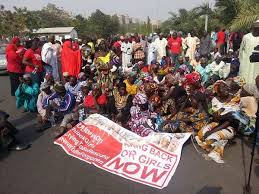
Parents of Chibok girls abducted by Boko Haram during an awareness campaign
The parents of 276 girls abducted by Boko Haram from a government owned school in Chibok, a village in Borno State, northeast of Nigerian, has disclosed plans to hold a memorial service for the girls on April 14, exactly two years after the abduction, hoping to remind the world that their daughters were still missing.
Lawan Zanna, Secretary of Parents of the Abducted Girls from Chibok Association said the government had granted permission for the event – a prayer session, that would integrating both Muslim and Christian faiths, to hold in the school’s premises, to mark the second anniversary of the abduction.
The event holding exactly two years since militants stormed Government Secondary School in Chibok in the middle of the night and kidnapped 276 girls had then provoked an international outcry and a viral campaign #bringbackourgirls. About 57 of the girls managed to escape leaving 219 unaccounted for.
Speaking on behalf of the group, Lawan Zanna said, the government agreed to give the parents access to the school that was heavily guarded and all the parents of the missing girls are expected to attend.
The parents were hoping the event would again garner attention for the girls who have not been seen since the night of their abduction despite calls to find them from celebrities and politicians including U.S. first lady Michelle Obama.
“We have also invited all the government officials from Chibok .. and they also promised to allow any person from the media to join us,” Zanna, whose 18-year-old daughter is among the missing girls disclosed.
Boko Haram has kidnapped thousands of people including adults, boys and girls in northeast of Nigeria over the past seven years, turning them into cooks, sex slaves, fighters, and even suicide bombers to attack their own villages, according to Amnesty International.
But the Chibok abduction remains the most high-profile.
On the first anniversary of the abduction the parents held a memorial event at the school but then a military checkpoint was set up outside the school and the area ruled out of bounds.
Visitors were then required to seek official permission from the government or the military to get access to the school and also to Chibok town.
The parents received permission to use the venue for this year’s event on Tuesday after three representatives of the parents’ association met with government officials.
Ikeja Electricity Distribution Company (IKEDC), Nigeria’s largest power distribution network, came into existence on November 1st, 2013 following the handover of the defunct Power Holding Company Of Nigeria (PHCN) to NEDC/ KEPCO Consortium under the privatization scheme of the Federal Government.
The consortium has the Korean Electric Power Corporation (KEPCO) which generates about 84,000MW in capacity and has a global efficiency record of a maximum down time period of slightly above three minutes annually as technical partners.
This partnership has positioned IE to effectively drive its commitment to deliver efficient and sustainable power supply through investments in new technology, infrastructure upgrade and human capital development.
We are recruiting to fill the position below:
Job Title: Manager, Channel Management
Location: Lagos
Reporting To: Head, Strategy and Revenue Optimization
Role Purpose
The purpose of the role is to plan, implement and carry out third party revenue channels expansion activities in order to meet or exceed company revenue.
Ensure consistent and even spread of all Payment Channel integrators through positive planning, deployment and efficient management of dealers and agents.
Role Accountabilities
Driving revenue through building a strong indirect channel partner network
Educate the market / channel to the benefits of agile products and services.
Developing Go-to-Market plans for each of the channel partners and agents, ensuring the efficient execution of those plans.
Analysis and optimization of relationship between solutions service providers and channels partners and agents
Responsible for identifying, prospecting, recruiting and on boarding new channel partners and agents to drive collection efficiencies and provide basic insights at offsite locations into Ikeja Electric services and new initiatives through the effective deployment of the channels management plan.
Serve as the partners single point of contact
Present written quarterly reviews and annual plans to all levels of partner management
Develop proposals and negotiate channel, agent agreements and any other legal commitment in conjunction with the legal department.
Track progress against the targets on an ongoing basis and take necessary action to refocus efforts if targets are not being met
Ensure all partners adhere to company professional standards in the engagement of customers at all times.
Minimum Requirements(Qualifications & Years Of Experience)
First Degree (B.Sc/HND) or its equivalent
7 Years related work experience
Experience working with VAR’s and other consulting professionals is preferred
Excellent understanding of the Channel System Integrators and their revenue models.
Excellent communication skills, focusing on persuasion and presentation skills
Experience in channel sales
Minimum of 3 years of prior supervisory / management role
Skills & Competencies
Technical Competencies:
Relationship management and interpersonal skills
Research and report writing skills
Problem solving and decision making skills
Negotiation and persuasion skills
Behavioural Competencies:
Ability to work under pressure and multi task effectively
Ability to influence others.
Good communication and interpersonal skills
Good relationship management skills.
Application Closing Date
12th April, 2016.
How to Apply
Interested and qualified candidates should APPLY
Prepare the company’s financial statements periodically
Over see the accounts payable and receivable management
Other duties as may be assigned by the Lead Accountant
Requirements
B.Sc Accounting
Minimum of 2 years relevant post NYSC experience experience
ICAN or ACCA membership is an advantage
Proficiency in the use of an Accounting Software and Microsoft Office
Application Closing Date
13th April, 2016.
Method of Application
Interested and qualified candidates should send their CV’s and application letter to:jobs@ersltdng.com using the job title as the heading.
Alexander Nelson is a human resources firm dedicated to helping our clients find, grow and retain the best talent in the global marketplace. We challenge ourselves everyday to go beyond our client’s expectations in providing them with world class consulting and human capital development services.
We are recruiting to fill the position below:
Job Title: Executive Assistant /Assistant Manager Office of the MD
Location: Nigeria
Job Descriptions
Projecting and managing the image of the office of the MD
Contributing to the development of strategic relationships with the office of the MD.
Managing the public image and presence of the MD.
Managing and executing projects as assigned by the Managing Director
Working with the Managing Director to develop and refine strategies for Public Relations campaigns.
Managing variety of public and media relations campaigns.
Maintaining / organizing / tracking hardcopy and electronic file systems.
Reading and monitoring of publications important to the office of the MD / clients.
Satisfying a mix of evolving and deadline-oriented needs of the office of the MD with high level of flexibility, passion and professionalism.
Coordinating the calendar, travel, meetings, and schedule arrangements for the Managing Director.
Coordinating operations of the Managing Director’s office including, reception, document preparation, confidential control of internal communication, general office maintenance and confidential file management.
Coordinating meetings as required, including, preparing agenda, circulating papers and taking minutes.
Writing and distributing press releases and manage corporate media relations
Assisting with the planning and coordination of company events and trade shows.
Answering and filtering telephone calls.
Assisting with the development/production of communication materials and presentations
Maintaining social media platforms such as the company’s website and Linked-in pages.
Attending events and meetings on behalf of senior executives where required.
Staying current with local and other relevant news and prioritizing news items for review of the senior executives.
Any other such duties and responsibilities as may be assigned by any of the Group’s senior executives which shall not be considered inconsistent with a position of this nature.
Desired Skills and Experience
Candidate must have sound analytical mind
Attention to details
High integrity
Good inter- personal and communication skills (oral and written)
Strong knowledge of Microsoft office applications
Meet deadlines with little or no Supervision
Application Closing Date
Not Specified.
How to Apply
Interested and qualified candidates should APPLY
The Central Bank of Nigeria, CBN, on Tuesday, April 5, said that the country’s Terms of Trade, TOT, improved in the fourth quarter of 2015.
The apex bank made this known in its Terms of Trade Bulletin for the fourth quarter released yesterday.
Terms of Trade (TOT) is the ratio of a country’s export prices to her import prices, and expresses the quantity of import goods a country can purchase per unit of its export goods.
The bulletin stated, “Nigeria’s all products TOT index for October, November and December 2015 stood at 103.02, 102.28 and 100.61, respectively.
These indices showed favorable TOT for all the months of the quarter, indicating that Nigeria used 3.02, 2.28 and 0.61 per cent less of her exports to obtain the same level of imports in the respective months under review.
It is common practice to multiply this ratio by 100, in which case the TOT is expressed as percentage. If the TOT is above 100, implying that the country can buy more of imports for a given level of exports, it is said to be favorable.
The CBN report stated: “Available statistics revealed that the product groups that contributed most to the positive trade positions during the review period were the: “Vegetable products”, “live animals; animal products”, “Footwear, headgear, umbrellas, sunshades, whips etc.”
“Wood and articles of wood, wood charcoal In Q4, 2015, the trade indices for “live animals; animal products” were 330.63, 289.04 and 227.42 for the months of October, November and December, respectively.
These show favorable trade positions of 230.63, 189.04 and 127.42 per cent for the months, respectively. Similar positions were also recorded in the months of the preceding quarter and the corresponding quarter of 2014 except the month of December which had an unfavorable trade position.
“The trade indices for “Prepared foodstuffs; beverages, spirits and vinegar; tobacco “ in October, November and December 2015 stood at 100.92 ,102.88 and 104.32 per cent, respectively, indicating favorable trade positions of 0.92, 2.88 and 4.32.
The Federal Airports Authority of Nigeria, FAAN, has confirmed discussions with Medview Airline over the carrier’s plan to relocate its operational station from Murtala Mohammed Airport 2, MMA2, to the General Aviation Terminal, MMA1.
FAAN’s spokesman, Yakubu Dati stated that the airliner has hinted the aviation authority about its plan to move from MMA2 terminal managed by Bi-Courtney Aviation Services Ltd to the GAT, which is managed by FAAN.
“We are aware that Medview Airline is considering coming to GAT and we have had talks about it, but that is the only airline having such a plan. We have enough space to welcome any airline and you know that we manage runway and the aprons as it were. It is FAAN marshallers that also work to help pilots at the tarmac in all the terminals,” Dati said.
Medview’s managing director, Alhaji Muneer Bankole also confirmed his airline’s plan to Leadership via telephone, but said the plan was “not immediate.”
Transactions on the floor of the Nigerian Stock Exchange, NSE, overturned the downward Trajectory of Monday, April 4, as the All-Share Index closed Tuesday, April 5 with 0.42% gain.
Trading in the Top Three Equities were Sterling Bank Plc, which sold 38.82 million shares worth N62.1 million, FCMB Plc accounted for 20.2 million shares worth N19.31 million, while Wema Bank Plc exchanged 13.3 million shares amounting to N9.85 million.
Nigerian Breweries Plc led the day’s price gainers as it added N3.98 to close at N106.59 per share, while SEPLAT Petroleum Plc gained 45 kobo to close at N306.5 per share. NASCON Plc also advanced by 34 kobo to close at N7.25 per share while Custodian and Allied Plc.
(CUSTODYINS) and Etranzact Plc increased by 19 kobo and 14 kobo each to close at N4.09 and N2.94 per share, respectively.
Conversely, International Breweries Plc topped the day’s price losers, declining by 49 kobo to close at N20 per share, while Cement Company of Nigeria Plc followed, dropping 36 kobo to close at N7.03 per share as Oando Plc lost 2 kobo to close at N4.3 per share.
Portland Paints Plc and Africa Prudential Registrars Plc also fell by 16 kobo and 9 kobo respectively to close at N3.04 and N2.48 per share respectively.
The Comptroller-General, Nigeria Customs Service, NCS, Hameed Ali, on Tuesday, April 5, said that the service posted a revenue shortfall of N230 billion in the last quarter of 2015.
The NCS Chief made the disclosure during a Consultative Forum between Customs and the Manufacturers Association of Nigeria (MAN) held at the Customs Training School, Ikeja, Lagos.
Ali attributed the shortfall to the Central Bank of Nigeria’s, CBN, policies, adding that service pleaded for sympathetic consideration by the apex bank to review the policies.
“Customs had also made progress in getting the necessary approval for clearance of a huge backlog of imports.
“Imports in respect of which forms `M’ were opened before the commencement of the CBN foreign exchange restriction of some imported items.
“Importers of such goods could not finalise Customs clearance due to inability to obtain the Pre-Arrival Assessment Report (PAAR).
“Relief has come for such importers as we (Customs) have secured the go- ahead to waive the formalities and allow them to pay duty,’’Ali said.
The total sales revenue for white products sold by the Pipelines and Products Marketing Company, PPMC, the downstream arm of the Nigerian National Petroleum Corporation, NNPC, jumped by N3.2bn in the month of February, 2016.
This is according to the state oil firm’s Monthly Financial and Operations Report for February, 2016 released at the weekend.
In January, the firm collected N71.62bn as sales revenue for petrol, kerosene and diesel but the value increased to N74.72bn in February.
While petrol sales contributed N66bn, kerosene earned N5bn and diesel N3bn in February.
The increase in the total revenues generated from the sales of white products for the month may not be unconnected to the 35.57m litre increase in supplies and sales of the products for the month.
Chairman of Snake Island Integrated Free Zone, SIIFZ, Lagos, Anwar Jarmakani, has revealed that Nigeria loses between $3 and $5 on every barrel of oil produced daily to monopoly in the oil and gas logistics chain.
With Nigeria’s daily production currently averaging 2 million barrels per day, Jarmakani’s loss figure give a daily $10 million, $300 million monthly, and $3.6 billion loss annually.
Jarmakani, who was briefing the comptroller-general of the Nigeria Customs Service (NCS), Col Hameed Ali (rtd), who was on a tour of the LADOL facilities on Snake Island, Lagos, on Tuesday, April 5, said that there is no aspect of the country’s law that encourages monopoly in the oil and gas logistics.
Being the chairman of Jagal Group, owners of the SIIFZ, he condemned such monopoly in the oil sector, noting that it had been on for over 20 years.
He said: “The tendency to monopolise the oil and gas logistics is like sabotaging the national economy, conspiring and working against any potential competitors, particularly against Snake Island Integrated Free Zone. Regrettably, attempts have been made in the past to also use the Nigeria Customs Service.
“We, therefore, appreciate the fact that the present administration is aggressively doing away with such impunity.”
Responding, Ali said that he would look into the laws on the discharge of oil and gas related cargoes in the country, stating that the customs was now becoming more knowledgeable about the activities in the zones.
“Having listened to your presentations, I would like to assure you that President Muhammadu Buhari’s administration is one of fairness, equity and transparency. It is regretable that in the past certain things were done in the wrong way, but this is the time to stop such. Let me also assure you that the president is all out for equity, justice and fairness and the customs service is working in this direction.
The downward trajectory at the Nigerian Stock Market came to a screeching halt on Tuesday, April 5, as benchmark indices closed higher than Monday, April 4.
As such, Market Capitalization added 105.68 points and N36.4 billion to close at 25,454.75 points and N8.756 trillion respectively against 25,349.07 points and N8.72 trillion recorded in the previous trading session.
During the course of the day’s transactions, a total of 177.4 million shares valued at N1.006 billion were exchanged in 3,304 deals by investors on the floor of The Exchange.
This was in contrast to a total 242.69 million shares worth N1.65 billion traded in 3,213 deals by investors in the previous trading session.
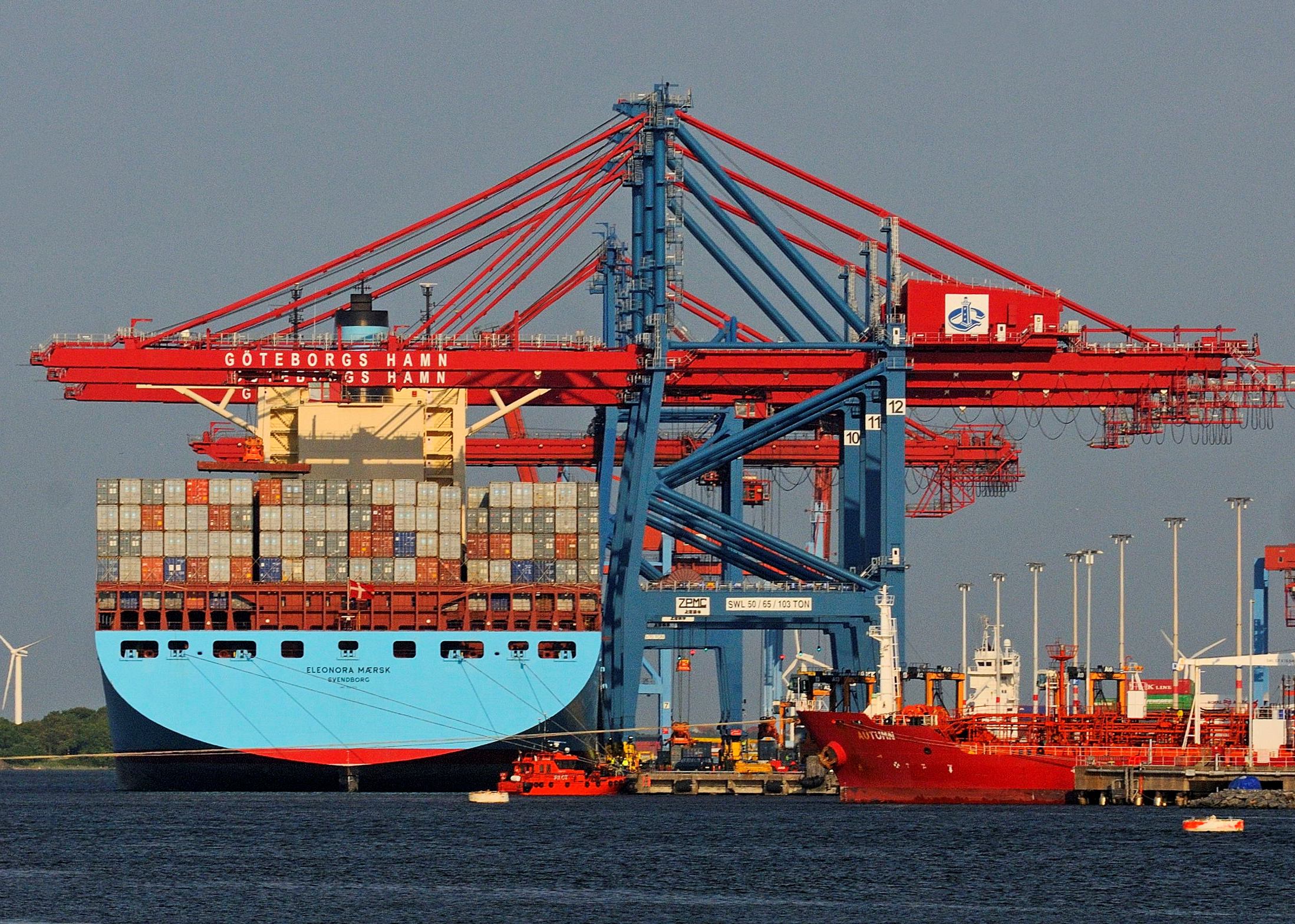
Some terminal operators at Lagos ports have implored the Nigerian Ports Authority, NPA, and the Bureau of Public Enterprises, BPE, to renew their concession terms which expires in 2016.
They are also seeking to have their lease agreement fees reduced to enable handle current business challenges.
The concessionaires made the request at a meeting with NPA, BPE and members of the House of Representatives Committee on Privatisation and Commercialisation during the committee’s visit to the Headquarters of the NPA as part of its oversight functions recently.
The meeting also had officials of other cargo terminals, including the JPS Terminal formerly known as JosepDam.
The spokesman of Ports and Cargo Terminal, who is also the terminal’s general manager for Legal Services Tunji Olusinde, said the challenges faced by the concessionaires would be handled if they can secure a reduction on the lease agreement fees and the renewal of their concession tenure.
The managing director, NPA in his comment stated that the concession was a deliberate effort by the federal government to improve the way business was being done at the ports.
He said: “We may recall that the concession process was free and fair, as it was bided for competitively by various interests and it is important that along the tenure of the concession, concessionaires should adhere to the terms of agreement in order to sustain the credibility of the process.”
Nigeria’s external reserves have plunged by $30.23 million as foreign investors exit the Nigerian markets.
The reserves had dropped to $27.858 billion within 11 days as at Friday, April 1, 2016 from $27.888 billion which it was on March 21, 2016.
The reserves had gradually inched up since early February when it reached $27.894 billion.
Foreign investors withdrawing profits and others exiting the Nigeria equities and bond markets had last week triggered a rise in foreign exchange disbursement by some banks.
Many of the investors, after liquidating their investments, secured forex to repatriate their funds through Stanbic IBTC Bank.
The lender disbursed $19,305,571.50 to 68 customers, according to published disbursement data for last week.
JPM London secured $3,331,564.24 from Stanbic IBTC for its divestment of equities and Federal Government of Nigeria (FGN) Bonds.
There was also $2,010,690.01 disbursed to State Street/Stanbic Nominees-E by the lender for the same purpose.
BP2S/BNP Pribas obtained $130,167.61; Standard Bank of South Africa, $541,671.31; Merrill Lynch International $63, 767.89; HSBC Funds Services London, $394,210.30; and The Bank of New York Mellon 2, $206,317.82.
By Annette Ikponmwonba | September 7, 2026
Keypoints
• Sub-Saharan Africa is expected to become the world's biggest source of new workers by 2050.
• More than...