





Home Blog Page 150

Ruthless Super Falcons Crush Zambia To Secure WAFCON Semi-Final Spot

Super Falcons
Scandalous! Super Falcons Whoop Nigerien Counterparts 15-0

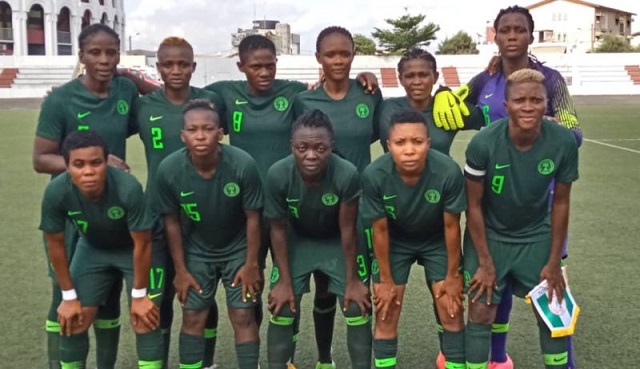
The Nigerian Super Falcons booked their place in the semi-finals of the Women’s Africa Cup of Nations (WAFCON) with a resounding 5-0 demolition of Zambia on Friday evening at the Larbi Zaouli Stadium in Casablanca.

In a thrilling display of dominance and precision, Nigeria overpowered the Copper Queens with goals from Osinachi Ohale, Esther Okoronkwo, Chinwendu Ihezuo, Oluwatosin Demehin, and Folashade Ijamilusi, reaffirming their status as Africa’s most decorated women’s football team. The win also extended the Super Falcons’ enviable record of reaching the semi-finals in every edition of the tournament they’ve participated in.

This emphatic result served as sweet revenge for the Falcons, who were narrowly defeated 1-0 by the Zambians in the third-place match at the last WAFCON edition. After an underwhelming group stage that sparked doubts over the team’s readiness, the Falcons roared back into contention with a complete performance that left no room for questions.

Barely two minutes into the match, Osinachi Ohale gave Nigeria the lead with a well-placed header off a free-kick delivered by Okoronkwo. The Zambian defense was caught napping as Ohale, left unmarked in the box, guided her shot past goalkeeper Ngambo Musole.

Nigeria maintained relentless pressure from the onset, forcing the Zambians into disarray. The Copper Queens, unable to manage their set-pieces or link-up play effectively, struggled to respond to Nigeria’s intensity. Goalkeeper Chiamaka Nnadozie confidently cleared any threats that came her way, ensuring the Falcons maintained control throughout.

Zambia had a rare chance midway through the first half when Barbra Banda surged down the flank and laid the ball off to Grace Chanda, whose effort missed the target—an opportunity they would later regret. Moments later, Okoronkwo doubled Nigeria’s lead with a stunning finish after chesting down Rasheedat Ajibade’s pinpoint cross inside the box and slotting the ball into the bottom corner.

As halftime approached, the Falcons added a third. A long clearance from Nnadozie exposed Zambia’s shaky backline, allowing Ihezuo to latch onto the ball and finish calmly past Musole. The half-time whistle saw Nigeria firmly in command with a 3-0 cushion.

The second half offered little relief for Zambia as Nigeria continued to dominate possession and space. Oluwatosin Demehin extended the lead to four with a powerful header from another Okoronkwo set-piece delivery, illustrating Nigeria’s aerial threat and smart set-play tactics.

In stoppage time, Folashade Ijamilusi completed the rout, scoring her debut WAFCON goal from close range after a neat cross from Ajibade caught the Zambian defense flat-footed.

Zambia, previously tipped as one of the tournament’s dark horses after impressive displays at the Olympics and Women’s World Cup, failed to deliver when it mattered most. Their star forwards Barbra Banda and Racheal Kundananji—who had combined for six goals in the group stage—were shut out completely, unable to register a single shot on target.

The Super Falcons, who had only managed four goals in their three group matches, finally found their attacking rhythm while preserving a flawless defensive record in Morocco.

Head coach Justine Madugu made six key changes from the goalless draw against Algeria, one of which was giving Okoronkwo her first start. The forward repaid the decision with a goal and an assist, delivering a standout performance that underlined Nigeria’s squad depth.

The statement victory reignited the Super Falcons’ quest to claim their 10th continental crown. Dubbed “Mission X,” the campaign continues with the Falcons set to face the winner between South Africa and Senegal in the semi-finals on Tuesday, back at the Larbi Zaouli Stadium.

With key players rested in the final minutes and an extra day to prepare, Nigeria will approach the semi-finals with confidence and momentum on their side.

Meanwhile, Zambia’s golden generation will have to regroup and set their sights on the 2026 WAFCON after falling short of expectations. Despite early promise, they failed to cope with Nigeria’s structured press, physicality, and clinical finishing.

Friday’s showdown marked the fourth WAFCON encounter between the two nations, and Nigeria’s superiority remained intact. Previous matches saw the Falcons earn 6-0 and 4-0 victories in 2014 and 2018, respectively.

In Casablanca, the Falcons not only advanced—they sent a clear message to their rivals: Nigeria is back in form, firing on all cylinders, and ready to reclaim their rightful place at the top of African women’s football.
Naira Strengthens Following Central Bank Dollar Injection Amid Easing FX Pressure

Federation Account Amasses Over ₦5trn In 6months- RMAFC

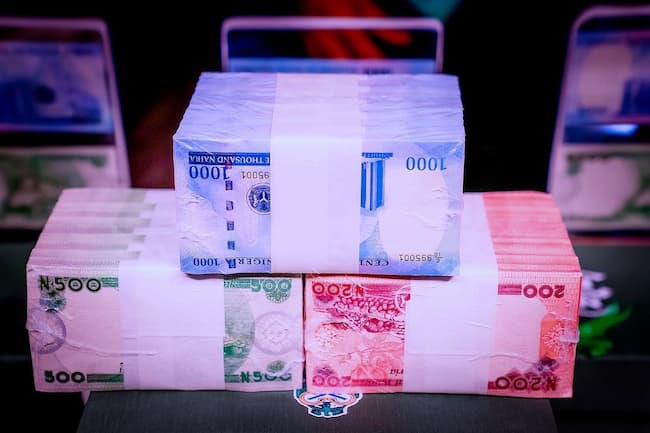
The Nigerian naira made a notable recovery at the close of the week, firming up against the US dollar to settle at ₦1,532.34/$ on Friday, following a two-day depreciation streak. The rebound came as the Central Bank of Nigeria (CBN) stepped in with targeted forex sales to curb mounting demand and restore equilibrium in the Nigerian Foreign Exchange Market (NFEM).

Earlier in the week, the official exchange rate had weakened from ₦1,518/$ to ₦1,533/$ due to heightened demand for the greenback outstripping available liquidity. To arrest the pressure, the apex bank allocated $80 million to authorized dealer banks, a move aimed at improving market supply and stabilizing the local currency.

The intervention had a positive impact, with the naira appreciating by 77 kobo or 0.05%, compared to Thursday’s close of ₦1,533.11 per dollar. The currency had previously recorded a weekly uptrend and resumed the new trading week on Monday, July 14, 2025, gaining ₦11.37 against the dollar.

In parallel with currency movements, Nigeria’s foreign reserves posted their second weekly gain, climbing by $422.16 million to reach $37.85 billion. The uptick in reserves is linked to increased crude oil output, as captured by data from the Nigerian Upstream Petroleum Regulatory Commission (NUPRC).

Crude oil production—including condensates—rose by 2.4% month-on-month in June to a five-month high of 1.70 million barrels per day (mbpd). This improvement was attributed to higher yields from key terminals: Forcados (+9.5%), Odudu (+9.0%), Qua Iboe (+2.3%), and Bonny (+1.0%).

Meanwhile, production volumes declined at Brass (-15.0%), Agbami (-14.6%), Escravos (-8.7%), and Tulja–Okwuibome (-4.5%) terminals. On a half-year basis, average daily crude output rose 11.3% year-on-year to 1.68 mbpd, up from 1.51 mbpd in the same period of 2024.

However, investment limitations continue to affect production efficiency, despite growing momentum. Analysts at Cordros Capital project that Nigeria’s daily output will average 1.70 mbpd in 2025—short of the federal government’s 2.06 mbpd benchmark—though they expect improving security and renewed investment to support sustained growth.

Nigerian Stock Market Hits N83 Trillion Milestone Amid Sustained Rally

Stock Exchange Closes Trading Week With N30bn Gain

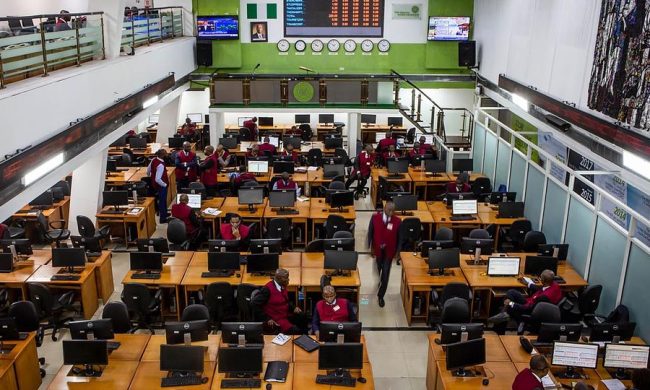
The Nigerian Exchange (NGX) recorded a major milestone as bullish sentiment propelled the equity market capitalization beyond ₦83 trillion. The All-Share Index (ASI) climbed by 1.00% to end the week at 131,585.66 points, reinforcing investor confidence in the local bourse’s resilience.

Year-to-date (YTD) returns surged to 27.84%, reflecting persistent optimism and growing interest in value-driven investments. Market capitalization rose by an impressive ₦823 billion during the week, peaking at ₦83.24 trillion and underlining a liquidity boost fueled by increased trading activities.

According to NGX data, trading volume and value rose significantly, increasing by 183.86% and 47.50%, respectively. A total of 3.35 billion shares worth ₦62.39 billion were exchanged in 28,593 transactions.

First City Monument Bank (FCMB) emerged as the top performer in both volume and value terms, contributing 59.43% of the week’s traded shares and 31.93% of the total value. Other heavyweights on the activity chart included ACCESSCORP (5.16%), CHAMS (4.20%), ZENITHBANK (2.30%), and AIICO (2.24%).

On the gainers’ list, LEARNAFRCA, NCR, and UPDC led with a 10.00% price surge each. BUACEMENT (+9.98%), ELLAHLAKES (+9.98%), FTNCOCOA (+9.97%), CAVERTON (+9.86%), and JAPAULGOLD (+9.85%) were also among the top performers. In total, 46 stocks appreciated in value.

Conversely, REDSTAREX topped the losers’ table with a -9.97% decline. Other decliners included ACADEMY (-6.67%), STERLINGNG (-4.34%), FIRSTHOLDCO (-4.10%), ZENITHBANK (-4.00%), and Nigerian Breweries (NB) with a 1.33% drop.

Sector-wise, the industrial goods segment led with a 5.60% jump, followed by consumer goods (+1.22%), insurance (+0.59%), and commodities (+0.25%). The banking sector fell by 1.08%, reflecting sector-specific volatility, while oil and gas equities remained flat.

Despite instances of profit-taking, the market breadth was broadly positive, pointing to sustained investor appetite and widespread bullish momentum.

CBN Forex Interventions Steady Naira Amid Shifting Market Sentiment

The Central Bank of Nigeria (CBN) returned to the foreign exchange scene this week with measured interventions that helped moderate pressure on the naira, even as rising dollar demand tested liquidity in the Nigerian Foreign Exchange Market (NFEM).

On Monday, the apex bank sold $80 million to commercial banks, helping to stabilize the spot exchange rate within the ₦1,527.05–₦1,530.70 range. Analysts at AIICO Capital noted that the early-week injection was instrumental in anchoring expectations amid uneven dollar supply.

By midweek, the market stabilized, requiring no further action from the CBN as exchange rates held steady between ₦1,527 and ₦1,532.50 per dollar. However, by Thursday, a spike in dollar demand caused a short-lived rally in the exchange rate, which climbed to as high as ₦1,536/$.

In response, the CBN returned to the market with additional forex sales on Friday, easing the pressure and improving liquidity. As a result, trading concluded the week within a narrow range of ₦1,528.00 to ₦1,536.50.

Despite some fluctuations, the naira posted a marginal 13.6 basis points depreciation week-on-week, ending at ₦1,532.34/$ at the official market.

Looking ahead, analysts predict that the local currency will likely maintain its current range, buoyed by improved liquidity. However, they caution that the market is closely watching for signals from the upcoming Monetary Policy Committee (MPC) meeting, which could influence currency movements.

Meanwhile, global commodity markets remained volatile. Brent crude fell 24 cents to settle at $69.28 per barrel, while U.S. West Texas Intermediate slipped 20 cents to $67.34, as investors reacted to mixed U.S. economic data and new EU sanctions on Russia.

Gold prices gained 0.4% to trade at $3,351.18 per ounce, recovering from the previous day’s slump, as global uncertainty and a weaker dollar boosted demand for safe-haven assets. Platinum prices pulled back after reaching decade highs, while analysts warned that proposed tariffs could send U.S. trade levies beyond Great Depression-era levels, sparking further inflationary concerns.

Crude Oil Prices Slide 1% Weekly Amid Geopolitical Risks and Inflation Concerns

Global oil markets closed the week ending July 18 with a marginal decline in prices, as traders weighed competing signals around supply disruptions and economic uncertainty. Brent crude, the global benchmark, dipped to $69.39 per barrel — down 0.9% from the prior week’s close of $70.01.

The U.S. West Texas Intermediate (WTI) benchmark followed a similar trajectory, settling at $66.83 per barrel, reflecting a 1% week-on-week drop from $67.56.

Though Friday’s trading session saw prices recover slightly — spurred by geopolitical tensions in the Middle East and fresh EU sanctions on Russia — the overall trend remained bearish. The week started with upward momentum, fueled by supply concerns and expectations of a more dovish U.S. monetary policy, but this was quickly tempered by broader macroeconomic developments.

U.S. President Donald Trump’s remarks about imposing 100% tariffs on Russian goods heightened global trade worries, adding further pressure to crude demand projections. Additionally, higher-than-anticipated U.S. inflation data reduced hopes of a swift interest rate cut by the Federal Reserve — a move that would typically support oil prices.

Rising interest rates generally strengthen the dollar, making oil more expensive for foreign buyers and curbing demand globally. Meanwhile, the oil supply outlook turned uncertain after drone strikes targeted Iraqi oil installations, damaging infrastructure and fanning fears of broader regional instability.

Also rattling the market was a new sanctions package introduced by the European Union, targeting over 100 Russian vessels — including those operating under what officials referred to as Moscow’s “shadow fleet” — and placing a ban on imports from Nord Stream pipelines.

The dual impact of military conflict and regulatory restrictions is keeping energy markets on edge as traders watch for further disruptions and policy signals in the coming days.

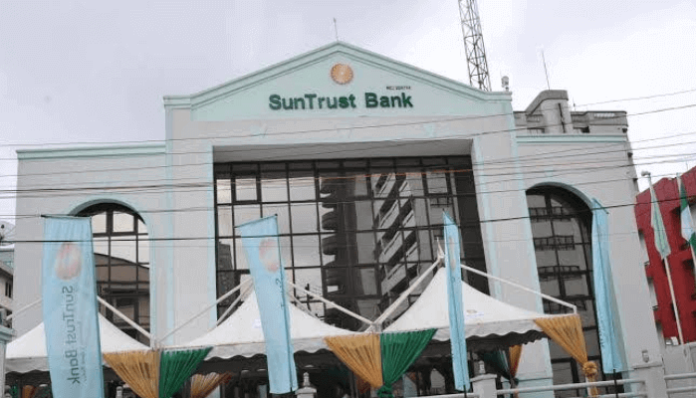
EFCC Alleges $12 Million Forex Swap At SunTrust Bank In 10 Days, Court Hears

A witness for the Economic and Financial Crimes Commission (EFCC), Mr. Suleiman Ciroma, testified on Thursday before the Federal High Court in Abuja, detailing how $12 million was exchanged over a 10-day period within SunTrust Bank Plc.

Testifying before Justice Emeka Nwite, Ciroma told the court that the transactions were carried out under the supervision of Halima Buba, the Managing Director/CEO of the bank, and Innocent Mbagwu, the Executive Director/Chief Compliance Officer.

According to the EFCC, Buba and Mbagwu are being prosecuted on a six-count charge bordering on alleged money laundering involving high-volume cash swaps that bypassed formal financial channels. The case, brought under the Money Laundering (Prevention and Prohibition) Act, 2022, could result in severe penalties if proven.

During cross-examination by EFCC counsel, Ekele Iheanacho, SAN, Ciroma — a travel consultant and former Bureau De Change operator — said the transactions began on March 10 after he was contacted by oil businesswoman Aisha Achimugu about conducting foreign exchange deals through the bank.

Ciroma explained that Achimugu intended to facilitate dollar inflows into her company, Oceangate Energy Oil & Gas, as part of plans to purchase an oil block. According to his testimony, multiple individuals, including Hassan Dantani of Ashrap Ltd and Tijjani Adamu, were involved in collecting physical cash from bank branches in Abuja and Lagos.

The court heard that $1 million in cash was picked up on the same day from an Abuja branch, with several other tranches — including $2 million handed to an individual named Kabiru — following shortly after. In total, the $12 million was processed over 10 days, and Ciroma claimed he earned a profit of ₦15 million from facilitating the swap.

The EFCC witness submitted bundles of supporting documents, including WhatsApp chats with Buba and a certificate of identification. Despite objections from the defense counsel, Justice Nwite admitted the documents as evidence (Exhibit P1) and adjourned the trial to July 18.

Investor Grows As FGN Bonds Yields Slide Amid Policy Rate Expectations

FGN Bond For Jan. 2021 Oversubscribed

The yield on Nigeria’s Federal Government Bonds (FGN) declined to 16.6% in the secondary market, reflecting strong demand from fixed-income investors positioning ahead of a possible monetary policy easing by the Central Bank of Nigeria.

Investor sentiment has turned bullish on government securities as disinflationary signals and tight supply dynamics bolster optimism. With inflation cooling to 22.22% — down from previous highs — and the Monetary Policy Rate (MPR) maintained at 27.5%, many traders anticipate a near-term reduction in interest rates.

This shift in expectations is prompting investors to secure higher returns by buying bonds at prevailing rates before yields decline further. On Thursday, the FGN bond market recorded modest gains, closing with a positive tone. Market participants observed a general decline in yields across key maturity bands.

According to fixed-income dealers, the average yield across benchmark bonds dipped by 8 basis points to 16.62%. The short end of the yield curve experienced the largest move, dropping by 11 basis points, followed by mid-tenor bonds which shed 9 basis points, while long-duration bonds declined marginally by 2 basis points.

Analysts noted that although buying interest was more visible in short-to-medium term securities, spreads on other maturities remained relatively wide. Of note, bonds maturing in February 2031 traded around a 16.55% yield. Despite the activity, average rates held relatively steady as institutional investors sought to lock in favorable returns.

Market watchers expect bond yields to continue adjusting in line with monetary policy signals, particularly if the Central Bank initiates a cycle of interest rate cuts to stimulate economic activity.

UN Chief Guterres Pays Tribute To Late President Buhari

United Nations Secretary-General António Guterres has paid glowing tribute to late former President Muhammadu Buhari, describing him as a leader whose unwavering commitment to Nigeria, Africa, and global cooperation will remain his enduring legacy.

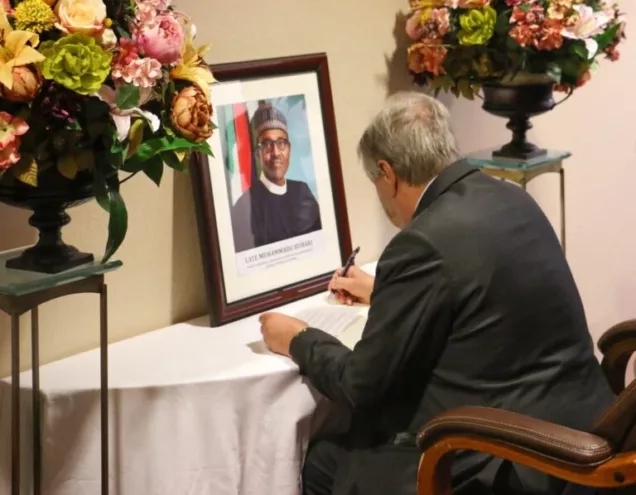
Guterres, during a condolence visit to Nigeria House in New York on Friday, personally conveyed the UN’s solidarity with the government and people of Nigeria. He signed the condolence register and expressed deep admiration for Buhari’s lifetime of service.

“On behalf of the United Nations, I extend my heartfelt condolences on the passing of His Excellency, Muhammadu Buhari. He will be remembered for his steadfast commitment to selfless service, his leadership in advancing peace and stability across Africa, and his dedication to strengthening institutions in Nigeria,” Guterres wrote.

The UN chief praised Buhari as a staunch supporter of multilateralism, solidarity, and sustainable development. Speaking with the News Agency of Nigeria after the visit, Guterres reflected on their professional relationship, noting Buhari’s role in defending West Africa’s stability.

“I had the privilege of working with President Buhari, and I deeply admired his extraordinary work — not only for Nigeria’s interests but for Africa as a whole and for the United Nations,” he said.

Guterres further described Buhari as “a leading personality in defending West Africa’s interests in a difficult context, affirming Nigeria’s leadership and influence in the region.”

The UN chief extended condolences to Buhari’s family, the Nigerian government, and its citizens, adding that “the world remembers him as a true servant-leader whose legacy will inspire generations.”

Chargé d’Affaires of Nigeria’s Permanent Mission to the UN, Mr. Syndoph Endoni, thanked Guterres for the visit, noting that the tribute reflected Buhari’s stature as a statesman whose influence transcended national borders. He was received alongside Bola Asaju and Head of Chancery, Mr. Razak Lawal.

Buhari, who ruled Nigeria as a military leader from 1983 to 1985 and as a civilian president from 2015 to 2023, died on Sunday at a London hospital at the age of 82. He was buried in his hometown of Daura, Katsina State, on Tuesday.

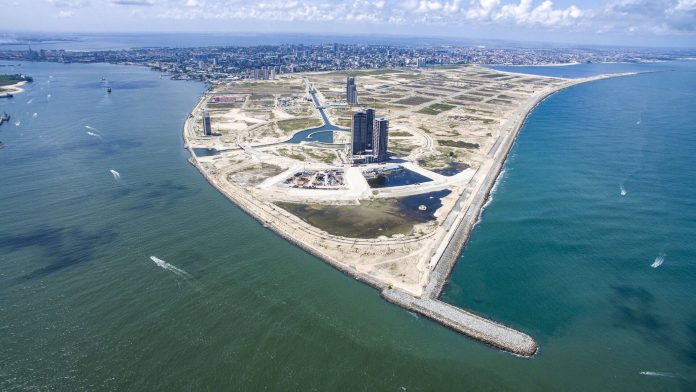
Eko Atlantic Land Value Soars from N180m to Over N2bn as Lagos Real Estate Booms

Land prices in Eko Atlantic have risen from about N180 million in the early 2000s to over N2 billion, reflecting the sharp appreciation of prime real estate in Lagos, according to the State of Lagos Housing Market, Volume 3.

The report, released on Friday, noted that Lagos’ property market has transformed into a premium investment destination over the past decade, driven by economic growth, infrastructure projects and rising investor demand.

“Historical data shows land values have moved in one direction upward with no significant reversals. The longer an investor delays, the more expensive real estate becomes,” the report stated.

It highlighted Ibeju-Lekki as one of the fastest-growing property markets. A plot of land in the area that sold for between N500,000 and N1.5 million in 2013 now costs between N25 million and N40 million as of the first quarter of 2025.

Similarly, plots in Lekki Phase 1 that were priced between N10 million and N15 million in 2005 are now valued at over N400 million to N500 million. Eko Atlantic has experienced one of the sharpest increases, with land prices rising from N180 million to over N2 billion in just over two decades.

The report described Lagos real estate as a key wealth creation vehicle, noting that the luxury segment is largely driven by high-net-worth and diaspora investors.

Cuba Abolishes Presidential Age Limit Ahead Of 2028 Elections

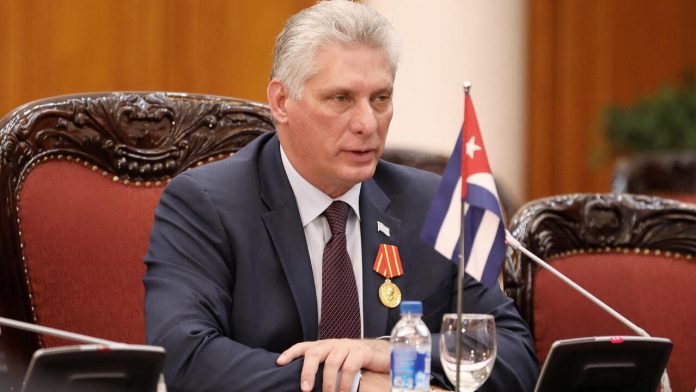
(FILES) In this file photo taken on November 09, 2018 Cuba's President Miguel Diaz-Canel Bermudez (C) speaks during a meeting with Vietnamese Prime Minister Nguyen Xuan Phuc (not pictured) at the Government Office in Hanoi. - Born after the victory of the 1959 revolution, Miguel Diaz-Canel, president and now first secretary of the Communist Party, embodies the new generation in power in Cuba, more connected but not necessarily more flexible. (Photo by LUONG THAI LINH / POOL / AFP)

Cuba has removed the maximum age limit of 60 for presidential candidates as part of a constitutional reform approved by parliament on Friday, paving the way for older leaders to seek office.

The reform, passed by the Council of State, maintains the current rule of two five-year terms and a minimum candidate age of 35. However, it now allows any candidate “in the full exercise of their physical and mental faculties, with loyalty and revolutionary trajectory” to run for the presidency, National Assembly President Esteban Lazo said.

Former president Raul Castro, 94, who still holds a seat in the assembly, was the first to vote in favor of the measure, which will take effect for the 2028 presidential elections.

Cuba’s current president, Miguel Diaz-Canel, 65, was first elected in 2018 and re-elected in 2023, with no preferred successor publicly named.

The inclusion of age and term limits in the 2019 constitution marked a major departure from six decades of leadership under Fidel and Raul Castro. Fidel, who ruled for nearly 50 years, stepped down in 2016 due to health issues and died later that year. Raul officially became president in 2008 at 76 and retired as Communist Party first secretary in 2021, passing the reins to Diaz-Canel.

The constitutional change comes as Cuba faces its worst economic crisis in three decades, with widespread shortages, power cuts, and a record wave of emigration.

Nigeria Faces Multi Disease Alert, NCDC Urges Immediate Action

The Nigeria Centre for Disease Control and Prevention (NCDC) has issued an urgent nationwide alert over the growing threat of multiple infectious disease outbreaks, warning that Nigeria faces an escalating public health emergency if immediate measures are not taken.

According to the NCDC, the country is currently battling a surge in cholera cases affecting 34 states, alongside fresh detections of yellow fever and dengue fever in several regions, while Mpox and diphtheria outbreaks continue to strain health systems.

In its latest situation report covering Epidemiological Week 26 (June 23–29), the agency revealed that Zamfara State accounts for 32 percent of the national cholera burden, with other high-risk states including Bayelsa, Adamawa, Delta, Lagos, and Rivers. Although specific case numbers were not disclosed, the Centre warned that the situation requires “heightened vigilance and intensified response efforts.”

The NCDC confirmed seven laboratory cases of yellow fever in Abia, Anambra, Edo, Ekiti, Lagos, and Rivers States, noting that even a single confirmed infection meets the threshold for an outbreak under international health regulations. The agency also reported a dengue fever outbreak in Edo State, detected between June 9 and 13, raising concerns of further mosquito-borne disease spread driven by poor sanitation and climate factors.

“This convergence of outbreaks is occurring at a time when Nigeria is still managing Mpox and diphtheria, putting additional pressure on health services,” the agency said. It urged citizens to take preventive measures, including improved hygiene, vaccination against yellow fever, and elimination of mosquito breeding sites.

The NCDC also advised Nigerians to seek immediate medical care for symptoms such as severe diarrhoea, persistent fever, joint pain, or unexplained bleeding, and warned against self-medication since yellow fever and dengue share similarities with malaria.

To contain the situation, the Centre announced it is coordinating with state governments, the National Primary Health Care Development Agency, and partners to deploy rapid response teams, strengthen laboratory surveillance, and scale up risk communication campaigns nationwide.

“Nigerians must act now to prevent further loss of lives,” the NCDC warned, stressing that controlling these outbreaks will require urgent, collective action across all sectors.

Cross River Targets N10bn Monthly Revenue From January 2026

The Cross River State Internal Revenue Service (CRIRS) has unveiled plans to raise the state’s monthly internally generated revenue to N10 billion starting January 2026, signaling an aggressive push for fiscal sustainability.

Chairman of CRIRS, Mr. Edwin Okon, disclosed this on Friday during the agency’s two-day Half-Year Review Session held in Calabar. He said the new target would leverage recently assented federal tax laws and expanded automation of tax processes.

According to Okon, the state has already recorded notable progress, with a 39.7 percent increase in revenue in the first half of 2025 compared to the same period last year.

“Between January and June 2025, we generated about N27 billion, up from N19 billion during the same period in 2024. At this trajectory, we expect to surpass our annual target of N43.9 billion and close the year between N54 billion and N60 billion,” he said.

Okon credited the revenue growth to the full automation of tax systems and non-interference by the state government, noting that proactive reforms had curbed leakages and brought more state-owned institutions into the revenue net.

“The governor has never interfered in my job, and that independence has allowed us to deliver these results,” he added.

Speaking on federal tax reforms, the CRIRS boss said the new policies aim to ease the burden on low-income Nigerians while creating a more robust tax framework.

Commissioner for Finance, Mr. Mike Odere, also urged key sectors, particularly Lands and Housing, to ramp up their revenue performance to align with the state’s infrastructure investments.

“We are injecting significant funds into reforms, and we expect agencies to triple their revenue targets to justify these investments,” Odere stated.

Similarly, Head of Service, Mr. Innocent Eteng, emphasized the need for Cross River to strategically position itself to benefit from the new tax regime while effectively managing its abundant natural resources.

Military Launches Mental Health Training For Troops In Combat Zones

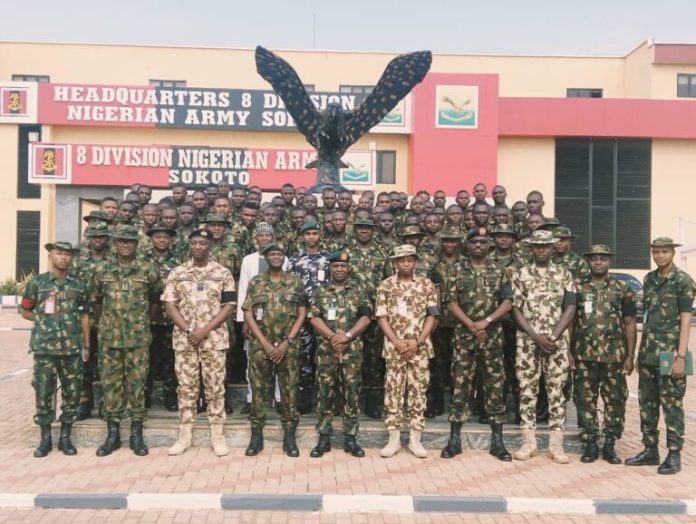
The Armed Forces of Nigeria has begun the 2025 first biannual sensitisation training on stress management, post traumatic stress disorder, and emotional intelligence for frontline troops serving in active combat theatres. The programme opened Friday at the Eight Division Auditorium in Sokoto and targets officers and soldiers deployed for Operation FANSAN YAMMA and other internal security missions nationwide.

Declaring the training open, Chief of Defence Staff General Christopher Musa reaffirmed the military commitment to force mental readiness, stressing that personnel face not only physical danger but profound psychological strain in the course of duty. Speaking through the Director of Innovation and Concept Development at Defence Headquarters, Major General Warrah Idris, he said managing mental health is as critical to modern warfare as weapons and logistics.

“Our troops are exposed to invisible wounds, stress, trauma, and emotional fatigue that can linger long after combat. This training is a strategic step toward equipping them to manage these realities,” General Musa said. He called for emotional resilience to be embedded in all levels of military preparation and for structured mental health support to be woven into daily operational routines across commands.

Also speaking, General Officer Commanding Eight Division and Commander Sector Operation FANSAN YAMMA, Major General Ibikunle Ajose, represented by Chief of Staff Brigadier General Abubakar Suru, described the initiative as timely. He said the course will help personnel recognise warning signs of post traumatic stress disorder, develop practical coping skills, and build emotional intelligence that supports mission success and long term well being. He commended the Chief of Defence Staff for giving priority to troop welfare and elevating mental health within the service hierarchy.

The session drew military psychologists, mental health specialists, and soldiers from multiple formations to share field experience, strengthen peer networks, and promote a culture of psychological preparedness across the Armed Forces.

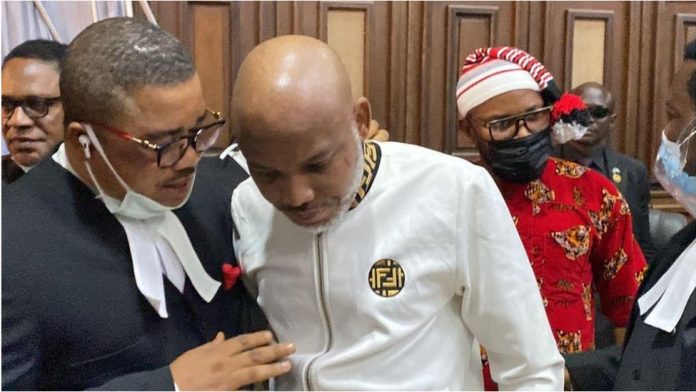
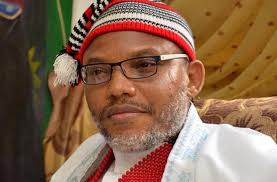
FG Opposes Nnamdi Kanu’s No-Case Plea, Says Threat To Nigeria Real

The Federal Government has asked the Federal High Court in Abuja to reject the no-case submission filed by the detained leader of the proscribed Indigenous People of Biafra (IPOB), Nnamdi Kanu.

Lead counsel to the government, Adegboyega Awomolo (SAN), made the request on Friday while responding to Kanu’s application before Justice James Omotosho. Awomolo argued that Kanu’s past statements and actions posed a grave national security threat and could not be dismissed as mere rhetoric.

According to him, Kanu made a public broadcast on Radio Biafra where he openly declared his intention to break up Nigeria and create the Republic of Biafra. He maintained that the IPOB leader’s threats were deliberate and incited fear across the country.

“The defendant proudly identified himself as IPOB leader despite knowing the group had been proscribed. He declared the world would come to a standstill. Nigerian law prohibits inciting statements capable of placing citizens in perpetual fear,” Awomolo said.

He further alleged that Kanu ordered his followers to attack security personnel and their families, linking the directive to the killing of over 170 police officers and other operatives.

“The threat to destroy Nigeria was not idle talk, it was calculated to create Biafra, and there are consequences for such declarations,” Awomolo stated.

The Federal Government urged the court to dismiss the no-case plea and compel Kanu to open his defence, stressing that the application was “misplaced and misconceived.”

Kanu is facing a seven-count terrorism-related charge brought by the Office of the Attorney-General of the Federation.

London-Nigeria Economic Ties Strengthen As 27 Tech Firms Scout Opportunities

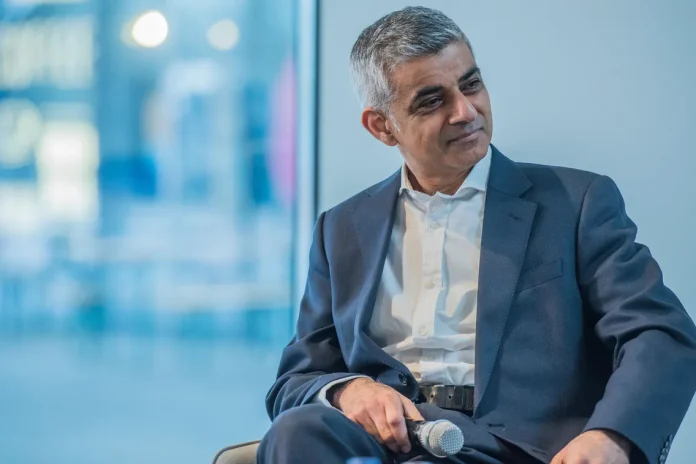
27 London-based companies in fintech, enterprise technology, and sustainability have explored investment opportunities in Nigeria as part of a high-level trade mission led by the Mayor of London, Sadiq Khan. The landmark visit, the first of its kind by a London Mayor, signals a major step toward deepening economic ties between the United Kingdom and Nigeria.

According to a statement by the British Deputy High Commission on Thursday, the delegation supported by the Mayor’s growth agency, London & Partners connected with Nigerian policymakers, investors, and creatives through strategic engagements aimed at unlocking fresh business opportunities across Africa.

The participating firms include leading players in sustainability such as Envopap, TIPA Solar, and The Washing Machine Project, as well as fintech innovators like Abound, Allica Bank, Ozone API, and Sumsub. Enterprise tech companies such as Chekkit, Deepsearch Labs, and UpSkill Universe also joined the mission, underscoring London’s interest in Nigeria’s rapidly growing technology ecosystem.

Speaking during his visit to Lagos, Mayor Sadiq Khan described Africa as the future of global growth and stressed the importance of forging partnerships that deliver mutual benefits.

“Africa has the world’s fastest-growing populations and economies, and over the next decade, there are huge opportunities to deepen partnerships with London,” he said.
“This visit is about driving trade and investment across critical sectors including finance, education, health, tech, creative industries, and sustainability.”

The British Deputy High Commissioner in Lagos, Jonny Baxter, reiterated the UK’s commitment to strengthening trade relations with Nigeria under the UK-Nigeria Enhanced Trade and Investment Partnership. He noted that the visit is a “powerful step forward in creating inclusive growth, driving innovation, and unlocking new opportunities for businesses in both countries.”

UK Minister for Africa, Lord Collins of Highbury, hailed the initiative as “a demonstration of the UK’s long-term commitment to fostering economic growth and cultural ties with African nations.”

The Mayor’s trade mission will continue with visits to Accra, Johannesburg, and Cape Town as part of a broader push to enhance trade, investment, and cultural exchange across the African continent.

Snoop Dogg Becomes Co-Owner Of Swansea City Football Club

Snoop Dogg

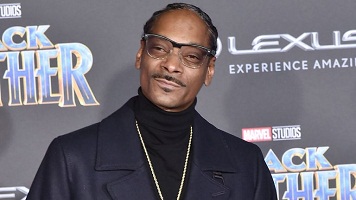
In a move that has stunned both the football and entertainment worlds, American rap icon Snoop Dogg has been announced as a new co-owner of Championship club Swansea City.

The 53-year-old artist, whose real name is Calvin Broadus, joins the Welsh club’s ownership group alongside Croatian football legend Luka Modric, as part of a wider investment effort following a takeover by American businessmen Brett Cravatt and Jason Cohen last November.

Snoop Dogg’s involvement was teased last week when he appeared on the club’s social media channels, modelling Swansea’s new home kit for the 2025–26 season. The club confirmed his official role as an investor on Thursday.

“My love of football is well known, but it feels special to me that I make my move into club ownership with Swansea City,” said Snoop Dogg on the club’s website. “The story of the club and the area really struck a chord with me. This is a proud, working-class city and club. An underdog that bites back, just like me. I’m proud to be part of Swansea City.”

Swansea, relegated from the Premier League in 2018, will be hoping Snoop Dogg’s global brand, including over 100 million social media followers can boost the club’s international visibility and commercial reach.

The club’s owners echoed that sentiment, noting that the partnership marks “the next episode” for Swansea City. “Snoop’s colossal global fanbase and audience will certainly help us… He has made clear to us just how excited he is at the prospect of joining the club.”

Luka Modric, who was announced as a part-owner in April and has since signed with AC Milan at age 39, adds a strong football pedigree to the club’s leadership, balancing Snoop Dogg’s cultural star power.

The partnership reflects a growing trend of celebrity involvement in British football. Swansea’s Welsh rivals, Wrexham, have seen a rapid rise since being acquired by Hollywood actors Ryan Reynolds and Rob McElhenney in 2020.

With its new ownership structure in place, Swansea City is aiming to return to the Premier League — and it now has a hip-hop legend in its corner.

UBA Seeks N157bn in Rights Issue Amid Capital Expansion Strategy

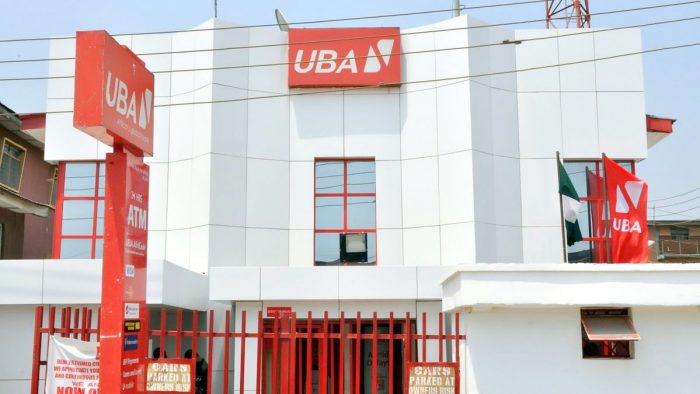
United Bank for Africa Plc (UBA) has announced plans to raise N157 billion through a rights issue in a bold strategic move aimed at strengthening its capital base, improving liquidity, and driving growth across its operations in Africa and beyond.

The capital-raising initiative, which underscores the bank’s commitment to maintaining resilience in a competitive financial landscape, is designed to position UBA for sustained expansion, regulatory compliance, and increased shareholder value in the face of evolving market dynamics.

In a statement filed with the Nigerian Exchange Limited (NGX) on Thursday, the bank disclosed that its stockbrokers, United Capital Securities Limited, have submitted an application seeking approval and listing for the rights issue. The exercise involves the issuance of 3,156,869,665 ordinary shares of 50 Kobo each, priced at N50 per share.

According to the notice, the rights issue will be offered on the basis of one new ordinary share for every 13 ordinary shares held, based on the register of members as of the qualification date of Wednesday, July 16, 2025.

“Trading License Holders are hereby notified that United Bank for Africa Plc, through its stockbrokers, United Capital Securities Ltd., has submitted an application to the Nigerian Exchange Ltd. in respect of a proposed Rights Issue,” the disclosure read.

The move comes as UBA intensifies efforts to strengthen its capital buffers in line with regulatory requirements and sustain its expansion strategy across Africa. The bank emphasized that the capital raise will enhance its ability to seize growth opportunities in key markets while ensuring resilience in an evolving macroeconomic environment.

The rights issue is subject to approval from the Securities and Exchange Commission (SEC) and the NGX.

EU Approves 18th Sanctions Package On Russia

EU Honey Market

The European Union on Friday approved its 18th package of sanctions against Russia in response to the ongoing war in Ukraine, tightening restrictions on Moscow’s oil exports and expanding economic pressure on key sectors of its economy.

The new measures  among the most extensive to date , include a reduction in the price cap on Russian oil exports to third countries, additional blacklisting of shipping vessels, and sanctions targeting international networks seen as helping Moscow circumvent existing restrictions.

“The EU just approved one of its strongest sanctions packages against Russia to date,” said EU foreign policy chief Kaja Kallas. “Each sanction weakens Russia’s ability to wage war. The message is clear: Europe will not back down in its support for Ukraine.”

The package, which had been delayed for weeks, was finalized after Slovakia dropped its opposition. Slovak Prime Minister Robert Fico, a known Russia-friendly figure, lifted the block following assurances from Brussels over energy security and gas pricing. The EU aims to phase out Russian gas imports entirely by 2027.

At the heart of the new sanctions is a revised oil price cap. Under the updated rules, the EU has agreed to lower the cap on Russian oil exported to non-EU countries to 15 percent below market value, a move designed to shrink Russia’s oil revenue. The new cap, starting at $47.60 per barrel, will replace the $60 ceiling introduced by the G7 in 2022 and will be adjusted over time as global prices fluctuate.

Although the U.S., under President Donald Trump, has not yet committed to the revised cap, the EU expects backing from other G7 partners, including the United Kingdom and Canada.

Diplomats also confirmed the blacklisting of over 100 additional vessels in Russia’s so-called “shadow fleet” were older tankers used to skirt sanctions and deploy new measures to permanently disable the Nord Stream 1 and 2 gas pipelines, which have remained dormant since being damaged in 2022.

The sanctions extend further to include: A Russian-owned oil refinery operating in India, Two Chinese banks linked to transactions with Russian entities, Expanded bans on exports of dual-use goods with potential military applications and Tighter restrictions on financial transactions with Russian banks.

The new package underscores the EU’s continued commitment to Ukraine as the war approaches its fourth year. The sanctions will be formally adopted by EU ministers later today.

Court Restricts Attendance As Nnamdi Kanu Trial Resumes In Abuja

The trial of Nnamdi Kanu, leader of the proscribed Indigenous People of Biafra, resumes at the Federal High Court in Abuja today Friday July 18 2025 under tight access controls after the presiding judge restricted attendance to a select list from the defence team.

Justice James Omotosho approved entry for only ten people from the defence side in a move court officials say is intended to maintain order and manage security around the high profile proceedings. The cleared list includes eight senior lawyers and two close associates of Kanu. All other observers remain barred.

On the legal roster are Senior Advocates of Nigeria Kanu G Agabi, Dr Onyechi Ikpeazu, Paul Erokoro, Emeka Etiaba, Mela Audu Nunghe, Dr Joseph Akubo, Uchenna Njoku, and Aloy Ejimakor. Also approved to attend are House of Representatives member Hon Obi Aguocha and Kanu’s younger brother, Prince Emmanuel Kanu. Proceedings are scheduled to start at nine o clock this morning.

The defence heads back to court after the federal government closed its case at the last sitting. The judge directed Kanu’s team to file a written address in support of a no case submission within fourteen days a critical next step that could determine whether the matter proceeds to full defence or is dismissed in whole or in part.

Journalists and members of the public will not be allowed into the courtroom in line with the restricted access order. Media briefings if any are expected to take place outside the court premises once the day’s session ends.

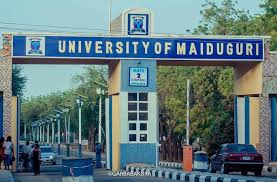
Tinubu Renames UNIMAID To Muhammadu Buhari University

President Bola Tinubu has announced the renaming of the University of Maiduguri to Muhammadu Buhari University in honor of Nigeria’s former president, Muhammadu Buhari, who passed away days ago in London at the age of 82.

The announcement was made on Thursday during a special session of the Federal Executive Council (FEC) held in Abuja to pay tribute to the late leader. Tinubu described the decision as a mark of respect for Buhari’s service to the country both as a military ruler and a democratically elected president.

“In honor of his memory, the Federal Executive Council has approved the renaming of the University of Maiduguri to Muhammadu Buhari University, Maiduguri,” Tinubu declared during the session.

The University of Maiduguri, founded in 1975 as one of Nigeria’s second-generation universities under the Third National Development Plan, will now bear the name of a man who shaped Nigeria’s political landscape for decades. However, the renaming will require legislative backing, as the National Assembly must amend the institution’s Establishment Act before the change becomes official.

Buhari’s funeral, held in his hometown of Daura in Katsina State on Wednesday, drew prominent dignitaries and political figures from across the country. Buhari retired to Daura after handing over power to Tinubu on May 29, 2023, marking the end of his constitutionally permitted two terms in office.

The late leader first came to prominence as Nigeria’s military head of state between January 1984 and August 1985 following a coup. Decades later, he returned to power as a civilian president, serving from 2015 to 2023. His tenure was marked by economic reforms, security challenges, and anti-corruption campaigns that defined much of his administration’s legacy.

Originally established without its own structures, the university began operations in 1976 after inheriting facilities from the former North East College of Arts and Science. Over the years, it has grown into a major academic institution, enrolling thousands of students across diverse disciplines. At its inception, the school had only 743 students spread across three faculties—Arts and Education, Science, and Social Science & Law.

Renaming the University of Maiduguri after Buhari is seen as a symbolic gesture to honor his contribution to Nigeria’s unity and development. It also aligns with the government’s plan to preserve the legacies of past leaders through national monuments and institutions.

The Muhammadu Buhari University, as it will now be known once the legislative process is complete, is expected to continue its role as a leading center of learning in northern Nigeria, while serving as a lasting tribute to a former president whose influence spanned decades of the country’s political history.

BizWatchNigeria.Ng
Privacy Overview

This website uses cookies so that we can provide you with the best user experience possible. Cookie information is stored in your browser and performs functions such as recognising you when you return to our website and helping our team to understand which sections of the website you find most interesting and useful.