





Home Blog Page 105

LBS BREAKFAST PRESENTATION AUGUST 2025: Nigeria’s Aviation Gamble, Reform Fatigue, And the Search For Sustainable Growth

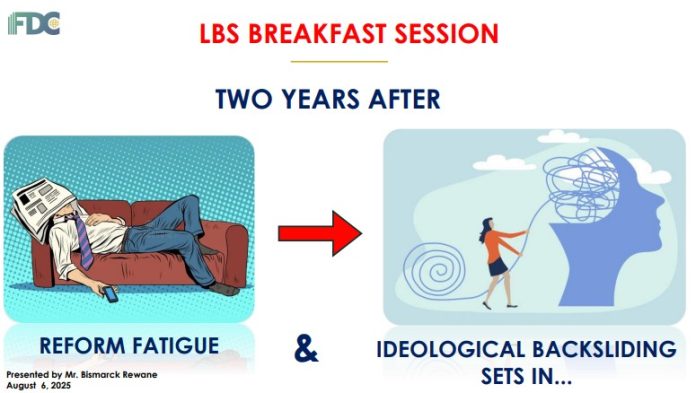
When Bismarck Rewane took the stage at the Lagos Business School (LBS) Breakfast Session of August 2025, his message was as sobering as it was forward-looking. Two years into Nigeria’s bold economic reforms—subsidy removal, naira floatation, and privatization—reality is setting in: reform fatigue, ideological backsliding, and misallocation of scarce resources threaten to undermine progress. For business leaders and investors, the lessons from his presentation are both cautionary and instructive.

🔗 Download the full LBS Breakfast Presentation (August 2025)

Reform Fatigue and Its Economic Tol

Economic reforms often begin with optimism. Yet, as Rewane highlighted, history shows that two years after implementation, fatigue sets in. Just as Thatcher’s UK, Myanmar, and Moldova saw their bold policies spark unintended hardships, Nigeria today faces a similar challenge: rising inflation, currency volatility, and eroding disposable income.

While subsidy removal has boosted government revenue, households and businesses continue to feel the squeeze. Inflation eased marginally to 22.22% in June 2025, but food prices remain stubbornly high. For entrepreneurs, this environment demands careful cost management and strategic pricing to stay competitive without alienating consumers.

Aviation: A Bottomless Pit or a Catalyst?

One of the sharpest insights from the session was Nigeria’s obsession with aviation. Over the past eight years, multiple states have plunged into building airports and even launching airlines—Ibom Air, Cally Air, and the newly announced Enugu Air—despite the sector’s notoriously slim margins.

Globally, airlines average a razor-thin 2.5% profit margin, with African carriers faring worse at just 0.6% in 2024. Meanwhile, African airlines face double the operating costs of their global peers. Rewane cautioned that pouring billions of naira into airlines—an industry Warren Buffet once described as a “bottomless pit”—is a questionable use of scarce resources.

For business leaders, the takeaway is clear: states should rethink airline vanity projects and focus on infrastructure with broader impact—roads, schools, and healthcare—that catalyze real productivity and unlock consumer spending.

Privatization: The Telecommunication Lesson

Nigeria’s telecom sector is a case study in successful privatization. In 1999, NITEL managed just 400,000 telephone lines with a teledensity of 0.04%. Fast-forward to today, the industry boasts over 169 million active lines and 48% broadband penetration.

Contrast this with Nigeria’s petroleum downstream sector, which has only begun its transition to market-based pricing after years of inefficiency and corruption. For investors, the lesson is unmistakable: private-sector-led growth delivers efficiency, innovation, and profitability, while state-led enterprises often drown in bureaucracy and political interference.

Stock Market Signals: Resilience Amid Risks

One bright spot in Rewane’s outlook was the Nigerian Exchange (NGX). Despite high interest rates, FX volatility, and inflationary pressures, the NGX recorded a 36% year-to-date return in naira terms and 30% in dollar terms. This performance outpaced most African peers, positioning Nigeria as a surprisingly attractive equity market for both local and foreign investors.

However, risks remain. Valuations are climbing, with the NGX’s P/E ratio rising from 6.7x in 2024 to 7.8x in July 2025. While not yet bubble territory, Rewane warned that sustained overvaluation without earnings support could trigger a painful correction. For investors, this is a signal to balance optimism with discipline—rotate portfolios, hedge against naira risks, and prepare to buy the dip after inevitable corrections.

The Creative Economy: Nigeria’s New Growth Engin

Perhaps the most optimistic theme of the breakfast session was the creative industry’s rapid rise. Growing at 9.63% in Q1 2025, it has outpaced national GDP growth more than threefold. Music, film, fashion, and sports are now among Nigeria’s fastest-growing exports, with the sector projected to be worth $10–20 billion by 2027.

For investors, opportunities abound in content production, talent development, and digital distribution. The global media and entertainment industry is set to generate $3.5 trillion by 2029, and Nigeria, with its youthful population and digital connectivity, is positioned to capture a meaningful slice of that pie.

Policy Outlook: Stability, but Caution Ahead

Looking forward, Rewane projects moderate stability in key variables:

  • Naira to trade between ₦1,500–₦1,600/$ through Q3 2025
  • Inflation to decline gradually to 21.79% in July 2025
  • Interest rates likely to ease slightly, with a 25bps cut signaling a slow shift toward cheaper credit
  • Oil production improving, though still below budget benchmarks

Yet, he warned that Nigeria’s “suboptimal use of resources” is unsustainable. Spending ₦53 billion on a new airport, he noted, could alternatively build 424 primary healthcare centers or 350 secondary school blocks—a stark reminder of opportunity cost.

Bottom Line for Business Leader

The LBS Breakfast Session offered no illusions: Nigeria’s reform journey is far from over, and missteps could roll back hard-won gains. For business-minded Nigerians, the insights converge on three key strategies:

  1. Prioritize efficiency over expansion – Whether in aviation or manufacturing, focus on operations that deliver sustainable margins, not prestige.
  2. Follow privatization trends – Invest in sectors where government is stepping back, as telecoms and downstream oil show the private sector’s ability to unlock growth.
  3. Bet on the creative economy – Nigeria’s cultural exports are not just art—they’re billion-dollar opportunities waiting for capital, structure, and scale.

The reforms may be biting, but for disciplined investors, the next wave of growth opportunities is already visible.

🔗 Access the full LBS Breakfast Presentation (August 2025)

Femi Otedola Recounts How He Lost N200 Billion In Market Crash

Nigerian billionaire and business mogul, Femi Otedola, has revealed the harrowing financial ordeal that cost him nearly N200 billion, describing it as one of the darkest moments of his entrepreneurial journey.

In his new memoir, Otedola: An Autobiography, the chairman of FBN Holdings Plc recounted how a mix of global oil market volatility and financial miscalculations brought his energy empire, Zenon Petroleum & Gas, to its knees.

The Oil Price Collapse

According to Otedola, the crisis began in 2008 when global crude oil prices peaked at $147 per barrel. Believing the upward trend would continue, he made a bold move—placing a diesel import order worth $500 million for the Nigerian market.

However, within weeks, oil prices plummeted to $37 per barrel, slashing the value of his cargo to a fraction of the purchase price.

“The diesel I ordered at the peak of the market was already on the high seas. By the time it landed, the value had collapsed. At that point, I told myself—this is the end,” Otedola recalled.

Naira Devaluation and Mounting Debt

As the oil market crash deepened, Nigeria’s foreign exchange crisis compounded his woes. The Central Bank of Nigeria devalued the naira due to dwindling oil revenues. Loans that Otedola had secured at N117/$1 were now to be repaid at N165/$1, inflating his debt significantly.

“I saw N60 billion wiped out instantly, alongside another N40 billion in interest repayments,” he revealed.

A Missed Stock Market Exit

The billionaire also disclosed how his investments in Nigeria’s banking sector further worsened his losses. At the time, Otedola held 2.3 billion shares in Zenith Bank, representing about 8% ownership, and an additional 6% stake in UBA.

He purchased Zenith Bank shares at N12 each and saw them surge to N60. A timely exit could have earned him a staggering N191 billion. However, expecting the rally to continue, he held on—only for the global financial crisis to strike, erasing much of his paper wealth.

“It remains one of my deepest regrets. If only I had trusted my instincts and sold at the peak,” he admitted.

AMCON Intervention and Asset Surrender

By the end of the crisis, Otedola’s debts had soared to over N220 billion. To resolve the financial quagmire, he reached an agreement with the Asset Management Corporation of Nigeria (AMCON), the government agency established to rescue banks from toxic loans after the 2008 crash.

As part of the settlement, Otedola relinquished substantial assets, including luxury estates in Lagos, Abuja, and Port Harcourt, filling stations nationwide, truck depots, storage facilities in Apapa, his holdings in banks and oil firms, and even his Bombardier private jet.

“It was a lifeboat in the storm,” he wrote. “You either sink with pride or grab a preserver to stay afloat. I chose the latter and gave up everything to start all over again.”

Lessons Learned and a New Beginning

Looking back, Otedola described the experience as a turning point that reshaped his outlook on business and life. Losing almost everything, he said, instilled discipline and a renewed determination to rebuild.

Today, Otedola has not only recovered but also cemented his place as one of Nigeria’s most influential investors. As chairman of FBN Holdings Plc, he remains a prominent figure in the nation’s corporate and financial landscape.

His newly released memoir, Making It Big, published on August 18, 2025, provides a candid look into his rise, fall, and comeback.

Top 10 Cheapest Countries To Relocate To In 2025 (With Cost Comparison)

Passport Issuance Hits Over 1m As More Nigerians Relocate

Relocating abroad isn’t just about chasing dreams—it’s also about crunching the numbers. Let’s be honest: moving overseas can be overwhelming, but the one question that sits stubbornly in the back of everyone’s mind is: Can I actually afford to live there?

For many Nigerians, especially those thinking of “japa” (relocating for better opportunities), affordability isn’t just a nice-to-have—it’s a survival strategy. Between rent, food, healthcare, and transport, the cost of living can make or break your relocation experience.

According to the 2024 U.S. News Best Countries rankings, affordability is shaped by how global respondents perceive living costs—covering everything from groceries to bus fares, and even housing. This isn’t just about exchange rates; it’s about daily reality. Think of it as the difference between surviving and actually living.

So, if you’ve been sketching out your relocation plan, here are the top 10 cheapest countries you should seriously consider.

1. Thailand

Thailand has mastered the art of making life affordable yet vibrant. Picture this: a steaming bowl of Pad Thai on a Bangkok street corner for less than $2. Rent? Way lower than in Lagos or London.

  • Ranked #1 in Affordability
  • GDP per capita (PPP): $23,423
  • Population: 71.8 million

Beyond the cost, Thailand is paradise for digital nomads and retirees. Healthcare is surprisingly affordable, English is widely understood in tourist hubs, and the culture—between temples, festivals, and beaches—makes everyday life feel rich, even if your wallet isn’t.

2. Vietnam

Vietnam isn’t just affordable; it’s buzzing with entrepreneurial spirit. Cities like Ho Chi Minh are fast-growing hubs for freelancers and small businesses. Street food is a religion here, and it barely dents your budget.

  • GDP per capita (PPP): $15,194
  • Population: 98.9 million

What makes Vietnam stand out? The low rent, the coffee culture (some of the best in the world), and a lifestyle that balances tradition with modern convenience.

3. India

India is enormous—geographically, culturally, and economically. And that means choices. Whether you’re in bustling Mumbai or a quieter city like Jaipur, the cost of living stays refreshingly low.

  • GDP per capita (PPP): $10,176
  • Population: 1.43 billion

Rent and transport are among the cheapest you’ll find globally. For Nigerians, the cultural similarities—family-centered living, spicy food, noisy streets—make it feel oddly familiar.

4. Philippines

Imagine living near turquoise waters, eating fresh seafood, and paying a fraction of Western prices. That’s the Philippines for you.

  • GDP per capita (PPP): $10,755
  • Population: 117 million

With strong English proficiency, navigating daily life is easy. Healthcare is much cheaper compared to Europe or the U.S., and housing near coastal towns remains affordable.

5. Malaysia

Malaysia offers something unique: a blend of affordability and advanced infrastructure. Kuala Lumpur, for instance, has shiny skyscrapers, efficient public transport, and still, you’ll pay less in rent than in Abuja or Accra.

  • GDP per capita (PPP): $37,248
  • Population: 34.3 million

Food is cheap, especially in hawker centers where you can eat like royalty for just a few dollars.

6. Indonesia

Yes, Bali gets all the attention, but Indonesia as a whole is affordable.

  • GDP per capita (PPP): $15,613
  • Population: 278 million

From Jakarta to quieter towns, living costs remain manageable, especially for expats with remote income.

7. Mexico

For those who want affordability without being too far from the U.S. (or even Canada), Mexico stands tall.

  • GDP per capita (PPP): $25,602
  • Population: 128 million

Cities like Mérida and Oaxaca are particularly loved for their safety, cultural richness, and low living costs.

8. China

Shanghai may shock your wallet, but head inland and China’s affordability shines.

  • GDP per capita (PPP): $24,558
  • Population: 1.41 billion

Teachers especially find it rewarding, with salaries that cover rent, food, and even savings.

9. Turkey

Turkey is a cultural melting pot—half Europe, half Asia, all affordable.

  • GDP per capita (PPP): $44,151
  • Population: 85.3 million

From Istanbul’s markets to Antalya’s beaches, Turkey offers strong value for those with foreign income.

10. Bangladesh

Bangladesh may not top lifestyle rankings, but affordability is unbeatable.

  • GDP per capita (PPP): $9,066
  • Population: 173 million

Food, transport, and housing are extremely cheap. The tight-knit community vibe makes it unique.

Quick Cost Comparison of the Cheapest Countries to Relocate to in 2025

Here’s a snapshot of average monthly living costs (for a single person) across the top 10 cheapest countries to relocate to:

Thailand$400 – $600$150 – $200$30$800 – $1,000
Vietnam$300 – $500$120 – $180$10$700 – $900
India$150 – $300$100 – $150$10$500 – $700
Philippines$250 – $400$120 – $180$15$600 – $900
Malaysia$400 – $600$150 – $200$25$900 – $1,100
Indonesia$250 – $450$120 – $160$15$650 – $900
Mexico$400 – $650$180 – $250$20$1,000 – $1,200
China$350 – $600$200 – $300$25$900 – $1,200
Turkey$300 – $500$150 – $200$20$800 – $1,000
Bangladesh$100 – $200$80 – $120$10$400 – $600

(Note: Figures are estimates based on global expat surveys and may vary by city.)

So, Where’s Your Next Stop?

Affordability isn’t just about saving money—it’s about finding value in your everyday life. Whether it’s sipping coconut water by a Philippine beach or bargaining in a Vietnamese market, these countries prove that low costs don’t mean low quality.

For Nigerians considering relocation, the key takeaway is simple: living abroad doesn’t have to drain your bank account. With the right country, you can balance lifestyle, culture, and affordability. Because sometimes, the cheapest option doesn’t feel cheap at all—it feels like freedom.

Naira Strengthens On Improved Dollar Liquidity As CBN Intervenes

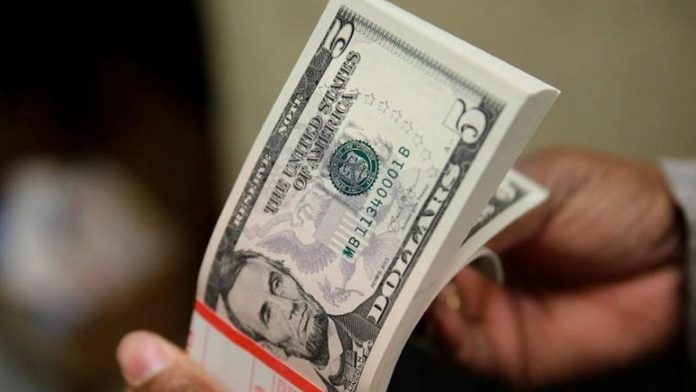
The Nigerian naira extended its gains in the foreign exchange market on Thursday, supported by higher inflows from foreign portfolio investors (FPIs) and intervention measures by the Central Bank of Nigeria (CBN).

Market data showed that increased supply of the U.S. dollar helped ease pressure on the local currency, with the apex bank reinforcing liquidity through FX sales. Offshore investors also participated actively in the open market operations, further boosting foreign exchange supply.

According to figures released by the CBN, the naira appreciated marginally, closing at ₦1,535.78 per dollar compared to ₦1,536.73 recorded on Wednesday. Trading data revealed intraday quotes ranging between ₦1,535.25/$ and ₦1,538.00/$, with the local unit appreciating by six basis points.

In its market commentary, AIICO Capital Limited noted that the improvement in FX liquidity at the official window was largely driven by the CBN’s undisclosed intervention. The institution highlighted that demand was outpaced by supply, resulting in the stronger closing rate.

Meanwhile, Nigeria’s external reserves climbed further, rising by $44.87 million to $41.04 billion as of August 21, 2025. Analysts predict that the gradual accumulation of reserves may help sustain rate stability in the near term.

On the international front, crude oil prices rallied on Thursday, lifted by stalled peace negotiations between Russia and Ukraine, coupled with stronger U.S. demand data. Brent crude futures advanced by 83 cents, or 1.2%, to $67.67 per barrel, while U.S. West Texas Intermediate (WTI) gained 81 cents, or 1.3%, to settle at $63.52.

Gold prices, however, edged lower as the dollar firmed. Spot gold slipped 0.3% to $3,337.95 per ounce, while U.S. gold futures dropped 0.2% to close at $3,386.50. Investors are now closely monitoring Federal Reserve Chair Jerome Powell’s upcoming address at the Jackson Hole symposium for potential guidance on rate cuts.

Tinubu Urges Nigerians In Diaspora To Drive National Development

Tinubu Authorizes Appointment Of New CEOs

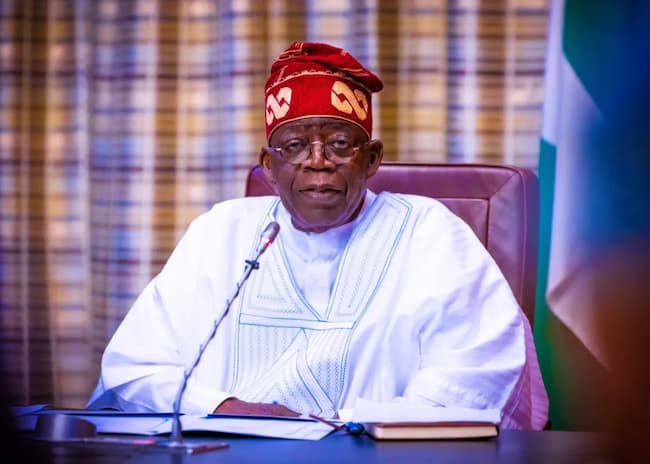
President Bola Tinubu has called on Nigerians in the diaspora to remain committed to the nation’s progress, stressing that their skills and resources are critical to building a stronger country.

Speaking on Thursday during an interactive session with Nigerians in Japan at the Kahala Hotel, Yokohama, on the sidelines of TICAD9, the President urged the community not to “abandon home.” His remarks were contained in a statement issued by Presidential Spokesperson, Mr. Bayo Onanuga.

The event brought together professionals and entrepreneurs across sectors, offering Tinubu an opportunity to highlight his administration’s reforms and economic agenda. He described the gathering as “a vibrant representation of Nigeria’s diversity” and assured participants of his government’s resolve to create an environment where citizens can thrive.

Ministers and agency heads, including Sen. John Enoh, Minister of State for Industry, and Mr. Khalil Halilu, Executive Vice Chairman of the National Agency for Science and Engineering Infrastructure (NASENI), outlined policy reforms under the administration. Oando PLC’s CEO, Mr. Wale Tinubu, added that ongoing reforms were improving the business climate and attracting fresh investments.

Reaffirming that “Nigeria is back on the rise,” the President said his government is pursuing stability and unity through strategic reforms, including faster passport processing and expanded healthcare services to reduce medical tourism.

While acknowledging that some citizens may remain abroad for economic opportunities, Tinubu urged them to consider the prospects at home, insisting that development requires joint responsibility between government and the diaspora. He further encouraged them to promote Nigeria’s image positively in their global engagements, warning that negative portrayals damage investment inflows and international partnerships.

“If we don’t join hands and work together, then we’ve lost the hope of being the leaders we are supposed to be,” he said. “True citizenship lies in commitment, integrity, and support for national progress, not just holding a passport.”

Leaders of the Nigerian community in Japan welcomed the President’s outreach. Mr. Emeka Ebogota, President of the Nigerian Union in Japan, pledged the diaspora’s support for the administration’s agenda.

Notable participants included John Ologbotsere, a Japanese award-winning expert in electrotechnical standardisation, entrepreneur Kingsley Kabuyashi, students, doctors, and business leaders.

Also in attendance were Foreign Affairs Minister Yusuf Tuggar, Minister of Solid Minerals Dele Alake, Budget Minister Atiku Bagudu, Minister of State for Finance Doris Uzoka-Anite, NIA Director-General Amb. Mohammed Mohammed, and other senior government officials.

Excess Liquidity Keeps Nigerian Interest Rates Stable Despite CBN OMO Auction

CBN Approves Reduction In Banks' CRR

Nigeria’s short-term interest rates held steady on Thursday, as coupon payments eased liquidity pressure in the banking system despite large-scale open market operations (OMO) conducted by the Central Bank of Nigeria (CBN).

Liquidity in the financial system closed at ₦390.89 billion, representing a decline of ₦624.68 billion following the apex bank’s liquidity mop-up. The CBN had earlier floated ₦600 billion worth of OMO bills aimed at curbing excess liquidity in circulation.

Subscription levels were robust, reaching ₦1.015 trillion, with allotments totaling ₦897.19 billion, largely taken up by FPIs and Nigerian banks. AIICO Capital Limited reported that money market rates spiked as high as 32.5% earlier in the day due to auction funding pressures, but later moderated after a ₦392.74 billion bond coupon injection provided relief to the system.

The interbank market recorded marginal increases across maturities: the overnight rate climbed 1.03%, while the 1-month, 3-month, and 6-month tenors rose by 1.30%, 1.43%, and 1.21%, respectively. However, the Open Repo Rate (OPR) and overnight lending rate remained relatively flat at 26.50% and 27.00%.

Analysts expect rates to remain stable barring any unforeseen liquidity shocks. On the treasury bills market, yields on the 1-month, 3-month, and 6-month tenors fell by 19bps, 32bps, and 9bps, respectively, while the 12-month tenor rose by 63bps to 20.35%, according to Cowry Asset Limited.

The average yield on Nigerian Treasury Bills also dipped slightly by 1bps to 18.07%, reflecting sustained investor appetite for short-term instruments in the secondary market.

OMO Bill Yields Decline As CBN Offers 25.99% On 124-Day Tenor

Yields on Nigerian Open Market Operation (OMO) bills fell marginally on Thursday, as investors showed strong demand for the Central Bank of Nigeria’s latest primary auction.

The CBN auctioned ₦600 billion worth of bills across 89-day and 124-day tenors, attracting subscriptions totaling ₦1.015 trillion. The apex bank allotted ₦897.19 billion, with stop rates of 25.50% and 25.99%, respectively.

Market analysts noted that foreign portfolio investors and local deposit money banks accounted for the bulk of the bids, reinforcing OMO bills as one of the most attractive short-term investments in Nigeria’s financial market.

Following the auction, the average yield on OMO bills in the secondary market declined by two basis points to 24.8%. Investment banks observed that trading activity remained subdued in treasury bills, as investor attention focused heavily on the OMO segment.

With Nigeria’s inflation rate easing and the naira maintaining relative stability, real returns on OMO bills have improved significantly, currently offering an estimated positive yield of 5.62%. Analysts expect continued foreign investor participation, which could further strengthen FX liquidity and bolster the local currency.

Oil Prices Rise Amid Russia-Ukraine Escalation And U.S. Supply Drop

Global oil prices advanced on Friday as renewed hostilities between Russia and Ukraine rattled markets, while U.S. inventory data revealed a sharper-than-expected draw in crude stockpiles.

Brent crude edged up to $67.22 per barrel, a slight increase from the previous day’s $67.13, while West Texas Intermediate (WTI) climbed to $63.51 per barrel.

Ukraine’s military reported one of the largest airstrikes of the year, which resulted in casualties and heightened tensions. President Volodymyr Zelensky accused Moscow of refusing to engage in meaningful peace negotiations and called for stronger international sanctions.

Adding to bullish sentiment, the U.S. Energy Information Administration (EIA) reported that crude inventories declined by six million barrels last week, significantly above expectations of an 800,000-barrel reduction. Analysts believe this points to firm demand in the world’s largest oil-consuming nation.

Meanwhile, markets await insights from Federal Reserve Chair Jerome Powell’s address at the Jackson Hole symposium, as potential rate cuts could stimulate economic growth and further lift oil demand.

Tensions also flared after a Ukrainian strike targeted a Russian oil pipeline supplying Hungary. Hungarian Foreign Minister Peter Szijjarto condemned the attack, calling it “an assault on Hungary’s energy security.” He criticized Kyiv’s actions, reiterating Hungary’s refusal to be drawn into the conflict and its opposition to the EU’s “war budget” allocations.

With no resolution in sight, oil traders remain cautious, balancing geopolitical risks with economic indicators that continue to drive market volatility.

CBN Sells OMO Bills At 25.99% Stop Rate

The Central Bank of Nigeria (CBN) on Thursday sold N897.2 billion worth of open market operation (OMO) bills, offering investors stop rates as high as 25.99%, auction results showed.

The sale, conducted across two maturities, came after more than N1 trillion in inflows lifted market liquidity into surplus. The CBN offered N600 billion split between 89-day and 124-day bills but demand was strong, with subscriptions reaching N1 trillion.

At the close of the auction, the 89-day tenor cleared at 25.50%, while the 124-day paper settled at 25.99%. The issuance was aimed at mopping up excess liquidity following the maturity of earlier bills, while also helping attract foreign portfolio inflows amid ongoing economic reforms.

Market Value Drops N780bn As BUA Cement, MTN Lead Losses

The Nigerian Exchange (NGX) extended its bearish run on Thursday, with investors losing about ₦780.64 billion in market value, dragged down largely by sell pressures in BUA Cement and MTN Nigeria.

The All-Share Index (ASI) fell by 1,233.86 points or 0.87% to close at 140,332.44, while market capitalisation declined to ₦88.78 trillion. Year-to-date return moderated to 36.34%.

Heavyweight BUA Cement plunged 9.96%, erasing much of the day’s gains from smaller-cap stocks. MTN Nigeria also shed 2.25%, compounding the bearish sentiment. Other laggards included Julius Berger (-9.96%), AXA Mansard (-5.18%), Sterling Financial Holdings (-2.56%), and Access Holdings (-1.64%).

Additional declines came from Wema Bank (-0.84%), United Capital (-0.78%), Oando (-0.61%), Stanbic IBTC (-0.53%), AIICO Insurance (-0.51%), and FCMB (-0.46%).

Market activity also slowed, with transaction volume down 20.51% and value lower by 0.46%. A total of 573.75 million units worth ₦12.88 billion were exchanged across 25,881 deals. Fidelity Bank led the activity chart, accounting for 16.8% of total volume and 15.54% of total value.

Top volume movers included Veritas Kapital (6.40%), Universal Insurance (5.76%), Access Holdings (5.31%), and Jaiz Bank (3.70%).

On the gainers’ side, Jaiz Bank led with a 9.75% rise, followed by NSL Tech (+9.38%), Omatek (+5.88%), Chams (+5.00%), Custodian (+4.86%), and Mecure (+3.90%).

However, market breadth closed negative with 16 gainers against 45 losers. The worst performers included International Energy Insurance (-9.98%), Thomas Wyatt (-9.98%), University Press (-9.98%), Veritas Kapital (-9.98%), BUA Cement (-9.96%), FTN Cocoa (-9.50%), Champion Breweries (-9.32%), and Mansard (-5.18%).

Sectoral performance was largely bearish: Industrial goods (-4.04%), Insurance (-4.69%), Consumer goods (-0.04%), and Oil & Gas (-0.06%). The Banking index provided the sole cushion, rising 0.47%, while the commodities sector closed flat.

Euro Rises As EU, US Advance Trade Pact Talks

The euro edged up 0.02% to $1.1651 on Thursday as the European Union and the United States moved forward with a trade pact that could cut tariffs on key sectors, while stronger Eurozone business activity data added support.

A joint EU–US statement outlined new benchmarks for tariff reductions on cars, pharmaceuticals, and semiconductors, deepening commitments announced in a preliminary deal last month. The news encouraged investors to open fresh euro positions, though the currency remains confined to a narrow trading range this week.

The single currency also drew strength from S&P Global’s flash Eurozone Composite PMI, which rose to 51.1 in August from 50.9 in July — the highest in 15 months and signaling a third straight month of expansion. Rising new orders and price pressures bolstered expectations that the European Central Bank may slow its pace of rate cuts.

Despite the gains, analysts at ING noted EUR/USD is likely to remain in a tight 1.1620–1.1670 band ahead of Federal Reserve Chair Jerome Powell’s speech on Friday. Meanwhile, EUR/CHF slipped to 0.9370 after a recent rally, and analysts flagged firmer oil and gas prices as a mild headwind for the euro.

The latest trade deal progress also reassured markets after the EU secured a settlement that averted steep 30% US tariffs, locking in a lower 15% rate. The euro has climbed 11% against the dollar so far in 2025, underpinned by fiscal expansion plans across EU member states to boost industry, infrastructure, and defense spending.

NUPRC Targets 2.5mbpd Oil Output For Nigeria By 2026

The Nigerian Upstream Petroleum Regulatory Commission (NUPRC) says the country is on course to hit a crude oil production target of 2.5 million barrels per day (mbpd) by 2026. NUPRC Chief Executive, Gbenga Komolafe, disclosed this on Thursday in Abuja at the 4th PENGASSAN and Labour Summit (PEALS 2025), themed “Building a Resilient Oil and Gas Sector in Nigeria: Advancing HSE, ESG, Investment and Incremental Production.”

Komolafe noted that production has risen from 1.46mbpd in October 2024 to 1.8mbpd, with momentum building toward the 2026 benchmark. He attributed the gains to recent presidential executive orders under the Petroleum Industry Act (PIA) 2021, which have shortened contracting cycles, reduced investment risks, and encouraged new upstream projects.

According to him, NUPRC is driving deepwater exploration, reactivating dormant fields, and deploying enhanced recovery techniques. A recent Deepwater Technical Stakeholders’ Workshop, he added, identified more than 810,000bpd in new production potential.

The regulator is also pursuing a cluster development strategy to cut costs, optimise shared infrastructure, and boost investor confidence. On sustainability, Komolafe said the Upstream Decarbonisation Framework aims to end routine gas flaring by 2030 and cut methane emissions by 60% by 2031. He stressed that Nigeria’s 210 trillion cubic feet of gas reserves will be critical to the energy transition.

ExxonMobil’s Managing Director, Jagie Baxi, speaking at the summit, identified four key factors for boosting output: geology, cost, risk, and reward. He cautioned that despite Nigeria’s vast resources, natural production decline—especially in deepwater fields—remains a concern, with operators losing about 15% of output annually.

Baxi also flagged high drilling and operational costs as a deterrent to new investments and called for risk-adjusted incentives, better collaboration among stakeholders, and revival of underperforming assets to sustain production growth.

NNPC Records Sharp Profit Decline, Falls N720bn In One Month

The Nigerian National Petroleum Company Limited (NNPC Ltd) has reported a sharp fall in its profit after tax, which dropped from N905 billion in June to N185 billion in July — a 79.6% decline.

According to the company’s monthly financial report released on Thursday, total revenue stood at N4.41 trillion in July, compared to N4.57 trillion recorded in the previous month.

The July profit marks the steepest monthly drop this year. In June, NNPC posted N905 billion in profit after tax, down from N1.05 trillion in May and N926 billion in April.

The decline came despite marginal increases in crude oil and gas output. Crude oil production rose from 1.68 million barrels per day in June to 1.7 mbpd in July, while natural gas output inched up to 7.7 billion cubic feet from 7.58 bcf.

Between January and June, the company said it remitted N7.97 trillion in statutory payments.

The report also highlighted progress in infrastructure projects. The Ajaokuta-Kaduna-Kano (AKK) and Obiafu-Obrikom-Oben (OB3) gas pipelines reached 96% and 83% completion, respectively. Upstream pipeline availability was sustained at 100%.

To accelerate delivery, NNPC said it deployed additional subcontractors on the AKK project and revised execution strategies for the OB3 River Niger Crossing. The commissioned 113 km portion of the OB3 pipeline is already transporting about 300 million standard cubic feet per day (mmscf/d) of gas from producers including AHL (250 mmscf/d), Platform, Chorus, and Xenergi (50 mmscf/d).

The company noted that it remains focused on sustaining crude and condensate output, improving facility uptime, and strengthening collaboration with stakeholders to drive operational efficiency.

Nigerian TikToker ‘Geh Geh’ Earns $30,000 In Viral Live Session

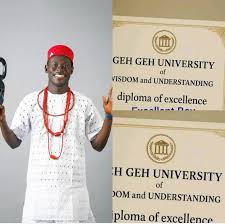
A young Nigerian content creator popularly known as Geh Geh has taken social media by storm after his TikTok live session on Thursday attracted more than 177,000 viewers and earned him gifts reportedly valued at over $30,000.

Famed for running what he humorously calls the “University of Wisdom and Understanding,” Geh Geh has built a reputation with his unconventional advice to men on relationships and money management.

Following the viral live stream, he expressed amazement at the support he received. “More than 177,000 people watch my lectures today. Jesus! University of wisdom and understanding, the only university where once you graduate, woman go fear to ask you for money,” he said in a video.

Describing himself as “the first illiterate to find a university in the history of Nigeria,” Geh Geh reflected on his journey from orphanhood to internet stardom. “I no be graduate, but by the grace of God, I don find school. Nigerians don show me love,” he added.

He revealed that the gifts he received during the session, estimated at about $30,000, were life-changing. “I no go take this love for granted, because I no really do anything for am,” he said.

While his views on women and money often stir controversy, his rise is being celebrated as proof of how social media can empower people, regardless of background or formal education. Many now see him as an inspiration for underprivileged youths who aspire to leverage digital platforms for influence and livelihood.

In another reflection, he noted: “If Nigeria be country wey value great people, by now them suppose dey compare people like me with Aristotle, Wole Soyinka, Einstein… but I thank God say people dey see my head and my own difference.”

Geh Geh’s followers, who now refer to themselves as “students” of his online university, continue to grow rapidly—highlighting how platforms like TikTok are reshaping fame, influence, and opportunity in Nigeria.

UK Tops Nigeria’s Q1 Capital Inflows At N5.5tn

United Kingdom-based investors accounted for the bulk of Nigeria’s foreign capital in the first quarter of 2025, contributing more than 65 per cent of total inflows, according to the latest Capital Importation report released by the National Bureau of Statistics (NBS).

The data showed that capital from the UK rose to $3.68bn (₦5.52tn at ₦1,500/$) in Q1 2025, representing 65.26 per cent of the $5.64bn recorded during the period. This was a 29.2 per cent increase from $2.85bn in Q4 2024 and more than double the $1.81bn inflow in Q1 2024.

Overall, Nigeria’s capital importation rose by 10.9 per cent quarter-on-quarter to $5.64bn in Q1 2025, up from $5.09bn in Q4 2024. Year-on-year, inflows grew by 67.1 per cent compared to $3.38bn in Q1 2024.

South Africa ranked as the second-largest source with $501.29m (8.88 per cent of total inflows), followed by Mauritius with $394.51m (6.99 per cent), the United States with $368.92m (6.54 per cent), and the United Arab Emirates with $301.72m (5.35 per cent). Together, the top five countries contributed over 92 per cent of all inflows.

Other notable sources included the Cayman Islands ($114.76m), Belgium ($70.54m), France ($47.33m), the Netherlands ($42.68m), and Singapore ($36.79m). The figures highlight the heavy concentration of Nigeria’s external financing in a handful of markets, underscoring both the strength of these bilateral ties and the risks associated with investor sentiment shifts in those jurisdictions.

The report also noted that British businesses continue to show rising interest in Africa, attracted by structural reforms, demographic trends, and accelerating digital transformation. A recent survey of UK executives revealed that half of large firms are already active in African markets and planning expansion, while others are exploring entry opportunities.

Africa’s abundant resources — including 30 per cent of global mineral reserves, 12 per cent of oil, eight per cent of natural gas, and 65 per cent of the world’s arable land — alongside a projected workforce boom by 2035, make the continent increasingly attractive to international investors. Key sectors drawing capital include technology, oil and gas, power (particularly renewables), agriculture, manufacturing, infrastructure, and strategic minerals.

Following Fatal Crash, U.S. Suspends Truck Driver Visa Program

The Trump administration on Thursday abruptly suspended the issuance of U.S. visas for commercial truck drivers following a deadly highway crash in Florida, marking the latest restrictive move against foreign workers.

“Effective immediately we are pausing all issuance of worker visas for commercial truck drivers,” Secretary of State Marco Rubio announced on X. He argued that the rise in foreign-born drivers of heavy trucks was “endangering American lives and undercutting the livelihoods of American truckers.”

The decision followed the case of Harjinder Singh, an Indian national accused of causing a crash that killed three people while making an illegal U-turn. Officials said Singh entered the U.S. unlawfully through Mexico, later sought asylum, and failed an English exam after the accident. His extradition from California was personally overseen by Florida’s lieutenant governor and federal immigration agents, underscoring the political weight the case has taken on.

Transportation Secretary Sean Duffy called the incident “a preventable tragedy directly caused by reckless decisions and compounded by despicable failures.” California Governor Gavin Newsom’s office, however, pointed out that Singh had been granted a federal work permit, adding that state officials cooperated fully in his extradition.

Republicans have seized on the crash to press their case against foreign truckers, though data linking immigration to road accidents remains inconclusive. The number of foreign-born truck drivers has more than doubled since 2000, reaching 720,000 by 2021, or about 18% of the workforce, according to federal figures. Industry groups say the influx has helped fill a driver shortage estimated at 24,000 — a gap that costs the U.S. freight sector nearly $100 million weekly.

The suspension adds to the administration’s widening visa restrictions. Since Trump returned to office, the State Department says it has revoked more than 6,000 student visas, introduced continuous vetting for all 55 million visa holders, and halted visitor visas for injured children from Gaza. Rubio has also ordered social media reviews of applicants and used national security provisions to rescind visas for individuals opposing U.S. foreign policy, including critics of Israel’s military actions.

Presidency Unveils Online Tax Calculator To Show Effect On Earnings

Tinubu Appoints Mandate Secretaries For FCTA

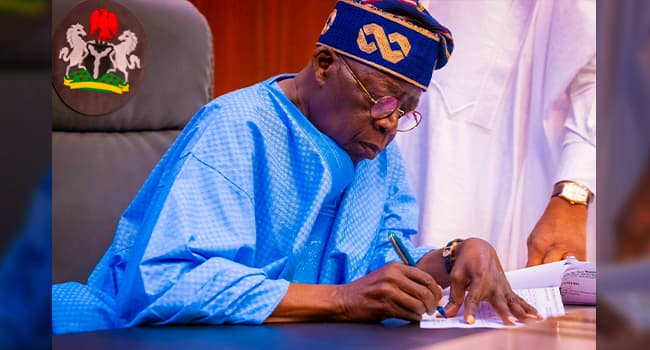
President Bola Tinubu on Friday unveiled a Personal Income Tax calculator designed to help Nigerians estimate their tax obligations under the administration’s newly signed reforms.

In a post on his official X account, the President explained that the tool allows citizens to compare projected taxes under the new framework, which takes effect in January 2026, with current rates. The aim, he said, is to give taxpayers a clearer understanding of how the changes will affect their incomes.

“A fair tax system must never punish poverty or weigh down the most vulnerable,” Tinubu said. “With the new tax laws I recently signed, taking effect from January 2026, we have lifted this burden and created a path of equity, fairness, and true redistribution in our economy.”

He added that the calculator demonstrates how the reforms are structured to protect low-income earners, ensure progressivity, simplify compliance, and deliver transparency.

“Together, we are renewing hope in the Nigeria of our dreams. Take a bet on our country. Bet on Nigeria to work for you, your family, and your community,” the President said.

The calculator is available via the Fiscal Reforms website at fiscalreforms.ng/index.php/pit-calculator.

Pension Fund Managers Eye Wider Investment Options For N24tn Assets

Only 7% Of Nigerian Adults Have Pension Accounts - Report

Players in Nigeria’s pension industry are urging regulators to expand investment guidelines to allow allocations into export-oriented businesses, toll roads, real estate, and high-growth unlisted companies, in a bid to boost returns for contributors. The call comes amid rising inflation and sustained naira depreciation, which continue to erode the real value of pension assets, according to a Bloomberg report on Thursday.

Data from the National Pension Commission (PenCom) showed that pension assets stood at N24.63 trillion as of June, with most of the funds invested in government securities.

Chief Executive of the Pension Fund Operators Association of Nigeria, Oguche Agudah, said managers are “looking toward alternative investments to be able to cover any potential losses.” Dave Uduanu, CEO of Access ARM Pensions, also highlighted opportunities in export-oriented firms, toll road projects, and unlisted high-growth companies.

Olumide Oyetan, CEO of Stanbic IBTC Pension Managers Ltd, called on authorities to issue inflation-indexed floating-rate bonds, arguing such instruments would protect fixed-income portfolios — currently the bulk of industry holdings — from negative real returns.

While pushing for broader reforms, operators note they are already increasing exposure to private equity, infrastructure funds, and real estate investment trusts within current rules.

The industry shift mirrors a wider global trend, with inflows into private credit now exceeding $1.5 trillion worldwide.

PenCom confirmed that a review of investment guidelines is underway, with new rules expected this quarter. At a sensitisation workshop in Lagos, the Commission encouraged Pension Fund Administrators (PFAs) to diversify into alternative assets, stressing the need for dynamic strategies to withstand macroeconomic headwinds.

“The current environment of inflation, foreign exchange volatility, and declining purchasing power requires a different investment playbook,” said PenCom’s Director-General, Omolola Oloworaran. “Alternative assets provide a complementary pillar to core strategies. Investments in infrastructure and private equity, in particular, align with pension fund horizons, enhance diversification, and improve risk-adjusted returns.”

Nigeria’s inflation rate stood at 21.88% in July, remaining in double digits since 2015. Meanwhile, the naira has lost nearly 70% of its value against the dollar since May 2023, when authorities unified segments of the foreign exchange market.

SpaceX Successfully Launches Covert U.S. Military Payload

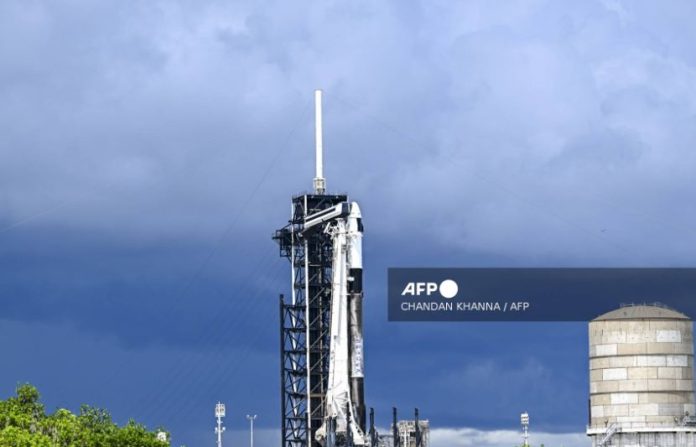
A SpaceX Falcon 9 rocket lifted off late Thursday, carrying the U.S. military’s classified X-37B orbital test vehicle on its eighth mission. The rocket launched at 11:50 p.m. local time (0350 GMT Friday) from NASA’s Kennedy Space Center in Florida, lighting up the night sky, according to a SpaceX livestream.

The U.S. Space Force said the drone’s latest mission will involve “a wide range of test and experimentation objectives,” including trials of next-generation technologies such as laser communications and what it described as “the highest-performing quantum inertial sensor ever tested in space.”

“Mission 8 will contribute to improving the resilience, efficiency, and security of U.S. space-based communications architectures,” the Space Force said in a statement.

Roughly the size of a small bus, the X-37B resembles a scaled-down version of NASA’s retired space shuttle. First flown in 2010, it has previously conducted experiments for both the military and NASA.

The unmanned craft, built by Boeing for the Air Force and now operated by the Space Force, measures 30 feet (nine meters) in length with a 15-foot wingspan and is powered by deployable solar panels.

Pope Leo XIV Declares Global Day Of Prayer And Fasting For Peace On Friday

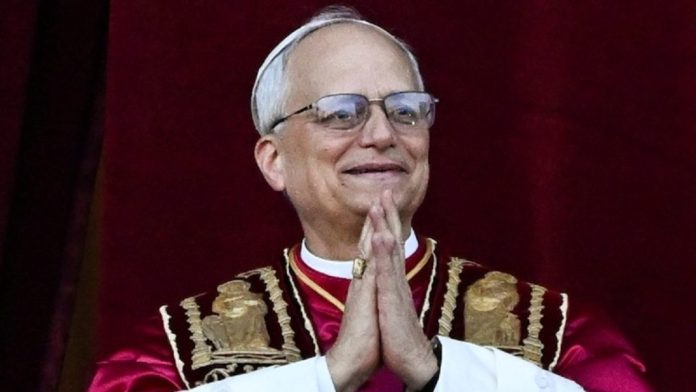
Pope Leo XIV has declared Friday, August 22, a global day of prayer and fasting for peace, coinciding with the Feast of the Queenship of the Blessed Virgin Mary. The announcement was made during his General Audience in St. Peter’s Square on Wednesday, according to Vatican News.

The Pope’s appeal comes amid escalating violence in Ukraine, the Holy Land, and other conflict regions. Humanitarian organisations continue to warn of worsening conditions, with rising numbers of displaced persons and civilians trapped in violence.

“Too many innocent lives are being lost, and too many families are bearing the weight of wars that seem endless. We cannot remain indifferent,” Pope Leo said, urging the faithful to observe the day through fasting, prayer, and acts of charity. He stressed that these practices are not mere symbolic gestures but catalysts for change.

The choice of date aligns with the liturgical celebration of the Queenship of the Blessed Virgin Mary, a feast honouring Mary as a figure of intercession and peace. Linking the observance to the Marian feast, the Pope said: “Let us ask Mary, Queen of Peace, to help nations rediscover the path of peace. May she intercede for people torn apart by hatred and violence.”

Religious leaders in conflict zones have welcomed the initiative. Cardinal Pierbattista Pizzaballa, Latin Patriarch of Jerusalem, said: “Prayer is not a magic formula, but it opens hearts where distrust and hatred have grown. It is a step toward rebuilding trust.”

In Ukraine, Bishop Vitalij Skomarovskyj described the appeal as a sign of solidarity. “This call reminds us we are not forgotten. Prayer and fasting have great power; they can change the course of history,” he said.

Reflecting on the Church’s teaching, Pope Leo underscored that peace is rooted not only in justice but also in forgiveness. Quoting St. John Paul II, he said: “True peace cannot exist without justice, but neither can it survive without forgiveness. Forgiveness is not surrender; it is the strength that prevents new wounds.”

The Pope’s message echoes ongoing debates about war reparations, ceasefire efforts, and transitional justice in conflict regions, offering a spiritual framework for reconciliation and peacebuilding.

BizWatchNigeria.Ng
Privacy Overview

This website uses cookies so that we can provide you with the best user experience possible. Cookie information is stored in your browser and performs functions such as recognising you when you return to our website and helping our team to understand which sections of the website you find most interesting and useful.