








Key points
- Oyetola commissions NIMASA-funded maritime institute at UNILAG
- Calls for collaboration among key maritime and research institutions
- FG highlights job creation potential and manpower development in blue economy
Main story
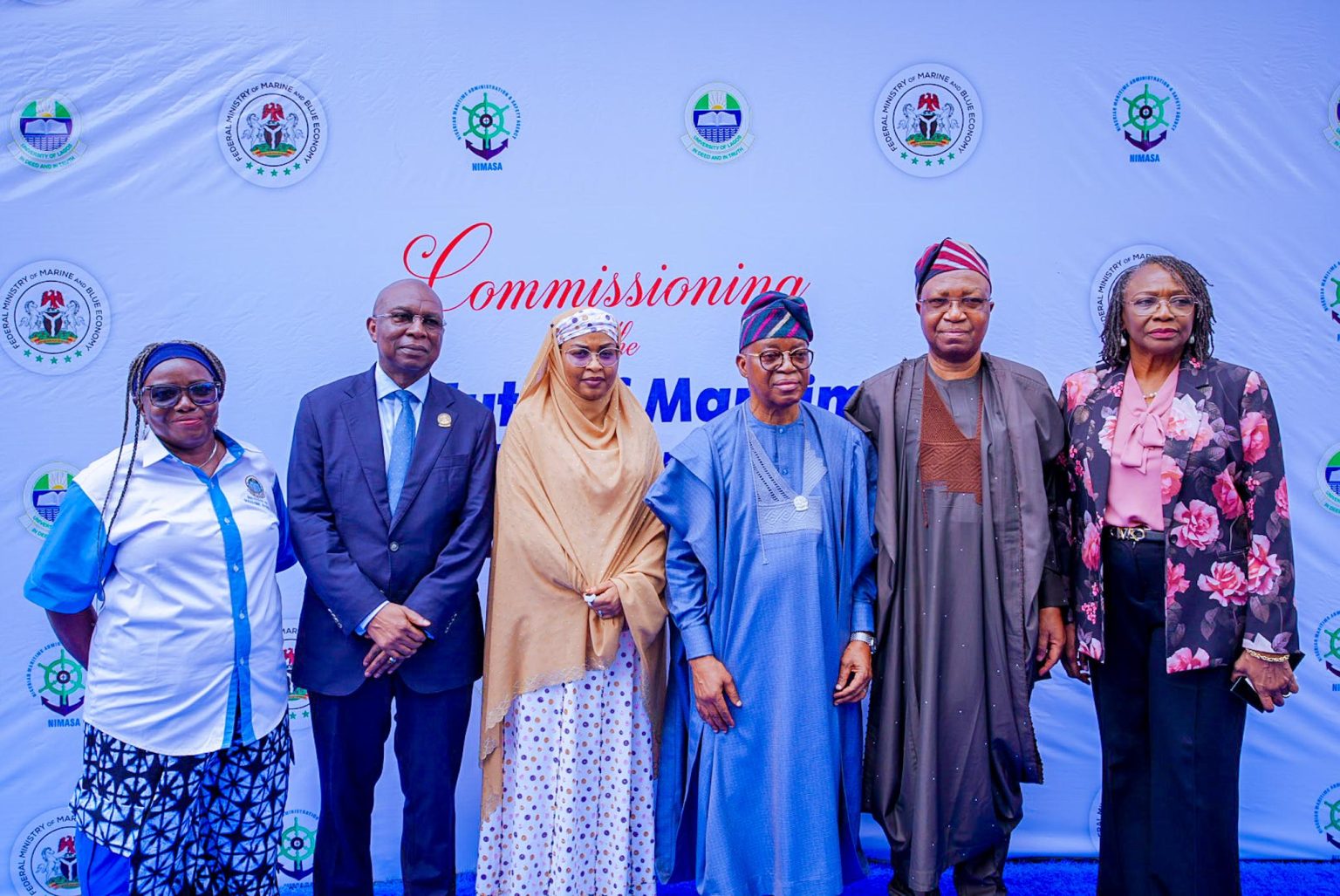
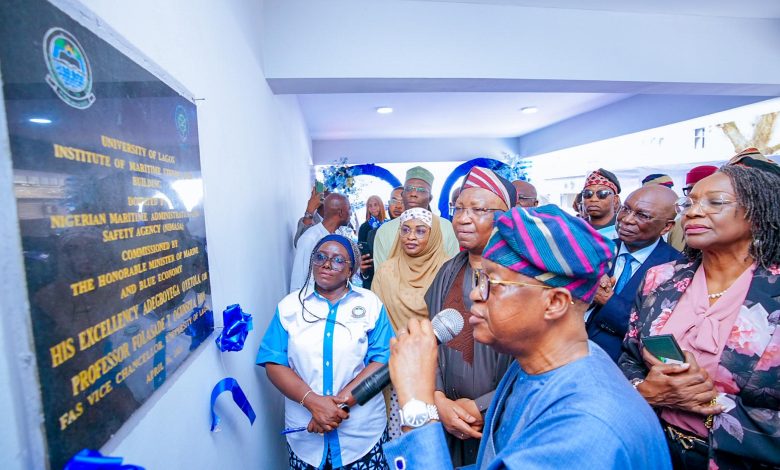
The Minister of Marine and Blue Economy, Adegboyega Oyetola, has commissioned the Institute of Maritime Studies (IMS) Multipurpose Building at the University of Lagos, reaffirming the Federal Government’s commitment to strengthening Nigeria’s marine and blue economy through investment in infrastructure, human capital, and institutional collaboration.
The facility, donated by the Nigerian Maritime Administration and Safety Agency, is equipped with modern lecture halls, laboratories and specialised facilities designed to support teaching, research and innovation in maritime studies.
Speaking at the commissioning, Oyetola described the project as a strategic milestone that reflects the government’s resolve to build institutional capacity and position the blue economy as a key driver of national growth.
“The future of the blue economy will be shaped not just by natural endowments, but by the quality of minds we nurture within institutions such as this,” he said.
The issues
The minister stressed the need for stronger collaboration among critical maritime and research institutions to develop a coordinated manpower ecosystem for the sector.
He urged the Institute to deepen partnerships with the Maritime Academy of Nigeria, Nigerian Institute for Oceanography and Marine Research and National Institute for Freshwater Fisheries Research.
Oyetola noted that over 90 per cent of Nigeria’s trade is conducted via maritime channels, underscoring the sector’s importance to economic diversification, job creation and sustainable development.
What’s being said
The minister disclosed that 2,459 Nigerians have been trained under the Nigerian Seafarers Development Programme (NSDP) across countries including the United Kingdom, Egypt, the Philippines, India and Romania, with 1,088 beneficiaries earning Certificates of Competency.
He also highlighted opportunities in fisheries and aquaculture, noting that Nigeria’s annual fish demand of 3.6 million metric tonnes presents significant prospects for food security and employment.
Oyetola further revealed that the planned disbursement of the Cabotage Vessel Financing Fund (CVFF) could generate up to 30,000 jobs, while ongoing port modernisation projects are expected to create about 20,000 jobs and improve operational efficiency.
The Director-General of NIMASA, Dayo Mobereola, said the agency is collaborating with eight Nigerian universities and international institutions, including the World Maritime University, to strengthen maritime manpower development.
Mobereola noted that the NIMASA–UNILAG partnership would enhance research, support data-driven policymaking and produce industry-ready professionals.
“NIMASA remains committed to capacity building in the maritime sector. Through the Nigerian Seafarers Development Programme, the agency has trained over 2,400 young Nigerians across global maritime institutions,” he said.
In her remarks, the Vice-Chancellor of the University of Lagos, Folasade Ogunsola, disclosed that the institute has produced over 2,000 graduates, with more than 400 candidates registered for the current academic session.
She said the new facility would strengthen teaching, research and professional training in maritime law, shipping management, port operations, logistics and marine environmental studies.
Also speaking, the Pro-Chancellor and Chairman of Council, Wole Olanipekun, commended the Federal Government’s support and pledged continued collaboration in advancing maritime manpower development.
What’s next
Established in 2013, the Institute of Maritime Studies at UNILAG has evolved into a strategic hub for maritime capacity development in Nigeria and across Africa, with stakeholders expecting the new facility to further deepen research, training and industry linkages.
Bottom line
The commissioning of the NIMASA-backed maritime institute underscores growing efforts by the Federal Government to strengthen institutional capacity and unlock the economic potential of Nigeria’s blue economy through coordinated investment in skills, infrastructure and partnerships.


 Multipurpose Building ...)