







Key points
- WTO Director-General Ngozi Okonjo-Iweala says effective public communication was instrumental in securing Nigeria’s $30 billion Paris Club debt relief.
- She says Nigerians’ understanding and support for economic reforms contributed to the success of the debt relief negotiations.
- Okonjo-Iweala urges Nigeria and other African countries to add value to mineral resources before export to drive industrialisation.
- She calls for stronger regional integration through the African Continental Free Trade Area (AfCFTA).
- CBN Governor Olayemi Cardoso stresses the need to deepen intra-African trade, strengthen institutions and mobilise domestic capital for sustainable growth.
Main Story
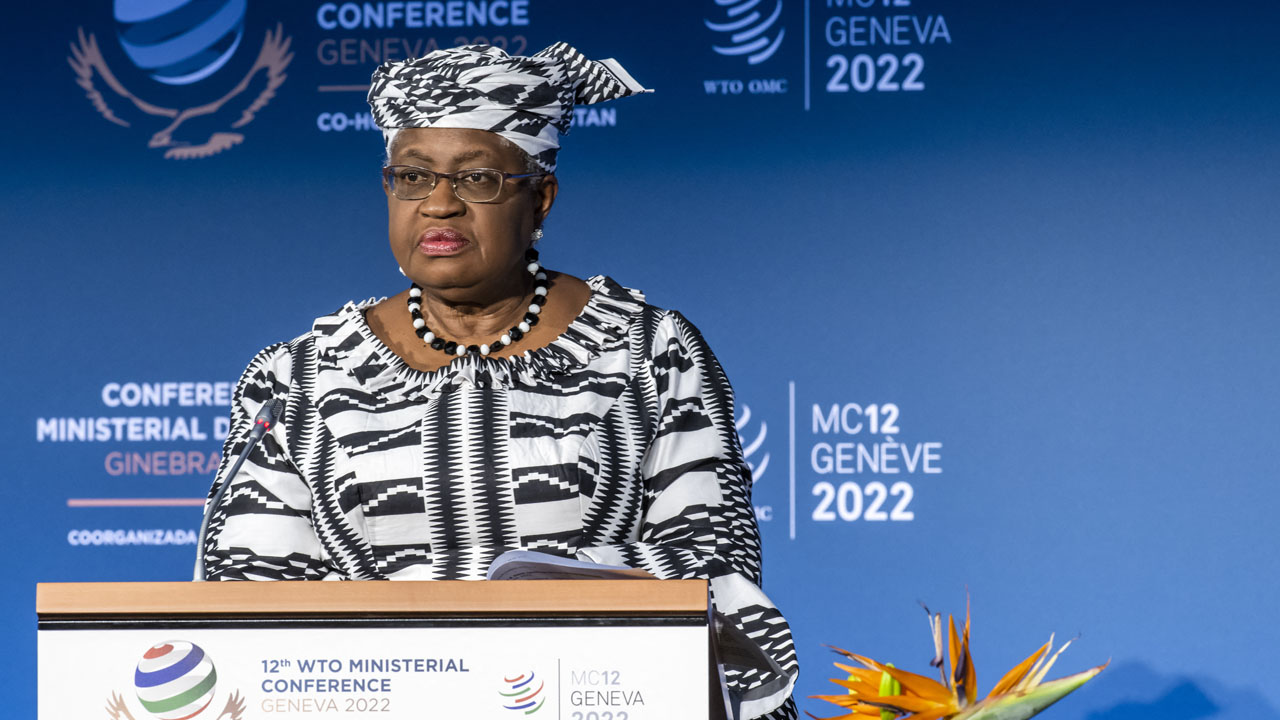
The Director-General of the World Trade Organisation (WTO), Dr Ngozi Okonjo-Iweala, has revealed that a deliberate and effective communication strategy played a pivotal role in Nigeria’s successful negotiation of the landmark $30 billion Paris Club debt relief during the administration of former President Olusegun Obasanjo.
Okonjo-Iweala made the disclosure on Wednesday in Abuja during the public presentation of The Pain and the Promise, a book authored by communications expert and public affairs analyst, Paul Nwabuikwu.
Reflecting on her tenure as Minister of Finance, she said she was brought in from the World Bank to strengthen Nigeria’s public finances, including negotiating the country’s exit from its Paris Club debt burden.
According to her, implementing the far-reaching economic reforms required public understanding and support, prompting the government to prioritise strategic communication as a critical component of the reform agenda.
She said the decision to recruit Nwabuikwu into the economic management team was driven by the need to explain complex reforms in simple language and build public trust.
Okonjo-Iweala credited the communications strategy with helping the government secure broad support for difficult policy decisions, noting that successful reforms in a democracy require more than sound policies—they also demand transparency, persuasion and public confidence.
She, however, expressed concern that Nigeria’s persistent ethnic, religious and regional divisions continue to impede national development, calling for a social compact that would ensure continuity in national priorities regardless of changes in political leadership.
Speaking separately at the Seventh African Emerging Markets Forum hosted by the Central Bank of Nigeria (CBN), the WTO chief urged Nigeria and other African countries to move beyond exporting raw minerals by investing in value addition and industrial processing.
She said Africa possesses about 30 per cent of the world’s mineral resources but continues to derive limited economic benefits because of its dependence on exporting raw materials instead of finished products.
Okonjo-Iweala called on African countries to leverage the African Continental Free Trade Area (AfCFTA) to develop regional value chains, strengthen industrial capacity and enhance competitiveness in global supply chains.
She also urged governments to improve the business environment, infrastructure and macroeconomic stability to attract investment, while promoting renewable energy to support mineral processing and industrialisation.
The Governor of the Central Bank of Nigeria, Olayemi Cardoso, also underscored the need to deepen intra-African trade, noting that trade within the continent accounts for only about 16 per cent of Africa’s total trade.
Cardoso called for stronger regional value chains, improved transport infrastructure, harmonised customs procedures and more efficient cross-border payment systems to unlock the full benefits of the AfCFTA.
He further stressed the importance of mobilising domestic savings, pension assets, insurance funds and diaspora capital to finance Africa’s development, while strengthening institutions to enhance investor confidence and long-term economic resilience.
The Issues
Despite its abundant natural and mineral resources, Africa continues to rely heavily on the export of raw commodities, limiting industrial development, job creation and value addition. Experts argue that stronger regional integration, improved infrastructure, stable economic policies and effective communication of reforms are essential to achieving sustainable economic growth and resilience.
What’s Being Said
WTO Director-General, Dr Ngozi Okonjo-Iweala:
“I can say without fear of contradiction that we wouldn’t have had as much success with the reform programme if we had not had a masterful steering of communications from Paul.”
She added:
“Reform is not just about writing new laws and enforcing new policies. It’s about persuading people, explaining trade-offs and building enough trust that governments can keep pushing through obstacles.”
On Nigeria’s development, she said:
“Until Nigerians can overcome the ethnic, religious and regional divides embedded in our society… Nigeria will find it difficult to move forward at the pace required to create enduring prosperity.”
On Africa’s mineral resources, she said:
“The goal should be higher value, higher productivity growth, driven by the development of sub-regional value chains.”
CBN Governor, Olayemi Cardoso:
“With intra-African trade still accounting for only about 16 per cent of total trade, we must build stronger regional value chains, produce more of what we consume, and trade more with one another.”
What’s Next
African policymakers are expected to intensify efforts to deepen regional trade under the AfCFTA, promote local value addition in strategic sectors and strengthen the business environment to attract investment. Nigeria is also expected to sustain reforms aimed at enhancing macroeconomic stability, improving competitiveness and accelerating industrialisation.
Bottom Line
Okonjo-Iweala’s reflections underscore the importance of effective communication in driving successful economic reforms, while her call for value-added exports reinforces the need for Africa to shift from raw commodity exports to industrial production. Combined with stronger regional integration and institutional reforms, the strategy could help unlock sustainable economic growth across the continent.



, Dr Ngozi Okonjo-Iweala, has revealed that a deliberate and effective ...)