KEY POINTS
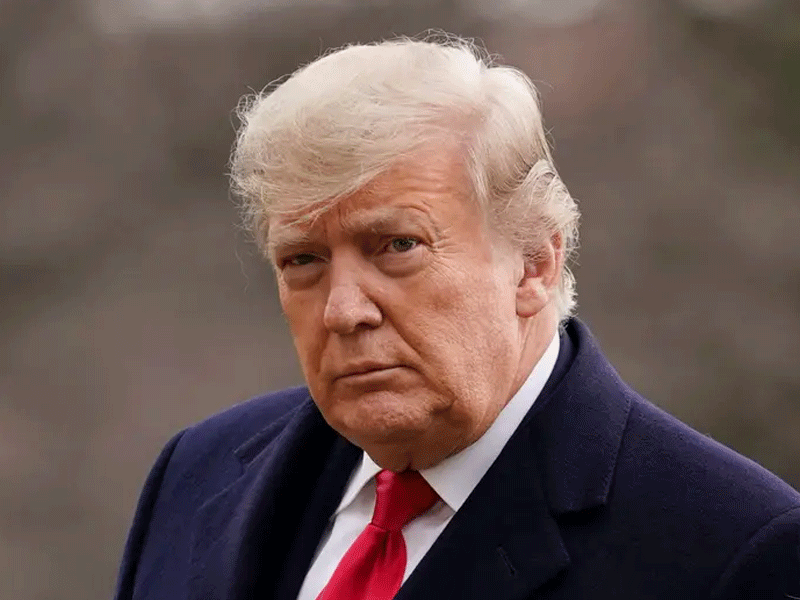
- Oil prices fell after President Donald Trump said the US would not attack Iran before November’s midterm elections.
- West Texas Intermediate dropped towards $91 a barrel after rising 3.6 per cent on Thursday, while Brent settled above $104.
- Reports of possible US military action and production disruptions caused by Hurricane Isaias continued to influence market sentiment.
MAIN STORY
Oil prices retreated after US President Donald Trump ruled out attacks on Iran before November’s midterm elections, easing some concerns about a further escalation of the conflict.
West Texas Intermediate crude fell towards $91 a barrel after gaining 3.6 per cent on Thursday, while Brent crude closed above $104, according to Bloomberg.
Trump cited what he described as “productive discussions” with Iran and claimed that oil was passing through the Strait of Hormuz in record volumes.
However, the New York Times reported that the US had drawn up plans for three days of strikes targeting Iranian drone and missile arsenals, energy facilities and other sites. The reported plans contrasted with Trump’s public statement that the US would not attack Iran before the elections.
Oil markets have faced sharp price swings amid the conflict, attacks on shipping and uncertainty over supplies moving through the Middle East. Renewed fighting involving Saudi Arabia and Yemen’s Houthi movement has added to concerns about regional security and oil transportation.
Supply risks were also emerging in the United States, where Hurricane Isaias threatened oil production along the Gulf Coast. Bloomberg reported that producers in the Gulf of Mexico had shut in about 1.3 million barrels of daily crude output, representing more than 60 per cent of the region’s production.
The competing developments left oil traders weighing Trump’s assurance against the possibility of further military escalation and disruptions to production and shipping.
THE ISSUES
Military tensions remain a major influence on oil prices. The possibility of attacks on Iran can raise concerns about disruptions to crude production and shipments through strategic waterways. Trump’s statement eased some of those immediate concerns, but the reported US strike plans pointed to continuing uncertainty.
The Strait of Hormuz remains important to oil supply. Any disruption to shipping through the waterway could affect the movement of crude to international markets. Trump’s claim about record oil flows was not independently established by the material reviewed for this report.
Weather disruptions can add pressure to supply. The reported shutdowns in the Gulf of Mexico showed that oil production can also be affected by severe weather, independently of developments in the Middle East. The production figure reflects the situation reported at the time and may change as conditions develop.
WHAT’S BEING SAID
“We are having productive discussions with the Islamic Republic of Iran.” – Donald Trump, US President, in remarks reported by Bloomberg
WHAT’S NEXT
Oil traders will continue monitoring developments in US-Iran relations, the movement of tankers through the Strait of Hormuz and the effect of Hurricane Isaias on US Gulf production. Any changes in military activity or supply disruptions could influence prices.
BOTTOM LINE
Oil prices fell after Trump said the US would not attack Iran before the November midterms, but reported strike planning and weather related production shutdowns continued to create uncertainty over supply.
Source: Bloomberg News, with the reported US strike plans attributed to the New York Times.