








Keypoints
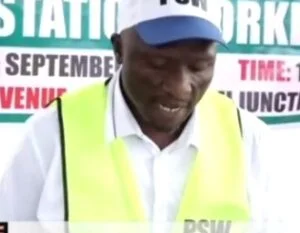
- The Petrol Station Workers (PSWs) group, led by Ibrahim Zango, is demanding immediate inclusion in the ongoing Nigeria Union of Petroleum and Natural Gas Workers (NUPENG) reforms.
- Zango warned that sidelining the group during restructuring, zonal elections, and national conference preparations would undermine downstream labor representation.
- Despite being a massive segment of the downstream workforce, PSWs are currently described as unstructured, vulnerable, and poorly integrated into the union’s protection framework.
- The group highlighted systemic issues including exploitation, poor remuneration, and a lack of social protection for station attendants and operators.
- Zango called on NUPENG leadership to formalize the PSW structure across all zones to ensure collective bargaining rights for this critical workforce.
Main Story
Nigeria’s downstream petroleum sector is facing a push for internal democratization from its most visible frontline—the petrol station workers.
In a statement issued from Kaduna on Monday, April 20, 2026, the Petrol Station Workers (PSWs) group issued a “historic call” for NUPENG to end years of marginalization.
While NUPENG represents the elite of the oil and gas industry, from tanker drivers to refinery engineers, the thousands of men and women manning the pumps across Nigeria say they have been left in a “union limbo.”
Ibrahim Zango, speaking for the PSWs, argued that as NUPENG prepares for its national conference and zonal elections, it is the perfect time to fix the “longstanding imbalances” in the union’s hierarchy.
The group is not just looking for a name on a list; they are demanding a formal, structured arm within NUPENG that has the power to negotiate for better wages, health insurance, and workplace safety.
For the average worker at a filling station, this shift could mean the difference between being a casual laborer and becoming a protected professional within the oil and gas value chain.
The Issues
The primary challenge is the informal-labor gap; many petrol station workers are employed by independent marketers under precarious conditions, making it difficult for a centralized union like NUPENG to verify and register them consistently. Authorities must solve the problem of employer resistance, as small-scale station owners often oppose unionization to avoid the costs associated with collective bargaining and improved welfare benefits. Furthermore, there is a representation-dilution risk; NUPENG leadership may worry that incorporating such a large, decentralized group too quickly could overwhelm the union’s administrative resources during an already complex election cycle. To succeed, the integration must include a clear “digital registration” framework to ensure that every petrol station worker in Nigeria has a verifiable union identity.
What’s Being Said
- “Excluding PSWs from the ongoing reforms undermines the very essence of unionisation and collective bargaining,” argued Ibrahim Zango.
- Zango described the situation of station workers as “unjust,” citing widespread exploitation and a total lack of social protection despite their role as a “critical mass” in the sector.
- NUPENG officials have previously stated that their goal is “total inclusivity,” though they have yet to formally respond to the specific demand for a separate, structured PSW arm.
- Labor analysts in Kaduna noted that the timing of the demand is “strategic,” as it forces NUPENG to address the group’s concerns before the national conference is concluded.
What’s Next
- NUPENG leadership is expected to issue a formal response to the PSWs’ demands before the next round of zonal elections begins in late May 2026.
- A pilot program for the “formalization and registration” of station workers may be launched in the North-West zone to test the feasibility of Zango’s proposed framework.
- The upcoming National Conference is likely to include a special session on “Downstream Inclusivity” to prevent any industrial disharmony at the pumps.
- Civil society groups and labor advocates are anticipated to increase pressure on independent petroleum marketers to recognize the union rights of their station attendants.
Bottom Line
NUPENG is at a crossroads where it must decide if it is a union for a specialized few or a shield for the many. By demanding a seat at the table, the petrol station workers are reminding the oil industry that the most important link in the “downstream chain” is often the person holding the fuel nozzle.




 group issued a "historic call" ...)