







By Boluwatife Oshadiya | April 10, 2026
Key Points
- A 50kg bag of cement now sells for ₦11,500–₦15,000 across major markets, up more than 30% since early 2026 and over 367% since 2019.
- Iron rods have climbed to ₦1.05 million–₦1.3 million per ton, while sand and granite tipper loads have risen sharply due to fuel and logistics costs.
- The total cost to complete a standard 3-bedroom bungalow now ranges from ₦15 million–₦33 million depending on location, quality and finishes.
- Real estate developers warn that escalating prices are delaying projects, scaling down developments and worsening Nigeria’s housing deficit.
- Industry leaders are calling on government to stabilise key material costs through stakeholder engagement and supply-chain reforms.
Main Story
Building a home in Nigeria has become significantly more expensive in 2026 as inflation, foreign-exchange volatility and rising logistics costs drive up the price of almost every major construction input. What many Nigerians once budgeted at ₦10 million–₦15 million for a moderate 3-bedroom bungalow now routinely exceeds ₦20 million when using current market rates.
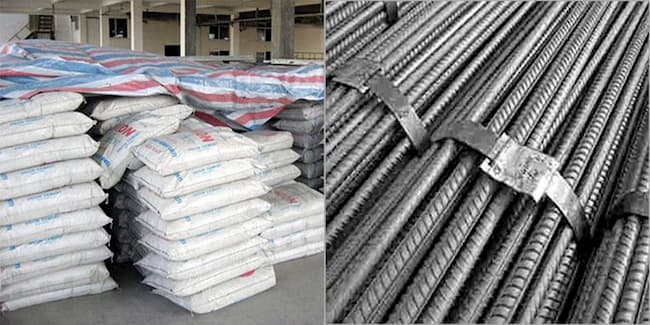
Market surveys conducted in Lagos, Abuja, Enugu and Kano in March–April 2026 show cement — the single largest cost component — trading at ₦11,000–₦12,500 in Lagos and up to ₦15,000 in some northern and eastern markets. Dangote, BUA and Lafarge brands dominate supply, with retail prices fluctuating daily depending on volume purchased and location.
Below is a comprehensive snapshot of current prices for key building materials (April 2026 estimates). All figures are retail averages and will vary by brand, quality, location and bulk discounts. Prices are subject to daily movement.
Cement (50kg bag)
- Dangote: ₦11,000–₦12,500
- BUA: ₦10,800–₦12,000
- Lafarge: ₦11,500–₦13,000 (Full trailer loads may attract ₦500–₦1,000 discounts per bag.)
Steel Reinforcement Rods (per tonne)
- 8–10 mm: ₦1.00 million–₦1.07 million
- 12 mm: ₦1.05 million–₦1.10 million
- 16 mm: ₦1.05 million–₦1.07 million
- 20–25 mm: ₦1.07 million–₦1.30 million (Individual 12 m lengths now cost several thousand naira each; binding wire rolls remain around ₦5,500–₦6,800.)
Aggregates
- Sharp coarse sand (20-ton tipper): ₦70,000–₦150,000
- Granite (3/4 inch or 1/2 inch, 30-ton truck): ₦450,000–₦660,000
- Stone dust / quarry dust (20–30 tons): ₦130,000–₦330,000
Blocks
- 9-inch vibrated: ₦650–₦1,300
- 6-inch vibrated: ₦600–₦1,100
- Hand-mould variants: ₦600–₦700
Roofing
- Aluminium long-span (0.45–0.70 mm): ₦1,900–₦3,100 per metre (or higher for premium gauges)
- Stone-coated tiles: ₦4,800–₦7,000 per square metre
Other Key Items (approximate retail)
- Marine plywood (3/4 inch): ₦15,000–₦25,000 per sheet
- Hardwood (2×4): ₦350–₦550 per length
- Casement/sliding aluminium windows (600×600 mm): ₦4,000–₦10,500 depending on type and glazing
- Flush doors: ₦5,000–₦20,000
- Burglary-proof grilles: ₦2,000–₦13,000 per standard size
Breakdown: Cost to Build a Standard 3-Bedroom Bungalow (2026 estimates)
Using current material rates and moderate finishes, a typical single-storey 3-bedroom bungalow in Lagos or major southern cities now costs:
- Foundation to DPC: ₦2.0 million–₦3.0 million
- Blockwork to roof level: ₦2.0 million–₦3.0 million
- Roofing (trusses, sheets, installation): ₦4.0 million–₦6.0 million
- Windows, doors and burglary proof: ₦2.5 million–₦4.0 million
- Electrical and plumbing: ₦1.8 million–₦2.7 million
- Finishing (plastering, tiling, painting, POP): ₦3.5 million–₦5.5 million
- Borehole, septic tank, fence and external works: ₦3.0 million–₦5.0 million
Total: ₦15 million–₦33 million (excluding land). Luxury or duplex finishes push costs well above ₦40 million. These figures exclude labour, which has also risen with fuel and living costs.
The Issues
The price surge is not isolated to any single material. Cement alone has risen more than 367% since 2019, driven by persistent naira depreciation, high diesel prices for factory and transport operations, and concentrated market power among three major producers. Iron rods, largely imported or dependent on imported billets, have increased over 100% in the past two years. Logistics costs — now inflated by fuel subsidy removal and poor road infrastructure — add another layer, particularly for sand and granite hauled from distant quarries.
High demand from both public infrastructure projects and private residential development has outstripped local supply in many categories, while imported components (tiles, fittings, certain roofing) remain vulnerable to forex swings. The net result is that building materials now account for 50–70% of total construction costs, squeezing developer margins and pushing many middle-income projects into delay or abandonment.
What’s Being Said
Real Estate Developers Association of Nigeria (REDAN) President HRM Oba Akintoye Adeoye has been vocal: “We felt it necessary to address the nation on a matter that is rapidly becoming a major challenge to housing delivery and infrastructure development in Nigeria — the escalating cost of cement and other critical building materials.” He noted that prices climbed from ₦7,500 per bag in late 2025 to ₦11,500–₦15,000 today, warning that developers are facing serious financial pressure, leading to project delays, scaled-down developments and, in some cases, outright suspension.
Immediate past REDAN president Aliyu Oroji added that “developers are being forced to increase prices, and ultimately, it is the end user who bears the burden. We are creating a situation where only a small fraction of Nigerians can afford to own homes.”
University of Lagos housing expert Prof. Timothy Nubi described the situation as “severely disrupting housing development projects nationwide,” with cement price increases alone exerting pressure across the entire cost structure.
Small-scale builders and contractors in Lagos and Abuja markets echoed the sentiment, reporting that clients frequently abandon projects midway once revised material quotes arrive.
What’s Next
The Federal Ministry of Housing and Urban Development is expected to engage cement manufacturers and other stakeholders in the coming weeks following REDAN’s formal appeal. Industry observers anticipate possible intervention through the Federal Competition and Consumer Protection Commission (FCCPC) to examine pricing practices.
The government has also signalled plans to establish building-material hubs aimed at reducing logistics costs and improving local supply. Cement producers have previously discussed price-freeze measures for large government-backed projects; any repeat of such arrangements could provide short-term relief.
The next Monetary Policy Committee meeting and any further movement in the naira exchange rate will directly influence May–June prices. Builders are advised to lock in major inputs early where possible and consult quantity surveyors for site-specific costing.
The Bottom Line:
Nigeria’s construction cost spiral in 2026 is no longer just a materials story — it is a structural threat to housing delivery at a time when the country already faces a massive deficit. Without coordinated action between government, manufacturers and developers to tame inflation’s impact on the supply chain, the dream of affordable home ownership will remain out of reach for the vast majority of citizens. The data is clear: every extra ₦1,000 on a bag of cement multiplies across hundreds of bags and thousands of projects. Stabilising these inputs is now an economic and social imperative.