Keypoints
- The Nigerian Army has inaugurated modern agricultural storage facilities at the Nigerian Army Farms and Ranches Limited (NAFRL) in Giri, Abuja.
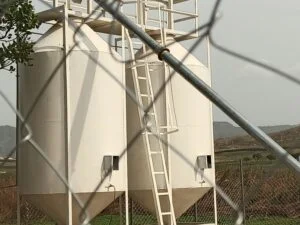
- The technologies include parabolic-shaped solar dryers and inert atmosphere silos designed for chemical-free grain preservation.
- Post-harvest losses currently account for up to 50% of Nigeria’s agricultural output.
- The initiative is part of the Army’s “non-kinetic” operations to strengthen national food security and stabilize prices.
- The inert silos use nitrogen-based storage to eliminate pests without the need for harmful chemicals.
Main Story
The Nigerian Army is expanding its role beyond traditional combat to address the nation’s growing food security crisis. On Tuesday, April 21, 2026, Chief of Army Staff (COAS) Lt.-Gen. Waidi Shaibu inaugurated advanced agribusiness infrastructure at the Nigerian Army Farms and Ranches in Abuja.
The move is a strategic response to the disruption of farming activities caused by insurgency and banditry, which has significantly worsened food shortages across the country.
The newly deployed technology focuses on the critical “post-harvest” phase, where nearly half of Nigeria’s produce is typically lost due to poor processing.
The parabolic solar dryers offer a clean-energy method for hygienic drying, while the inert atmosphere silos provide a revolutionary way to preserve grains.
By removing oxygen and using nitrogen-based storage, these silos can keep produce fresh for long periods without using pesticides. Maj.-Gen. Sonyina Nicodemus, Executive Director of NAFRL, noted that these facilities are essential for stabilizing food prices and strengthening the entire agricultural value chain.
The Issues
The primary challenge is the maintenance-sustainability gap; while the Army has successfully deployed these technologies, ensuring long-term operational efficiency requires consistent technical training and spare parts availability. Authorities must solve the problem of mechanization-access, as high-tech dryers and silos are most effective when paired with improved seedlings and fertilizers, which NAFRL is currently requesting from the Ministry of Agriculture.
Furthermore, there is a security-continuity risk; for these “non-kinetic” agribusiness interventions to stabilize national food prices, they must be shielded from the very banditry that disrupted the farms in the first place. To succeed, the Army must bridge the gap between military-led agricultural innovation and private-sector scaling to ensure these storage solutions reach civilian smallholder farmers.
What’s Being Said
- “These facilities will enhance food processing and storage, reduce waste and improve the quality and shelf life of agricultural produce,” stated Lt.-Gen. Waidi Shaibu.
- Maj.-Gen. Sonyina Nicodemus highlighted that post-harvest losses “account for up to 50 per cent of Nigeria’s agricultural output.”
What’s Next
- The Nigerian Army is expected to scale the deployment of these inert silos and solar dryers to other NAFRL locations across the six geopolitical zones by late 2026.
- A collaborative framework with the Federal Ministry of Agriculture is anticipated to provide improved seedlings and mechanised equipment to boost NAFRL’s output.
- Technical workshops are likely to be organized for civilian agricultural cooperatives to learn from the Army’s chemical-free preservation techniques.
- Monitoring of local food markets will be conducted to measure the impact of NAFRL’s increased storage capacity on seasonal price fluctuations.
Bottom Line
By deploying industrial-grade storage technology, the Nigerian Army is treating food security as a national defense priority. If these facilities can successfully reduce the 50% post-harvest loss rate, the Army’s “non-kinetic” strategy could prove just as vital to national stability as its frontline operations.