






KEY POINTS
By BizWatch
- Finance Minister Taiwo Oyedele says Nigeria is targeting seven per cent economic growth, above the IMF’s 4.3 per cent projection.
- The government plans to complement monetary policy with fiscal measures to accelerate growth and address inflationary pressures.
- Oyedele says lower inflation could create room for single-digit interest rates and reduce borrowing costs for businesses.
- The minister warns that reversing major reforms could weaken investor confidence and put pressure on the naira.
MAIN STORY
The Federal Government is targeting seven per cent economic growth, above the International Monetary Fund’s (IMF) projection of 4.3 per cent, as it seeks to accelerate economic reforms and improve investment conditions.
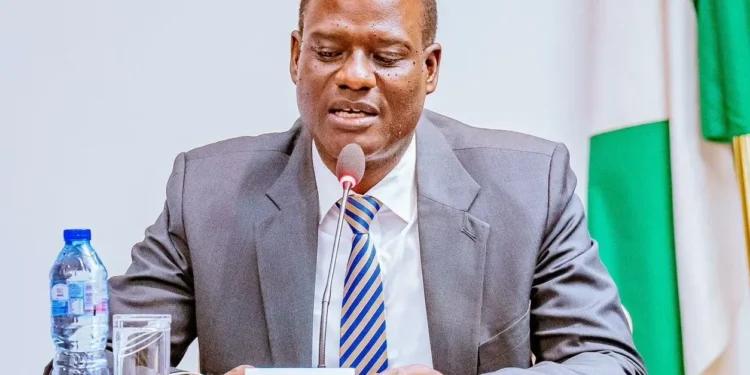
The Minister of Finance and Coordinating Minister of the Economy, Taiwo Oyedele, disclosed this at a Nigerian news conference on the sidelines of the 2026 World Bank and IMF Annual Meetings in Bangkok, Thailand, on Saturday.
Oyedele described the IMF’s growth forecast as conservative, expressing confidence that the economy could perform better as the government intensifies efforts to support expansion.
“The projections of the IMF have always turned out to be too conservative. This year will not be different,” he said.
The minister said the government intended to complement the Central Bank of Nigeria’s monetary policy measures with fiscal interventions aimed at strengthening economic activity.
He identified food, energy and logistics costs as major sources of inflationary pressure, saying the government was working to address these constraints.
According to Oyedele, reducing inflation to low single digits could create conditions for interest rates to fall into single digits, making credit more affordable for businesses.
He noted that companies currently borrowing at rates approaching 30 per cent could expand more strongly if financing costs declined.
The minister also credited the CBN’s interventions with improvements in foreign exchange stability, stating that the naira had remained stable and was appreciating.
Oyedele said the broader reform programme was intended to establish the conditions for sustainable growth and shared prosperity. He described “Nigerian Rising” as a way of communicating the country’s reform progress, increasing international recognition and emerging economic opportunities.
He cited foreign exchange reforms and changes to the tax system over the preceding two years as significant policy developments.
The minister urged Nigerians to look beyond negative headlines and recognise opportunities arising from the country’s economic transformation. He also argued that attracting investment and protecting public welfare were compatible objectives, provided economic policies remained sustainable.
Oyedele warned that reversing major reforms, particularly the removal of the petrol subsidy, could trigger capital flight, weaken the naira and generate further economic pressures.
“Reversing key reforms, particularly fuel subsidy removal, can trigger capital flight, weaken the Naira and create further economic pressures,” he said.
“Policy decisions must consider their long-term consequences. Reversing reforms can undermine investor confidence and economic stability,” he added.
He also cautioned against automatically classifying discounts offered through commercial pricing arrangements as fuel subsidies, stressing the distinction between commercial decisions and government-funded support.
The minister said the reform programme was ultimately designed to strengthen the economy, attract investment and create the conditions for faster and more sustainable growth.
THE ISSUES
The seven per cent growth target signals the government’s ambition, but achieving it would require economic activity to expand considerably beyond the IMF’s 4.3 per cent forecast. The difference between the two figures makes implementation, rather than the target alone, central to assessing the government’s outlook.
Inflation and borrowing costs are also closely connected to the growth objective. Lower inflation could give policymakers more room to ease monetary conditions, but a reduction in interest rates would depend on sustained price stability, inflation expectations and other economic risks. Single-digit inflation would not automatically guarantee single-digit lending rates, as banks also consider funding costs, credit risk and operating expenses.
The minister’s focus on food, energy and logistics points to costs that affect both households and businesses. Persistent pressure in these areas can reduce consumers’ purchasing power, raise production and distribution expenses, and limit companies’ ability to invest or expand employment.
The government’s confidence in foreign exchange stability will also need to be tested against sustained market conditions. A stable or appreciating naira can help businesses plan imports and manage costs, but the durability of that trend depends on foreign exchange supply, demand and broader economic conditions.
Finally, the debate over reform reversals reflects a tension between immediate relief and longer-term economic stability. The government argues that reversing policies could undermine investor confidence. However, the wider economic test is whether the reforms can deliver tangible improvements in incomes, access to affordable credit, business activity and employment.
WHAT’S BEING SAID
“The projections of the IMF have always turned out to be too conservative. This year will not be different.”
“Reversing key reforms, particularly fuel subsidy removal, can trigger capital flight, weaken the Naira and create further economic pressures.”
The Federal Government is targeting seven per cent economic growth, above the International Monetary Fund’s (IMF) projection of 4.3 per cent, as it seeks to accelerate economic reforms and improve investment conditions.
WHAT’S NEXT
Attention will be on whether the government’s fiscal measures can complement the CBN’s monetary policy to support faster growth while reducing inflationary pressure. Progress will also depend on whether food, energy and logistics costs ease sufficiently to improve business conditions.
For businesses, a sustained decline in inflation and lending rates would be important indicators to watch. Investors will be assessing policy consistency and foreign exchange stability, while households will be looking for improvements in the cost of living and employment opportunities.
The government’s seven per cent target remains an ambition, and its credibility will depend on economic performance over the coming quarters.
BOTTOM LINE
Nigeria is aiming for seven per cent economic growth, significantly above the IMF’s 4.3 per cent forecast. The government believes continued reforms, lower inflation and improved financing conditions can support that ambition. The decisive test will be whether those policies translate into stronger production, more affordable credit, sustainable investment and better living standards.