








Key points
- Africa CDC and WHO call for urgent community-led action to contain Ebola in the DRC.
- Joint mission identifies gaps in case detection, treatment and frontline support.
- Agencies urge stronger surveillance rather than travel or trade restrictions.
Main story
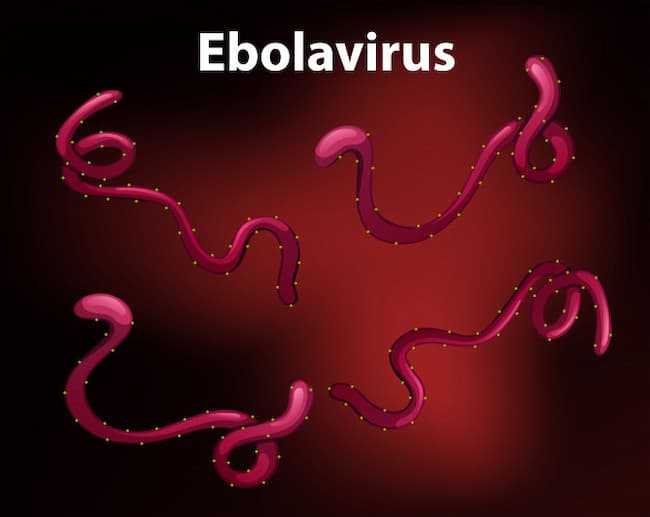
The Africa Centres for Disease Control and Prevention (Africa CDC) and the World Health Organization (WHO) have called for urgent, community-led action to contain the worsening Ebola outbreak in the Democratic Republic of the Congo (DRC).
The appeal followed a joint high-level mission to Uganda and the DRC on Aug. 4 and 5 to assess response efforts and identify operational priorities for stronger regional collaboration.
The mission was led by WHO Director-General Dr Tedros Ghebreyesus, Africa CDC Director-General Dr Jean Kaseya and WHO Regional Director for Africa Dr Mohamed Janabi.
The delegation visited Kampala, Bunia and Kinshasa, where it met government officials, health workers, community leaders and response partners to evaluate interventions and strengthen coordination.
Officials reviewed the outbreak’s progress, identified operational gaps and relayed concerns raised by affected communities to national authorities.
Africa CDC and WHO commended Uganda for successfully containing its outbreak, noting that the country declared Ebola on July 28 after recording 20 confirmed cases and two deaths, with all identified contacts completing follow-up.
The agencies urged neighbouring countries to strengthen preparedness and surveillance to reduce the risk of cross-border transmission.
In Bunia, the outbreak’s epicentre, the delegation visited the Rwangole Ebola Treatment Centre to assess patient care, operational capacity and challenges facing frontline health workers.
The agencies said ending the outbreak would depend on communities receiving trusted information and participating actively in surveillance, case reporting and response activities.
They urged residents to recognise Ebola symptoms early, report suspected cases promptly and seek treatment without delay.
The statement identified religious, traditional, women’s and youth leaders as critical partners in building public trust, countering misinformation and encouraging community participation.
The agencies also praised health workers and affected communities for sustaining response efforts despite insecurity, population displacement, misinformation and limited healthcare resources.
According to the statement, response teams continue to face delayed case detection, treatment shortages, resistance to interventions and inadequate frontline support.
Ituri Province accounts for nearly 90 per cent of confirmed Ebola cases, with Bunia, Rwampara and Mongbwalu among the worst-affected health zones.
As of Aug. 4, the DRC had recorded 3,973 confirmed cases, 1,801 deaths and 776 recoveries across 51 health zones. Authorities also reported 99 new confirmed cases and 52 deaths within the latest 24-hour reporting period.
The agencies said contact tracing had reached 75 per cent, below the 95 per cent target required to interrupt transmission, while about 674 patients remained under care and treatment centres in North Kivu were operating at 139 per cent capacity.
Africa CDC and WHO called for expanded treatment centres, stronger laboratory services, increased ambulance capacity, safe burial operations and better protection, equipment and timely payment for frontline health workers.
They also urged stronger government coordination, sustained financing and improved access to affected communities while pledging continued technical support.
The issues
The DRC continues to face one of the world’s most severe Ebola outbreaks, with insecurity, displacement, limited healthcare resources and misinformation undermining response efforts. Health agencies say stronger community participation and sustained investment are essential to slowing transmission and preventing further regional spread.
What’s being said
“Uganda’s successful containment demonstrated that rapid detection, contact tracing and strong community engagement can stop Ebola transmission.” – Africa CDC and World Health Organization (joint statement).
“Response teams reported delayed case detection, treatment shortages, resistance to interventions and inadequate frontline support.” – Africa CDC and World Health Organization (joint statement).
“Contact follow-up reached 75 per cent, below the 95 per cent target needed to rapidly interrupt Ebola transmission.” – Africa CDC and World Health Organization (joint statement).
“Africa CDC and WHO pledged continued technical support while advising countries to strengthen surveillance instead of imposing unnecessary travel or trade restrictions.” – Africa CDC and World Health Organization (joint statement).
What’s next
Africa CDC and WHO will continue supporting the DRC’s Ebola response while working with national authorities and neighbouring countries to strengthen surveillance, improve treatment capacity and increase community participation in outbreak control.
Bottom line
Health authorities say containing the Ebola outbreak in the DRC will depend on stronger community engagement, faster detection and sustained investment in frontline response systems.







 and the World Health Organization (WHO) have called for urgent, ...)