










Nigeria’s National Revenue Service (NRS) has unveiled a N40.7 trillion revenue target for 2026, following sweeping tax reforms that expand the agency’s mandate to include petroleum and mineral royalties.
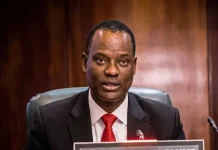
The announcement was made by the Executive Chairman of the NRS, Mr. Zach Adedeji, during a financial stakeholders’ roundtable in Abuja convened by the House of Representatives Committee on Appropriations.
Expanded Revenue Mandate
Adedeji explained that recent tax reforms transferred petroleum royalties and select mineral revenues to the NRS, significantly increasing its collection responsibilities.
“With the inclusion of petroleum and mineral royalties and other revenue streams, our total projection stands at N40.7 trillion,” he said, expressing confidence that legislative backing would enable the agency to meet the target.
2025 Outperformance Strengthens Confidence
The revenue service exceeded expectations in 2025, generating N28.23 trillion against an initial target of N25.2 trillion. According to Adedeji, collections rose by N6.5 trillion compared to 2024, representing a 30.3 percent year-on-year increase. The growth was largely driven by improved non-oil tax performance. This surge in non-oil revenue reflects ongoing diversification efforts aimed at reducing Nigeria’s reliance on hydrocarbon earnings.
Fiscal Consolidation and Reform Rationale
Speaking at the session, Minister of Finance and Coordinating Minister of the Economy, Wale Edun, addressed the fiscal challenges that necessitated reform.
He noted that Nigeria previously relied heavily on Ways and Means financing from the Central Bank to cover large fiscal deficits. Additionally, the Nigerian National Petroleum Company funded petrol subsidies through under-recovery arrangements, a system he described as fiscally unsustainable.
The minister argued that eliminating these distortions required a shift toward market-based policy mechanisms, reinforcing the government’s reform agenda.
Legislative Oversight and Transparency
Chairman of the House Committee on Appropriations, Rep. Abubakar Bichi (APC–Kano), said the roundtable was designed to scrutinize both 2025 fiscal performance and the 2026 Appropriation Bill. He emphasized the importance of clarity in revenue projections to enhance public understanding.
“In 2025, we achieved approximately N28 trillion against a N25 trillion benchmark. As we evaluate the 2026 proposal, we require comprehensive disclosures to ensure Nigerians fully understand the fiscal direction,” he stated.
Revenue Reform as a Growth Catalyst
Stakeholders at the meeting agreed that strengthening tax administration and broadening the revenue base are essential to sustaining macroeconomic stability and funding infrastructure investments.
With the N40.7 trillion target now formally tabled, the success of the reforms will depend on enforcement efficiency, compliance expansion, and continued legislative collaboration.






 has unveiled a N40.7 trillion revenue target for 2026, following sweeping tax reforms that expand...)