





Key points
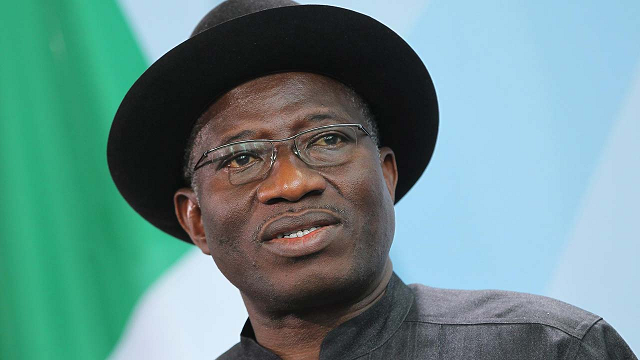
- Former President Goodluck Jonathan has warned that Nigeria’s democracy risks a deeper legitimacy crisis if courts continue determining electoral outcomes instead of voters.
- Jonathan said post-election litigation has become excessively normalized, with politicians increasingly relying on the judiciary to overturn election results.
- He called for electoral reforms, including the creation of a Constitutional Court dedicated to resolving election disputes.
- Former Attorney General of the Federation, Mohammed Adoke, warned that public confidence in elections continues to decline despite over two decades of civilian rule.
- Nigerian Bar Association President, Afam Osigwe, expressed concern over growing electoral violence, judicial interference, and democratic manipulation ahead of the 2027 elections.
Main story
Former President Goodluck Jonathan has cautioned that Nigeria’s democratic system could face a worsening credibility crisis if electoral outcomes continue to be determined through prolonged court battles rather than the ballot box.
Jonathan spoke at the opening ceremony of the Nigerian Bar Association Abuja Law Week 2026, held at the NBA House in Abuja under the theme, Safeguarding Nigeria’s Democratic Process.
The former president used the platform to highlight what he described as mounting threats to the country’s democratic foundations ahead of the 2027 general elections, including judicial overreach, electoral manipulation, voter apathy, and political violence.
He observed that election litigation had become deeply entrenched in Nigeria’s political culture, creating what he described as a parallel mechanism for deciding political power after votes had already been cast.
Jonathan argued that while the judiciary has an important constitutional role, courts should avoid declaring winners in disputed elections and instead order fresh polls where irregularities are established.
The former president also questioned inconsistencies within Nigeria’s electoral dispute resolution framework, particularly the differing appellate structures for governorship and presidential election petitions.
Beyond electoral litigation, Jonathan expressed concern over Nigeria’s declining voter turnout and the growing influence of political thuggery, which he said had become institutionalized in parts of the political system.
He urged the Nigerian Bar Association to work with the National Assembly on reforms to strengthen electoral laws and judicial processes, including consideration for a specialized Constitutional Court to handle election-related disputes.
In his keynote address, former Attorney General of the Federation and Minister of Justice, Mohammed Adoke, said Nigeria’s democracy remained at a fragile crossroads despite more than 20 years of uninterrupted civilian governance.
Adoke argued that the continuity of elections alone was insufficient if citizens no longer trusted electoral outcomes, citing low voter turnout and electoral violence during the 2023 general elections as evidence of weakening public confidence.
The President of the Nigerian Bar Association, Afam Osigwe, SAN, also warned that safeguarding democracy remained a pressing national concern nearly three decades after Nigeria’s return to democratic rule.
The event was attended by senior legal practitioners, judicial officers, and members of the NBA leadership, including representatives of the High Court of the Federal Capital Territory and the African Bar Association.
The issues
Stakeholders at the forum raised concerns over the increasing reliance on courts to settle political disputes, warning that excessive judicial intervention risks weakening public trust in democratic processes.
Concerns were also raised over voter apathy, electoral violence, vote-buying, weak internal party democracy, and political thuggery, all of which speakers argued continue to undermine electoral credibility in Nigeria.
Participants further stressed that unless institutional reforms are implemented ahead of the 2027 elections, public confidence in democracy could deteriorate further.
What’s being said
“She asked me, ‘why would somebody go to court after losing an election?’ In South Africa, going to court after losing an election is strange. While in Nigeria, not going to court is strange.” — Goodluck Jonathan
“The judiciary will do their work, but they should not declare any candidate. If they are not satisfied with the process of the election, then they should go back to the field. Let the ballot decide who wins.”, Jonathan said.
“Governorship election takes three levels, tribunal, Appeal Court and Supreme Court. Presidency takes two. Are you telling me electing a governor is more important than electing a President?” — Goodluck Jonathan
“Nigeria is the only country where thuggery is a profession. Some thugs, when they are travelling out of this country, fly first class while university professors struggle to buy economy tickets. That country is like a canoe turned upside down”, Jonathan added.
“Vote-buying has transformed elections into economic transactions rather than democratic choices.” — Mohammed Adoke
“The phrase ‘go to court’ has become a silent reminder that the electorate’s participation in determining leaders is gradually eroding.” — Mohammed Adoke
“Without people mounting a military coup, people through violence, thuggery and electoral manipulation come to power in Nigeria.” — Afam Osigwe
“That should be the mantra of every democratic process.” — Afam Osigwe
What’s next
Calls for electoral and judicial reforms are expected to intensify as political stakeholders prepare for the 2027 general elections.
Discussions around the establishment of a Constitutional Court, improvements to electoral dispute resolution mechanisms, and stronger enforcement of electoral laws may also gain renewed attention within legal and political circles.
Observers believe the debate could shape future conversations on judicial independence, electoral integrity, and democratic accountability in Nigeria.
Bottom line
As Nigeria moves closer to another election cycle, concerns raised by political and legal stakeholders suggest growing unease over the role of the judiciary, electoral credibility, and public trust in democracy — issues many believe could define the stability of the country’s democratic process in the years ahead.