When it comes to the possibility and ease of owning a share as an ordinary Nigerian today, the bridge that must be crossed is the awareness gap – and reluctance or hesitation in crossing it might be the single biggest missed opportunity in personal finance.
As of mid-July 2026, the Nigerian Exchange carries a total market capitalisation of roughly ₦156 trillion, or about $113 billion at prevailing exchange rates – the combined value of virtually every major company Nigerians deal with daily, from banks and telecoms to oil & gas, cement and consumer goods makers. For most of the country’s history, owning even a sliver of that value meant clearing hurdle after hurdle. Today, it takes little more than a smartphone, a few minutes, and the will to become a shareholder.
The Way It Used To Work
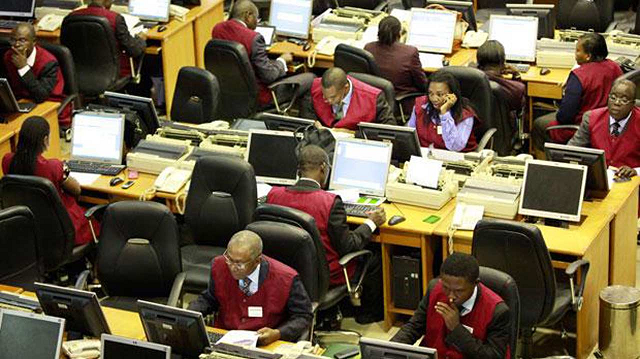
For most of the history of Nigeria’s capital market, the advantage never sat with the ordinary investor. It sat with the middleman: who alone knew which forms to file. Information about which shares to buy, how to buy them, and how quickly your money would move was rationed out by people who stood between you and the market. Buying shares meant a trip to a stockbroker’s office, a paper application form, and a patience that not every young professional had. The advantage the middleman held over the buyer was built into every step of that process, and it quietly discouraged a lot of people from ever trying.
What Actually Changed
That advantage has been shifting to the buyer quietly but decisively. Today, a literate person with a smartphone can open an account, verify their identity, and own a slice of Dangote Cement or MTN Nigeria before their lunch break ends, with no intermediary deciding whether or how quickly they get access. A wave of apps such as Bamboo, Trove, Chaka, Cowrywise and Risevest built their following by targeting exactly this kind of investor: young, digitally comfortable, and tired of processes that felt designed to keep them out. Between them, these platforms have attracted well over a million active users.
These platforms have folded in the kind of guidance once reserved for private wealth clients such as model portfolios, robo-guided fund selection, in-app research, and managed dollar portfolios – so that a first-time investor can lean on built-in judgement rather than picking shares blindly. The Nigerian Exchange itself has joined the push with NGX Invest, a digital gateway for public offers and rights issues that verifies your identity through the Nigeria Inter-Bank Settlement System and lets newcomers subscribe without first opening a separate CSCS account. NGX Group says the platform helped channel more than ₦2 trillion into the banking sector’s recapitalisation round in 2024 and 2025, much of it from investors who never filled a single paper form.
Borrowing A Page From The Fintech Wallets
If this sounds familiar, it should, because it is the same playbook that made mobile money and fintech wallets like Opay and Moniepoint succeed in Nigeria in the first place: remove the friction of branch visits and paperwork, cut the minimum balance to almost nothing, and meet people on the device already in their hand. Where the cashless policy pulled millions of unbanked and underbanked Nigerians into formal payments, this quieter revolution is pulling a similar demographic – younger, mobile-first, often first-salary earners into asset ownership rather than mere transactions. Call it financial inclusion’s second act: not just holding a bank account, but holding a stake in the economy that pays your salary.
How Low The Barrier Has Actually Gone
Today, some platforms let you start trading with as little as ₦1,000, or roughly $10 – an amount that would barely have covered brokerage fees under the old paper-based system. Fractional investing and low or zero account-opening minimums mean a market once associated with serious capital outlay is now accessible to a university graduate’s first paycheck. Settlement has caught up too: the Nigerian Exchange moved to a faster T+1 settlement cycle from June 2026, and several digital brokers now pay proceeds directly into a linked bank account, cutting the wait between selling a share and touching the money from days to almost real time.
A Record That Says The Rewards Are Real
None of this would matter much if Nigerian shares weren’t actually worth owning, and this is where Dangote Cement’s 17th Annual General Meeting, held on July 2, 2026, at Eko Hotels & Suites in Lagos, tells its own story. Shareholders approved a final dividend of ₦45 per share for the 2025 financial year, a 50 percent jump from the ₦30 paid the year before and the largest single payout in the company’s history at roughly ₦753.8 billion, taking cumulative dividends paid out over fifteen years past ₦3.3 trillion. Company chairman Emmanuel Ikazoboh linked the record payout to the confidence shareholders had continued to place in the business, citing disciplined capital allocation and consistent returns as the drivers. For anyone still wondering whether Nigerian equities can genuinely build wealth rather than simply carry risk, a company of Dangote Cement’s scale rewarding investors at record levels is a fairly persuasive answer.
Home And Abroad, The Door Is Open
Distance used to be one of the biggest barriers to Nigerians abroad owning a piece of the home market. That, too, is changing. The Central Bank of Nigeria, working with NIBSS, has rolled out the Non-Resident BVN (NRBVN) platform, letting Nigerians in the diaspora complete biometric verification and KYC requirements remotely instead of flying home for a bank visit. It sits alongside the Non-Resident Nigerian Ordinary Account and Non-Resident Nigerian Investment Account, which let diaspora Nigerians hold funds in naira or foreign currency and invest directly in Nigerian assets, including the diaspora bond and listed equities. Diaspora-focused platforms such as MyStocks.Africa go a step further, letting international investors buy NGX-listed shares and receive dividends in dollars without needing a Nigerian bank account at all – an experience built for someone sitting in London, Houston, Ontario or Dubai, even though every transaction still settles through the same CSCS infrastructure back home.
Even The Big Banks Are Not Left Out
Established institutions are also picking up the pace in bringing access directly to would-be share buyers. Stanbic IBTC, for instance, folded stockbroking, asset management, pensions and insurance into its everyday banking app, now known as APPbility, letting a customer trade equities and invest in mutual funds from the same login they already use for banking, with account opening available in minutes even for non-customers. Its stockbroking arm went further still, scrapping the minimum account-opening balance for individuals signing up through its mobile app or e-Trade platform. When institutions that also run the country’s largest equity and debt advisory mandates start removing minimum balances at the retail end, it is a fairly strong signal that the democratisation of share ownership has arrived.
The Barrier That’s Left
The picture today is clearly showing that the technology exists, the apps are free to download, the minimums have all but disappeared, and even the traditional gatekeepers are rebuilding around the same convenience the fintechs proved Nigerians wanted. The one barrier still standing isn’t cost, and it isn’t paperwork. It’s awareness. Ask around any office, church group or NYSC lodge, and you will likely find people who assume shares still require a broker’s introduction, a large sum of money, or specialised knowledge they don’t have. That gap, between who can now participate directly and who still believes they need a middleman, is the real story of this decade’s capital market and closing it is worth more to an individual’s long-term wealth than almost any single stock pick.
So, consider this an invitation to wealth building, whether you open your first position through a fintech app, a stockbroking platform, or your existing bank’s mobile app, whether you’re in Nigeria or reading this from abroad using the new non-resident BVN platform, the friction that once excused inaction has largely disappeared. Nigeria’s capital market is, for the first time in a generation, genuinely open to its people. The advantage now belongs to whoever notices, asks the right questions, and starts – even modestly.